Lead story / robotics
Hyundai Workers Strike Over Humanoid Robot Plans
Thousands of unionized workers at Hyundai's Ulsan plant staged early walkouts after 15 rounds of talks over humanoid robot deployment collapsed.
The Revision reporting on Hardware — 126 stories on the wire, decoded into one clear voice.
Thousands of unionized workers at Hyundai's Ulsan plant staged early walkouts after 15 rounds of talks over humanoid robot deployment collapsed.
The Israeli specialty foundry will revive a dormant Panasonic-era fab and expand a running plant, targeting $3.6 billion in revenue by 2028.
TSMC's latest $100 billion pledge lifts its total US commitment to $265 billion and puts Arizona on track for 10 fabs, with no timeline attached.
The Taiwan-based chipmaker now has $265 billion committed to American production, with AI demand and tariff pressure both pushing the expansion.
The US has approved ZTE and Maginfra to purchase Nvidia's Hopper-generation H200 accelerators, expanding a short list of Chinese firms with sanctioned access.
ELiTeFormer combines linear attention with ternary weights to run large language models on FPGAs with a fraction of the memory and energy of a GPU.
Spherephones convert nearby robot movement into spatial lo-fi audio cues, giving factory workers a heads-up before danger enters their line of sight.
A new kernel library lets AMD's XDNA2 NPU run AWQ-style quantized models natively, cutting prefill latency in half and energy use by more than 64.6%.
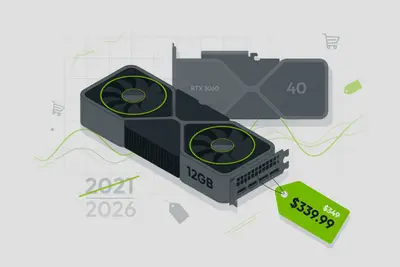
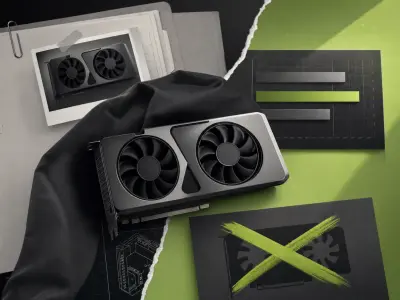
Five years after its debut, the RTX 3060 12GB is back at retail for $339.99 — almost exactly its original MSRP, and barely cheaper than newer cards.
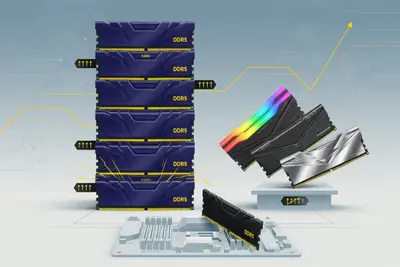
Lenovo warned that RAM prices could stay elevated for years, while kit makers respond by releasing ultra-fast memory almost no one will buy.
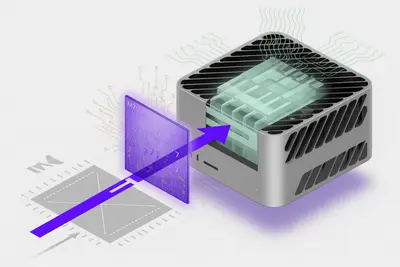
Apple is bypassing an M6 Ultra entirely, with a redesigned Mac Studio carrying M7 Ultra silicon and a new thermal system slated for 2028.
Samsung and SK hynix will cover nearly 90 percent of a national push to dominate AI memory production before any rival can catch up.
Jefferies forecasts 40-50% memory price hikes in Q3, another 30-40% in Q4, with no real recovery expected until 2028 at the earliest.
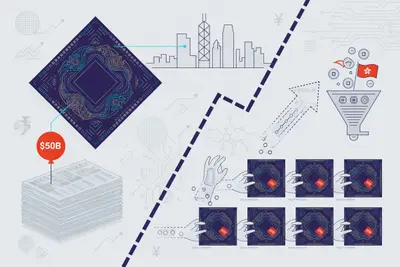
Kunlunxin is reportedly asking IPO investors to buy its chips too, blurring the line between capital raise and sales push.
A Bloomberg report says Apple will ship its long-rumored touchscreen MacBook Pro with M5 Pro and M5 Max chips, skipping a wait for next-generation silicon.
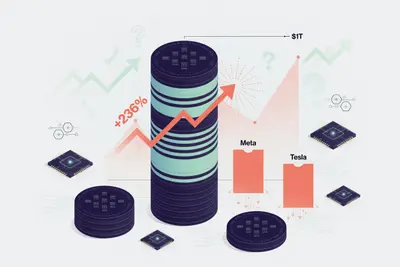
A 236% single-month stock surge lifted Micron past $1 trillion, but the revenue figure behind it could not be independently verified.
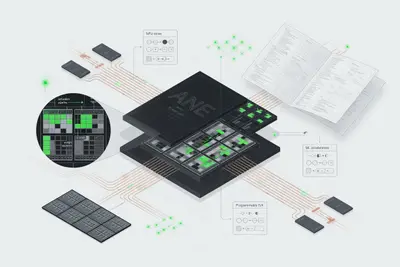
An arxiv paper examines the architecture and programming model of Apple's on-device AI accelerator, a chip block that rarely gets public scrutiny.
Apple is asking the Trump administration for permission to source chips from a Chinese company with reported military ties.
The FTC cleared Musk's bid for Mesh Optical, a startup built by three former SpaceX engineers who supply optical transceivers to AI data centers.
Apple raised prices on Macs, iPads, HomePods, and Vision Pro by up to 50 percent or more, blaming component shortages expected to last well into 2027.
Lenovo says pre-crisis memory prices are unlikely to return for years, while Microsoft warns console RAM costs could double again by fall 2027.
Micron's chief business officer implied aggressive price negotiations by Apple-style buyers starved the memory industry of the capital it needed to expand.
The power chip maker snaps up cash-strapped Synaptics to build a one-stop shop for edge AI hardware spanning compute, connectivity, and sensing.
The 2GB Uno Q goes from $44 to $59 while the 4GB jumps from $59 to $79, with both increases taking effect July 6th.
IBM's 0.7nm-class process stacks n- and p-type transistors on separate wafers, claiming 50% more performance and 70% better efficiency than its 2nm node.
Apple's next MacBook Pro will carry the M6, its first 2nm chip, with no Pro or Max variants until the M7 generation in 2027.
Apple is testing an M5 Ultra Mac Studio with up to 768GB of unified memory, though chip shortages could force a more modest launch around October 2026.
Apple hiked prices on 14 products by up to $1,300, citing a memory chip shortage driven by AI data center buildouts from OpenAI and Nvidia.
A report suggests Apple will launch the M6 chip in base form only, holding Pro, Max, and Ultra variants for the M7 in early 2027.
Apple is scrapping M6 Pro and Max variants, pushing professional Macs to wait for M7 chips built around on-device AI and GPU workloads.
IBM says it has demonstrated sub-1nm chip technology, a threshold no commercial process has crossed before.
Export controls have pushed black-market prices for Nvidia AI servers to almost three times their US retail cost, according to new reports.
A global memory shortage has forced Apple to quietly raise prices across Mac, iPad, Apple TV, and HomePod lines, with some models jumping $200 or more.
Apple has raised MacBook Neo prices by $100 across the board, blaming a memory chip shortage tied to surging AI infrastructure demand.
Memory demand from AI data centers has pushed Apple to hike the M4 Pro Mac Mini's starting price to $1,599, up from $1,399 at launch.
The Amble One is a street-legal electric buggy aimed at luxury resorts, with a full car reportedly in the works from the same team.
With 46% of revenue from China, Qualcomm is building export-compliant AI chips for Chinese data centers — a lane Nvidia already abandoned.
A global memory and storage chip shortage has forced Apple to hike prices by as much as $1,300, with the Mac Studio taking the steepest hit.
IBM's new "nanostack" architecture promises near-100-billion transistor density by bending the definition of what a nanometer node actually means.
OpenAI and Broadcom have unveiled Jalapeño, a custom data center chip built for large-scale LLM inference, with more generations promised.
A peer-reviewed critique argues Microsoft did not conclusively prove its topological qubit technology worked — one year after the Majorana 1 debut.
Qualcomm revealed Meta as the launch customer for its C1000 data centre chip, marking its most concrete push yet into AI infrastructure.
Nvidia's CEO told shareholders national security beats any commercial opportunity, and that data centers built on smuggled chips are a dead end.
OpenAI's first in-house silicon is a reticle-sized ASIC built in nine months, targeting LLM inference workloads with no disclosed benchmark numbers.
The bank now expects 50,000 humanoid robots to ship in China this year, citing a shift from stage demos to real factory and retail deployments.
The Pat Gelsinger-chaired startup wants to build a rival EUV light source — and chip hardware is suddenly a venture darling again.
China's LineShine system posted 2.198 exaflops on the standard benchmark using only domestic CPUs - but the real story is that China chose to submit it at all.
Qualcomm is in talks to design custom chips for ByteDance, a move that signals the chipmaker's pivot away from the saturating smartphone market.
OpenAI's first in-house silicon, built with Broadcom, targets AI inference workloads for models like ChatGPT and Codex.
OpenAI's Broadcom-built Jalapeño chip targets inference workloads and signals a serious push to reduce the company's dependence on Nvidia.
Qualcomm has agreed to acquire Modular, the AI infrastructure startup behind the Mojo programming language and MAX engine.
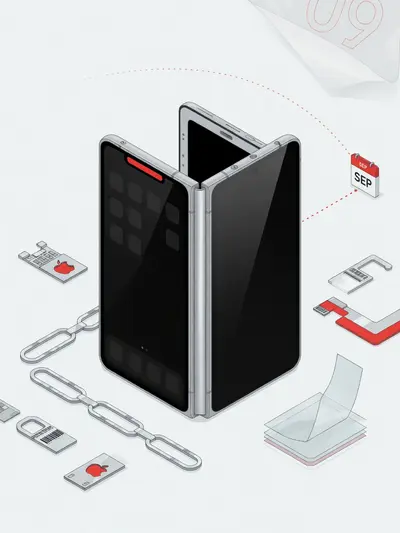
Apple's book-style foldable is heading to mass production in late July, with hinge defects largely resolved and a September launch still in play.
Price hikes covering 74% of TSMC's wafer revenue will hit Apple, Nvidia, AMD, and others with increases reportedly in the 5%-10% range.
The raise is a ceiling, denominated in won and subject to change, and the fabs it funds won't reach volume output until 2027.
With smuggling routes shut and legal imports blocked, Chinese buyers are paying triple for aging Nvidia AI hardware with nowhere else to turn.
The Bank of Korea warns that record performance payouts at Samsung and SK Hynix could spill into broader wage growth and push prices higher.
Supply chain signals suggest Apple will unveil its first foldable iPhone in September, though a reveal and a ship date are not the same thing.
Samsung's new UFS 5.0 mobile storage spec posts sustained read speeds that rival consumer SSDs, a threshold mobile flash has never crossed.
The Rotterdam firm's Series D is the largest deep-tech round in Dutch history, with sovereign funds betting on atomic-scale chip inspection.
Fueled by a 340% rally this year, SK Hynix's HBM dominance pushed its market cap past Samsung's for the first time since 2000.
Apple's second visionOS 27 developer beta adds a repositionable Siri orb, spatial panoramas, and a Thórsmörk environment with curved app windows.
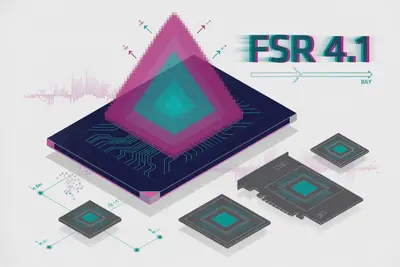
AMD is rolling out FSR 4.1 to RDNA 3 graphics cards ahead of its promised July timeline, with RDNA 3 APU support also in development.
Apple's latest iPad Air jumps to 12GB of RAM with the M4 chip, edging ahead of some laptops on paper.
A three-armed robot with a tactile sensor can now slice and plate salmon sashimi, built by a Norwegian research team.
Pixel sensor firmware throttles DPI at low speeds, affecting even flagship models.
A SemiAnalysis teardown of Huawei's Kirin 9030 finds SMIC's 7nm process beats Intel 18A on metal pitch but trails on density by 38%.
A hardware audit finds the GB10 platform exposes only GPU wattage, leaving agentic AI workloads' real energy costs unmeasured.
Pruning lookup-table matrix multiplication on FPGAs delivers 4.2x better energy efficiency than CUDA, though accuracy takes a moderate hit.
IMEC expanded its RF silicon interposer platform to handle signals up to 325GHz, targeting the manufacturing bottleneck that could keep 6G from scaling.
Researchers stripped surplus Pixels to bare motherboards and chained them into a Kubernetes cluster that already beats AWS on grading latency.
Adani and Jabil announced plans for an AI hardware manufacturing platform in India, but disclosed no investment figure, timeline, or product specifics.
China's Supreme People's Court upheld an injunction against Infineon, handing domestic rival Innoscience a major win in an ongoing multi-region patent dispute.
Overwhelming demand let Nvidia upsize a $20 billion offering to $25 billion after orders topped $85 billion in a single afternoon.
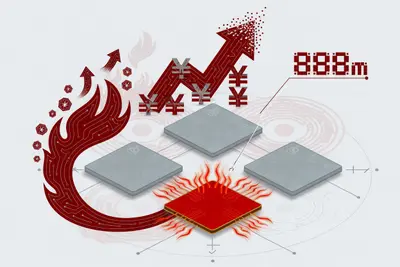
Tencent-backed Enflame is the final member of China's homegrown AI chip quartet to win stock exchange listing approval, seeking $888 million.
Multiple gaming handhelds built on Intel's Arc G3 debuted at Computex 2026, marking the chip's entry into a segment AMD has owned since the Steam Deck.
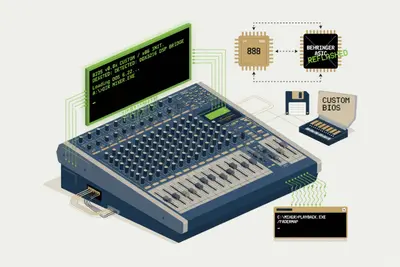
A hobbyist wrote a custom x86 BIOS from scratch to boot DOS on the Behringer DDX3216, a rack-mount digital mixer with no business running a general-purpose OS.
Shanghai Jiao Tong University's new photonic computing lab signals Beijing's bet that light-based chips can substitute for the silicon it can no longer import.
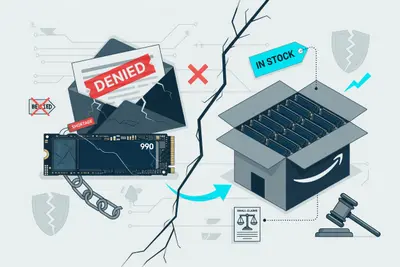
Louis Rossmann is taking Samsung to small claims court after it cited a memory shortage to deny his SSD warranty, while selling the drive on Amazon.
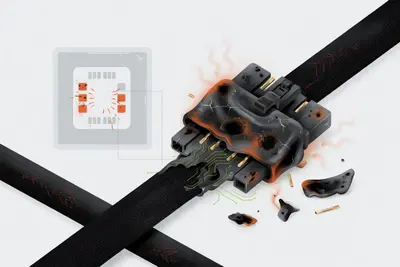
A photo shows a fried ROG Equalizer connector, the cable Asus sold as the fix for Nvidia's long-running melting problem.
DJI filed two patent suits against Insta360's Luna series on the same day the Luna Ultra went on sale, targeting a market gap DJI itself cannot fill.
After export controls gutted its GPU sales in China, Nvidia is now pitching its Vera CPU, a product that may sidestep current restrictions.
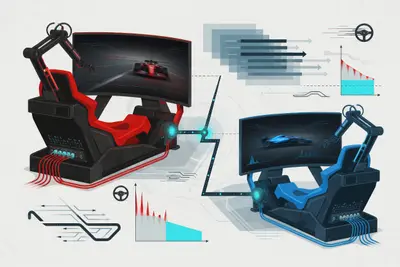
Latency, not motion range or graphics fidelity, is the key reason Formula 1 driver simulators cost 100 times more than high-end consumer rigs.
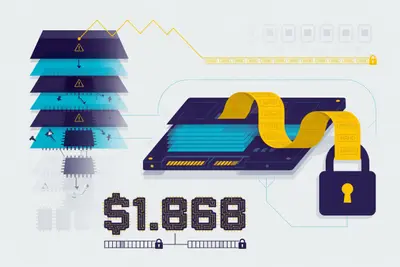
The SSD maker locked in a two-year fixed-price chip deal worth more than half its annual revenue, signaling it expects no relief from the memory crunch anytime soon.
Hardware defects in the haptic touchpad and display have pushed Framework's Pro-tier 13-inch back by roughly four weeks.
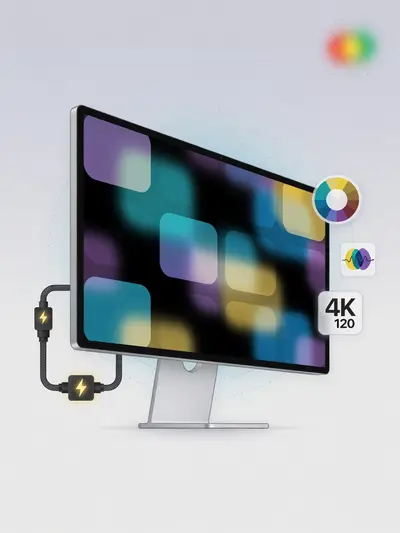
The PRO MAX 271UPXW12G offers 4K at 120Hz with Mac-specific color sync and brightness controls, positioning itself in a gap Apple hasn't filled.
Soaring electricity demand from AI data centers is drawing GM, Ford, and others into a stationary battery market Tesla has spent years building.
The South Korean shipbuilder is partnering with a Greek shipowner and Supermicro to put server racks on ships powered by LNG fuel cells.
The Luna Ultra pairs a Leica Summicron lens with a detachable OLED screen that works as a wireless controller up to 65 feet from the camera.
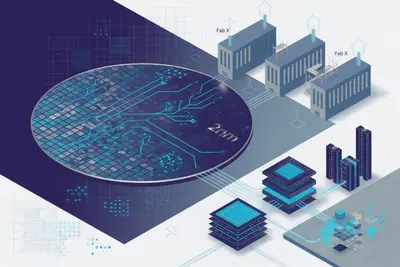
TSMC is simultaneously ramping 2nm production across multiple fabs and scaling CoWoS packaging capacity to match.
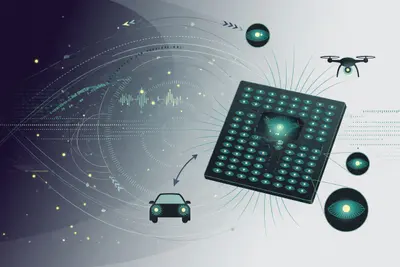
A Penn State sensor that mimics how the eye handles brightness shifts could help self-driving cars and robots stay accurate when lighting changes fast.
The $79.99 Mobi Fold collapses to pocket size and charges for a month in one minute, targeting workers who never stay in one place.
The server maker says it has $39 billion in AI orders from 20-plus customers but needs fresh equity just to afford the components.
Tokyo-based Fujikura is raising prices on AI data centre cables, and its CEO's reasoning is simple: the hyperscalers have nowhere else to go.
A developer documents porting the ThinkPad X61 to Coreboot, giving the 2007-era laptop an auditable, open-source firmware stack.
A Chinese startup says nanoimprint technology lets it make photonic wafers without the Western lithography equipment that export controls have largely cut off.
A complete annotated teardown of the TI-84 Plus operating system is now public, the most thorough look inside Texas Instruments' locked-down firmware yet.
Google ordered over three million chips from Intel, while Nvidia tests its fabs, suggesting the industry is quietly hedging its TSMC bets.
Amazon locked in a multibillion-dollar, multi-year supply agreement with Corning for the optical fiber, cable, and connectivity hardware powering its expanding US data centers.
The UK startup, backed by AMD and Aria, wants to replace every electrical switch in the data centre core with nanosecond-scale photonics.
The agreement gives SK Hynix a formal co-development role in the high-bandwidth memory powering Nvidia's next accelerators, not just a supply contract.
An engineering sample of Nvidia's never-released RTX 3050 Ti desktop GPU surfaced in leaked photos, revealing the Ampere card that quietly never shipped.
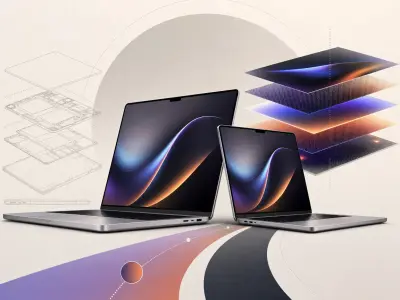
A supply chain report suggests Apple is planning its biggest MacBook redesign in years, pairing a new display technology with two chassis options.
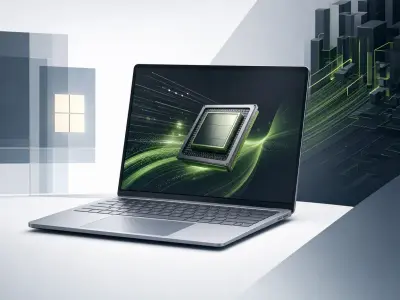
At Computex 2026, Microsoft designers explained the engineering choices behind putting a chip built for AI workstations into a laptop.
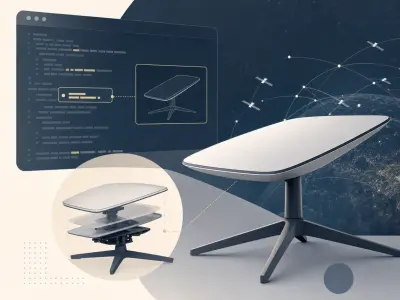
A Ukrainian repair specialist found a 'rev5' dish reference buried in a Starlink firmware update, suggesting SpaceX has a new hardware generation in the pipeline.
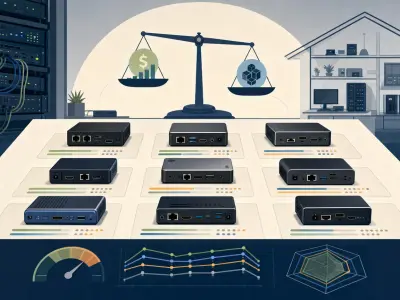
Jeff Geerling ran a hands-on comparison of IP KVM devices, the hardware that gives remote keyboard and BIOS-level access to a networked machine.
The component maker's latest enclosure pitches itself on performance, but seven HDD bays tell a more specific story.
Waymo has partnered with B2U Storage Solutions to redirect spent battery packs from its autonomous fleet into stationary grid storage.
Apple's incoming CEO has reportedly cancelled both Vision Pro 2 and Vision Air, replacing them with two smart glasses products planned for 2027 and 2029.
The refreshed AX1600i adds pin monitoring, new GPU power sockets, and a reduced footprint - but Corsair hasn't named a price yet.
The world's leading chipmaker says AI orders have exceeded what it can deliver, despite an ongoing US factory expansion.
Gigabyte's new case integrates a 16-inch display directly into the chassis, the logical endpoint of PC hardware's screen-on-everything era.
Jensen Huang confirmed two more RTX Spark generations are already in the pipeline, signaling to OEMs and developers that this platform is not a one-off.
A hands-on comparison found a dramatic performance gap between two XPS configurations running Intel's new Panther Lake chips.
The ROG Strix XG259QWPG Ace raises the refresh rate ceiling, while a portable ePaper display offers a quieter counterpoint for everyday screen users.
IDC forecasts a 17.3% average price increase for PCs in 2026 as a memory shortage that was supposed to ease keeps grinding on.
Shown at Computex 2026, MSI's tri-mode OLED gives gamers a menu of refresh rate options, while a Mac-focused display targets the port-starved productivity crowd.
The follow-up to last year's disputed Majorana 1 chip promises a thousandfold jump in qubit reliability, though independent verification is still nowhere in sight.
The Surface RTX Spark Dev Box is a new stationary machine from Microsoft built for AI development, aimed at developers who want desk-bound compute power.
Microsoft's new miniature developer PC runs Nvidia's Arm architecture, a quiet departure from its years-long Qualcomm partnership.
A compact Windows desktop powered by Nvidia's RTX Spark chip lets developers run AI models locally, without the cloud.
A deep dive finds macOS VMs on Apple Silicon run at near-native speed and can shrink to surprisingly small sizes.
The ride-hail giant plans to turn its millions of drivers into a data-collecting network for autonomous vehicle companies.
The cheapest Mac mini is gone — the compact desktop now starts $200 higher than before.
Chip shortages and AI hobbyist demand mean the compact desktop won't be easy to find until late summer.
The Japanese bathroom fixture company is doubling down on ceramics used in NAND production as the industry faces a supply crunch.
Apple executives acknowledged they misjudged how many people would want Macs for AI work, and the shortage isn't ending soon.