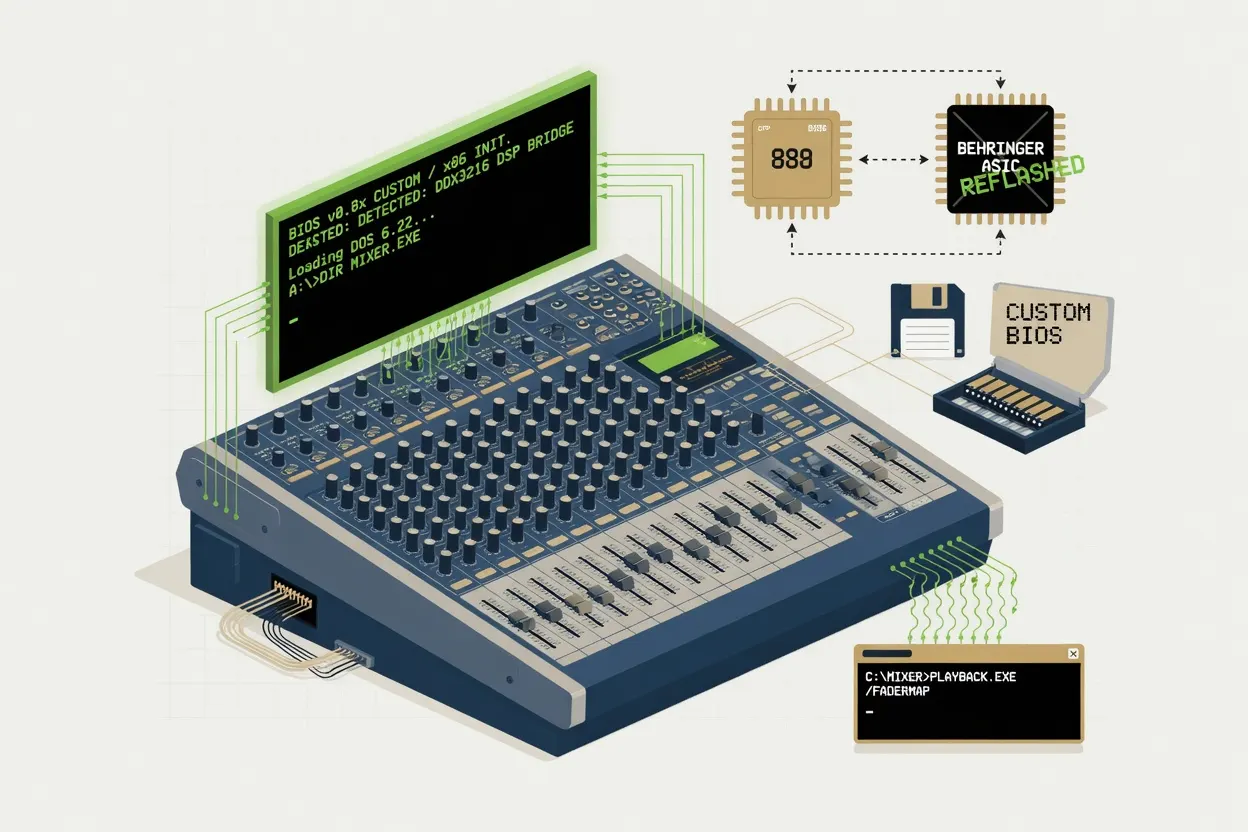
A hobbyist built an x86 BIOS from scratch and used it to boot DOS on a Behringer DDX3216 digital mixing console.
The DDX3216 is rack-mount audio gear — 16 channels, lots of knobs, zero general-purpose computing ambitions. It turns out the hardware contains enough x86-compatible silicon that, given the right firmware, it will run a decades-old operating system. The catch: no BIOS ships with it, because nobody at Behringer ever thought one would be necessary. So the author wrote one. A BIOS implementation from scratch means wiring up interrupt handling, memory mapping, the PC/AT compatibility layer, and enough disk I/O stubs to satisfy DOS before it gives up and panics.
The achievement matters because writing a BIOS is genuinely hard — it is the layer that every OS assumes exists and takes for granted, which is exactly why nobody writes one unless they have to. Doing it on audio hardware exposes something that keeps showing up in embedded teardowns: manufacturers reach for cheap, capable x86-compatible chips and lock them down with purpose-built firmware, leaving a general-purpose computer sleeping inside products that will never be asked to compute anything general-purpose.
The DDX3216 has been discontinued for years, so the practical upside here is zero — which is, historically, the ideal condition for this kind of project.