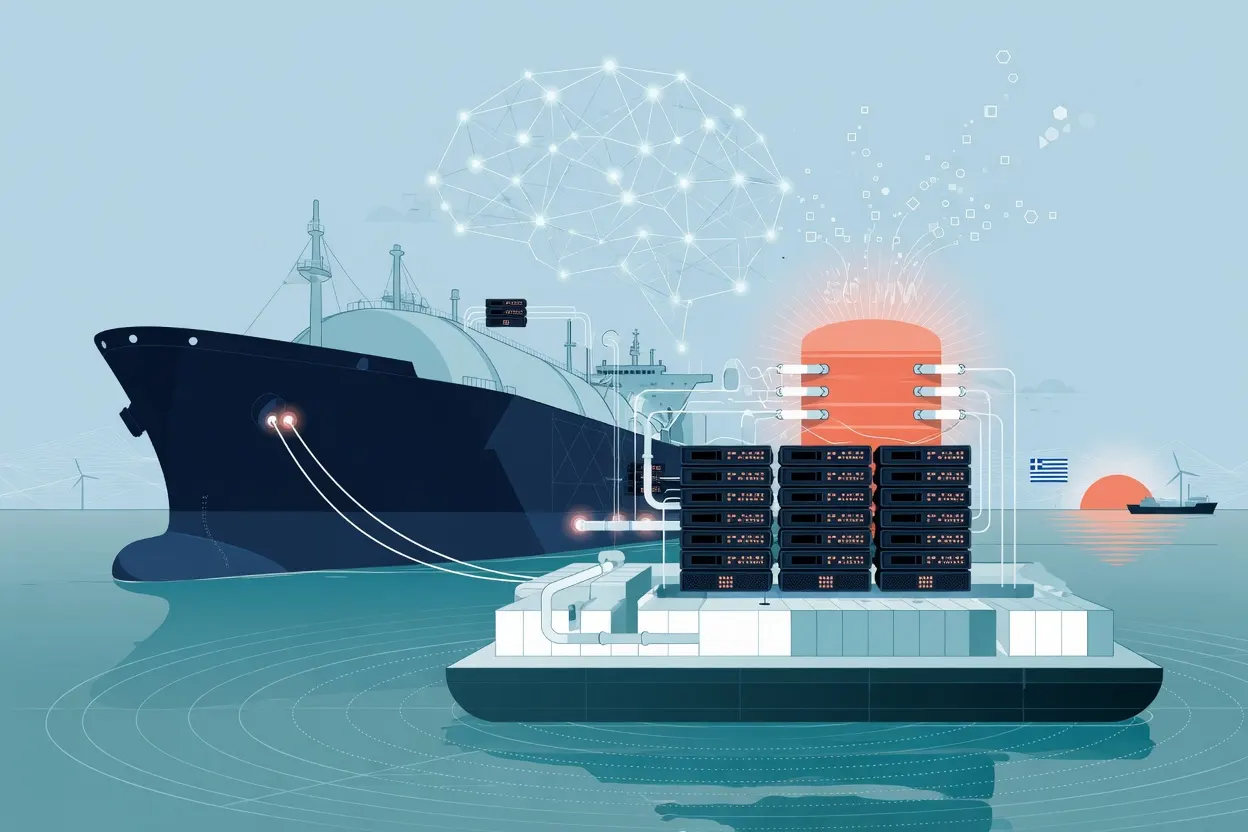
Samsung Heavy Industries wants to run AI workloads on ships.
The South Korean shipbuilder has joined forces with a Greek shipowner and Supermicro to develop 50-megawatt floating data centers — vessels purpose-built to house server racks at scale. Power comes from solid oxide fuel cells burning liquefied natural gas, letting the ships bypass the land grid entirely. No commercial launch date was announced for the partnership.
The pitch makes sense in a market where power-hungry AI clusters are exhausting what land-based grids can deliver. Floating data centers let operators park capacity wherever maritime access, fuel supply, and regulatory patience align — including, potentially, outside any particular jurisdiction's permitting process. That last part is either a feature or a red flag, depending on who you ask.
Samsung Heavy isn't alone. Japan's MOL is building a 73-megawatt floating data center with Karpowership, targeting a 2027 deployment. When two major shipbuilders move on the same concept within months of each other, it stops being a novelty and starts being a market.