Lead story / nasa
NASA Abandons Plan to Save Falling Swift Observatory
NASA has scrapped its plan to rescue the Swift observatory, leaving the satellite to fall out of orbit and re-enter Earth's atmosphere later this year.
The Revision reporting on Science — 91 stories on the wire, decoded into one clear voice.
NASA has scrapped its plan to rescue the Swift observatory, leaving the satellite to fall out of orbit and re-enter Earth's atmosphere later this year.
A second Chinese launch company recovered an orbital-class rocket booster, a little more than a month after the country's first such landing.
The startup's Zhuque-3 landing puts LandSpace in the small club with SpaceX and Blue Origin, narrowing China's reusable-rocket gap with the US.
A University of Cambridge team plans a small satellite that hides behind the Moon to catch radio whispers from the early universe.
A new study of Phoenix data centers finds their waste heat raises nearby air temperatures by as much as 4 degrees, adding a local climate cost to the AI boom.
China is racing toward a before-2030 crewed Moon landing, threatening to beat NASA's Artemis III, now targeted no earlier than 2027.
A topology-based deep learning model predicted how two chemical swaps raise polymers' heat resistance, and lab tests then confirmed it.
Researchers used active learning to find an optimal recipe for branched ReSe2 dendrites in a fraction of the possible experiments, then modeled why it works.
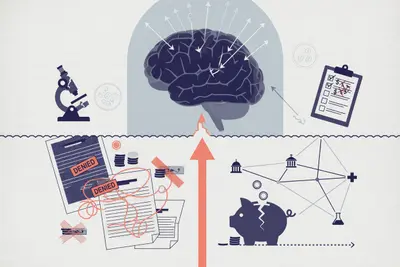
A new fMRI decoding framework called SemVideo uses layered semantic guidance to turn brain activity into more coherent reconstructed video than prior methods.
A stretched-grid probabilistic model outperforms an operational forecasting system on temperature and pressure but still struggles with peak storm winds.
A new image-based encoding hits 90.8% accuracy identifying phage virion proteins, but multi-class results still lag.
A new bidirectional Grover search variant needs fewer iterations to find multiple hidden items in an unsorted database, researchers report.
A neural network method reuses quantum shadow data across tasks, cutting the measurement overhead in studying large quantum systems.
A new proof shows a classic random-walk algorithm can construct efficient neural networks that solve a fundamental equation in physics and engineering.
A new codec called AudioTQ applies AI weight-compression math to raw audio, shrinking file sizes by up to 74 percent while running on a single CPU core.
A generative AI model filled gaps in satellite data to show that narrow ocean fronts, not open water, do most of the work shuttling energy between scales.
A new framework filters out noisy genes and models spatial context, outperforming prior methods for aligning tissue images with gene activity.
A new AI model reconstructs the post-drug brain blood flow scan doctors use to decide on bypass surgery for Moyamoya patients, using only the baseline scan.
A new graph neural network separates layer-specific interactions to predict bilayer material properties faster than DFT-based methods.
A new study applies six responsible AI principles to groundwater forecasting models in China's Heihe River Basin, where Transformer outperformed LSTM.
A new framework turns plain-English questions into SQL queries against battery storage telemetry, flagging voltage violations and power issues automatically.
A new research framework scores platform governance changes by how well they anticipate creators, sellers, and moderators gaming the new rules.
A new simulation shows Los Angeles air taxi networks could need up to sixteen vertiports but only twelve aircraft to meet peak demand.
A distributed scheduling method lets satellite constellations slot in emergency imaging without central control, nearly matching centralized performance.
Researchers combined years of teen survey data with family and peer networks to flag substance use risk earlier and more accurately than standard models.
UC San Diego surgeons used teleoperated humanoid robots to extract gallbladders from live pigs, a claimed first for the field.
A Nature-published preclinical trial shows human-controlled humanoid robots completing minimally invasive surgery on live pigs for the first time.
A preclinical trial at UC San Diego used teleoperated humanoid robots to complete two gallbladder removals on non-primate mammals — a first.
A new proof shows quantum machine learning algorithms can solve a physics prediction task that no classical algorithm can match in polynomial time.
A new UAV pipeline called EcoVision uses transformer models to classify salt marsh grasses at 2x2m resolution, matching traditional field surveys within 8%.
Researchers used physics-informed neural networks to model wave behavior across steel-aluminum boundaries, cutting reliance on costly finite-element runs.
A new paper argues that chaotic systems are actually easier for AI to reverse-engineer from data — and stable, predictable ones may be nearly impossible.
GenShin uses a graph neural network to rank proteins that coat lipid nanoparticles, potentially replacing costly mass spectrometry screening.
A new training method for forest biomass models cuts estimation error by swapping out coarse plot averages for spatially continuous reference data.
HamQASBench groups molecules by quantum structure rather than identity, catching failure modes that standard energy-accuracy metrics consistently miss.
Researchers built a verification framework for underwater AI that flags uncertain classifications before marine biologists waste time on bad data.
A new AI framework trains on camera images and sensor data but drops the cameras at inference, cutting costs without losing accuracy.
Why3-py translates Python statistical programs into a format that can be mathematically checked for hidden assumptions and misuse.
A new transformer model fuses radar and satellite imagery to map Amazon carbon stocks, clearing the ESA's sub-20% error benchmark.
Researchers used ChatGPT to help crack a stochastic-process uniqueness problem open for more than 35 years, then verified every step themselves.
Researchers tested two quantum optimization strategies on a gene-editing problem, and the structural approach beat penalty tuning by a wide margin.
A new automated pipeline converts CT segmentations into physics-ready cardiac models, enabling large virtual patient cohorts for in silico trials.
A Nanyang Technological University team fitted remote-controlled cockroaches with 3D-printed oxygen suits for disaster rescue in flooded terrain.
A neural network called Aframe matched the sensitivity of classical gravitational-wave search pipelines while running on a single consumer-grade GPU.
A new study finds that AI-learned satellite image embeddings outperform hand-crafted basin attributes when predicting river flow in ungauged regions.
Researchers validated a computer vision pipeline that extracts 3D movement data from a single phone video, rivaling expensive lab equipment.
A hybrid graph neural network and Transformer decoder brings quantum error correction thresholds within striking distance of theoretical maximums.
A hybrid model embedding thermodynamic laws directly into its architecture outperforms pure deep learning for high-pressure green-hydrogen safety.
Researchers built a light-curve model that handles astronomy's messy, irregular data better than hand-crafted features on 15 of 16 benchmarks.
The launch startup acquires Iridium's 80-satellite network in a cash-and-stock deal Beck calls one of the most transformative in the space industry.
Swiss researchers have built a pixel that can emit and capture light, potentially letting screens double as cameras without separate hardware.
An internal analysis supports NASA's cancellation of two Artemis-era programs, finding they were massively over budget and still nowhere near done.
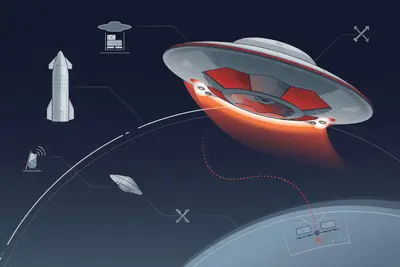
SpaceX is launching a secretive reentry vehicle called Starfall this week to demonstrate point-to-point cargo delivery from low-Earth orbit.
A new diffusion model turns coarse global climate output into 0.25-degree regional fields, with built-in uncertainty and far less compute.
Amazon and QuEra say useful error-corrected quantum computers could arrive by 2028, years ahead of where most of the field puts the milestone.
A two-stage training method reduces error in neural-net equation solvers by up to 60 times over standard single-pass approaches.
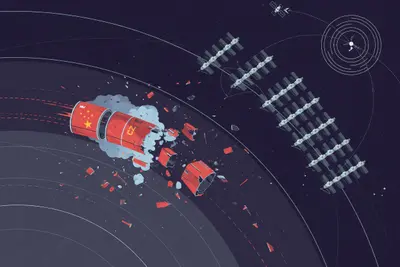
A Zhuque-2E upper stage shattered in low-Earth orbit after last week's launch, scattering debris through one of the most congested stretches of space.
A new method estimates causal treatment effects across siloed datasets by sharing only aggregate statistics, not individual records.
A new diffusion model framework replicates regional precipitation patterns well but still misses the most severe weather events.
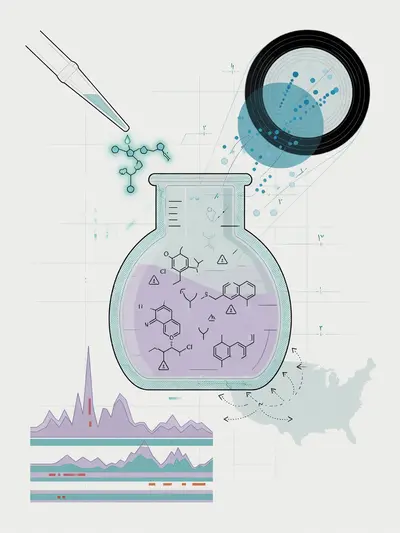
A new study detected dangerous endocrine disruptors in US breast milk, intensifying pressure on regulators who have long moved slowly on these compounds.
A newly posted preprint called Maxproof appears on arXiv, drawing modest attention on Hacker News.
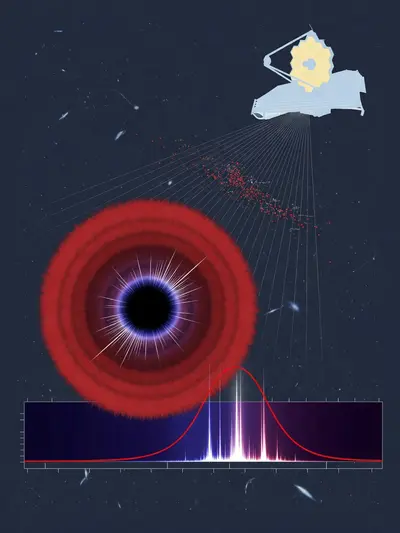
New spectral analysis of GLIMPSE-17775 suggests these early-universe objects are quasars buried in dense gas, and probably smaller than prior estimates.
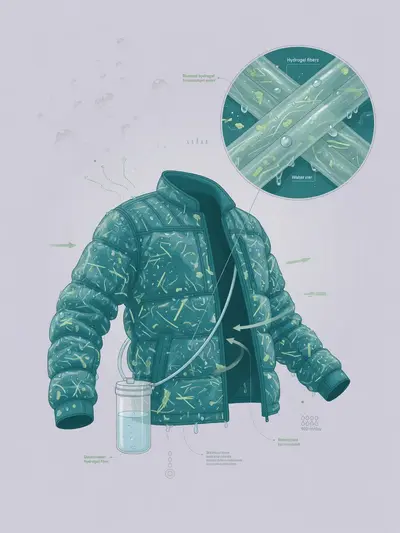
Researchers wove a biomass-derived hydrogel fiber into a wearable that passively harvests up to 900 ml of drinking water from ambient air each day.
The network that choked on Artemis I survived the crewed mission without throttling science data — helped more by a shorter flight than any capacity fix.
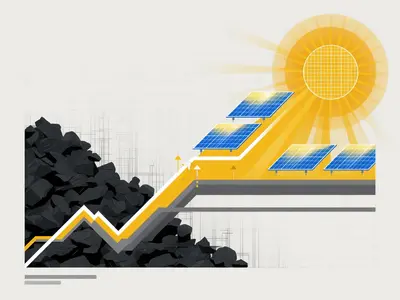
A milestone a decade in the making: US solar farms collectively outproduced coal plants for the first time on record.
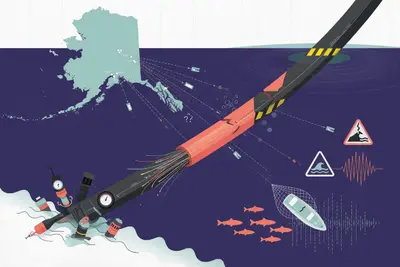
The Ocean Observatories Initiative, a $368M sensor network used by fishers, coastal planners, and the military, is slated for decommissioning.
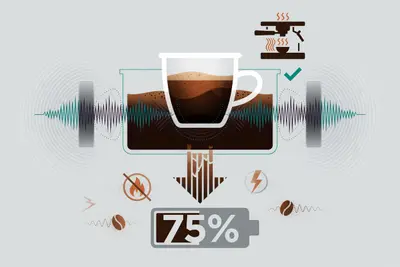
An ultrasonic method from UNSW Sydney extracts espresso at room temperature, cuts energy use by 75%, and fooled 100 blind tasters.
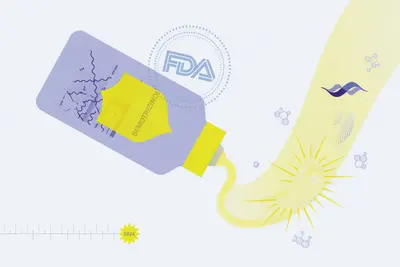
The US just approved bemotrizinol, the first new sunscreen ingredient in 26 years - a UV filter that Europe and Asia have used safely since 2000.
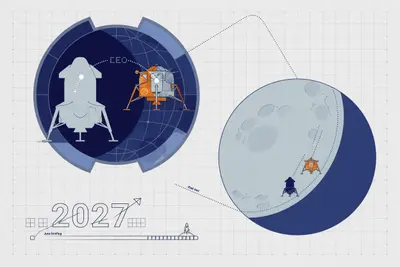
NASA named its lunar landing crew and confirmed astronauts will dock with both a Blue Origin and SpaceX lander in low-Earth orbit before any Moon descent.
A new facility on the seabed combines offshore wind power with seawater cooling, skipping both the grid and the chillers.
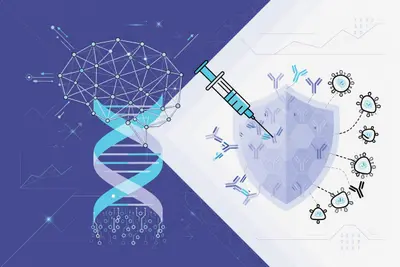
Cambridge researchers used AI to find conserved viral features, then built a needle-free DNA vaccine that just cleared its first human safety trial.
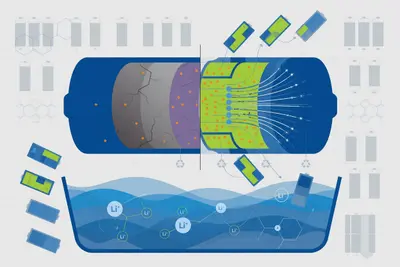
A Cornell University process restores spent lithium-ion battery cells to 95% of original capacity and cuts recycling costs by 56%, challenging the industry's shred-and-smelt default.
Commonwealth Fusion submitted five peer-reviewed papers modeling SPARC at 400 MW - more rigorous than the press-release promises that usually fill this field.
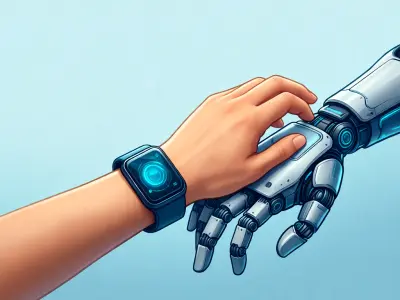
A ring of wrist-worn ultrasound transducers can track every finger movement with enough fidelity to control a robot hand in real time.
A YouTube investigation backed by a whistleblower and over 20 battery experts says Donut Lab's production-ready solid-state cell is just lithium-ion.
China's drug regulator approved NeuraMatrix's NEO implant for spinal cord patients, putting it ahead of Neuralink on the commercialization timeline.
One of Rassvet's 16 satellites re-entered Earth's atmosphere within weeks, a rough start for Russia's answer to Starlink.
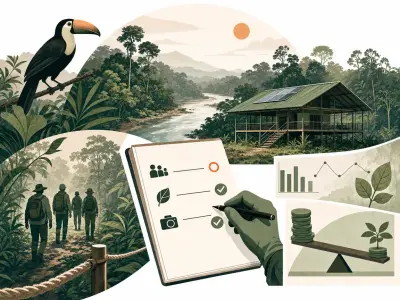
A citizen science station in the Peruvian Amazon is building a model where tourists collect real data — and the research funds conservation directly.
Used batteries from Waymo's robotaxi fleet will serve as stationary grid backup storage in California and Texas energy projects.
A 1,000-fold qubit reliability leap, driven partly by agentic AI, pushes Microsoft's scalable quantum computer target forward by four years.
A new Space Force contract makes SpaceX the primary builder of Trump's missile-tracking satellite layer, just as the company eyes a record IPO.
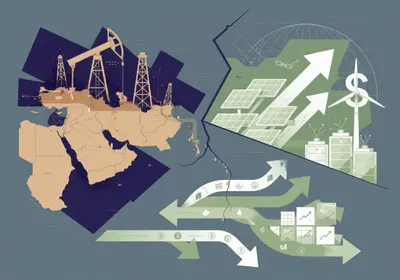
Money is flowing into renewables as nations seek energy independence during ongoing Middle East instability.
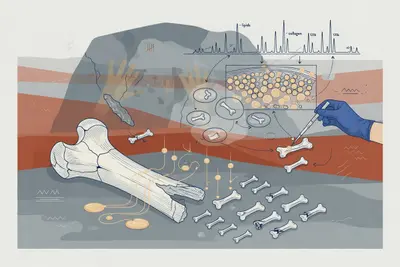
Archaeologists using chemical analysis found Neanderthals deliberately processed animal bones for fat, challenging assumptions about their cognitive abilities.
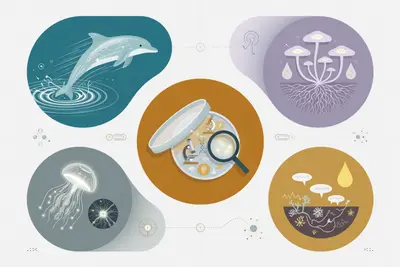
From why dolphins swim so fast to how mushrooms use urine to talk to each other, a batch of research that deserves more attention.
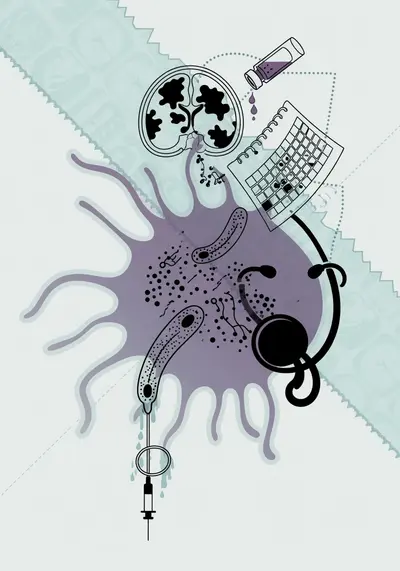
Doctors finally diagnosed a man's mysterious worsening condition as a parasitic infection, but treatment came too late.
A leading researcher argues that funding gaps and fragmented efforts—not just biology—are slowing progress on dementia treatments.
Researchers found zinc and manganese in scorpion stingers, but the evolutionary driver remains unclear.
The suborbital tourism business was supposed to take off years ago. Now one of its pioneers is burning the last of its cash.
The company that once promised to launch 3,200 satellites but has been slow to launch just reached another milestone in its race to compete with Starlink.
Researchers developed a treatment that may reverse osteoarthritis damage with a single injection, though it's years from availability.
Ukraine's strike on Russia's primary spaceport forces a secrecy shift in orbital operations.