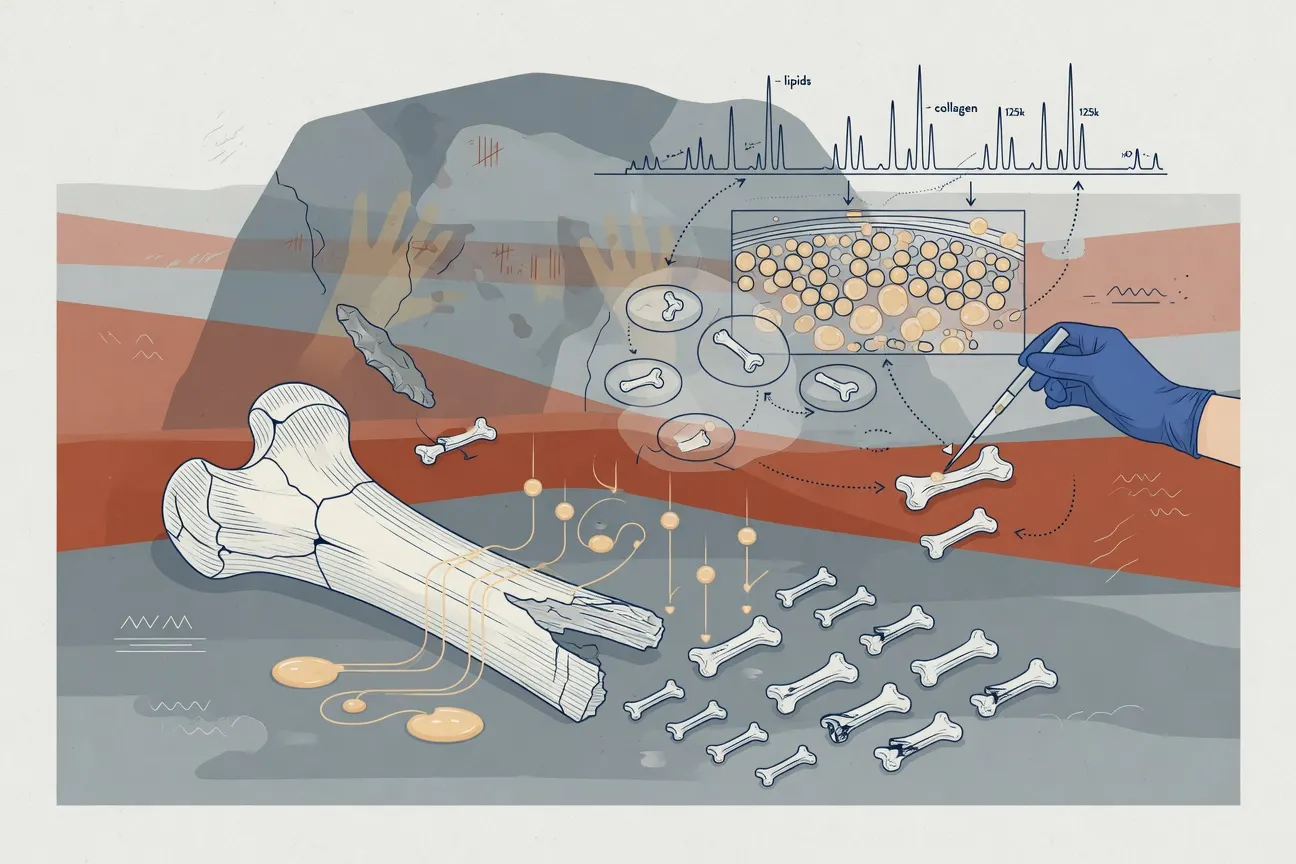
Researchers at Leiden University analyzed 125,000-year-old animal bones from a site in France and found chemical signatures indicating deliberate fat extraction — essentially running small-scale rendering operations.
The team examined bone fragments for specific lipid patterns that only appear when marrow is heated and processed, rather than simply consumed raw. This suggests Neanderthals understood that boiling bones yielded more calories than eating marrow directly, and they planned around this.
Why it matters: This adds to a growing pile of evidence that Neanderthals weren't brutish scavengers but capable of planning complex food-processing operations. The ability to conceptualize, plan, and execute a multi-step transformation process — bones to fat — requires cognitive abilities we haven't traditionally credited them with. It also raises questions about how we define "technology" — if rendering fat counts, Neanderthals had it thousands of years before Homo sapiens.
The findings join a recent trend of using biochemical analysis to read Neanderthal behavior in ways traditional archaeology couldn't. The tools have gotten better at reading what people actually did, not just what they left behind.