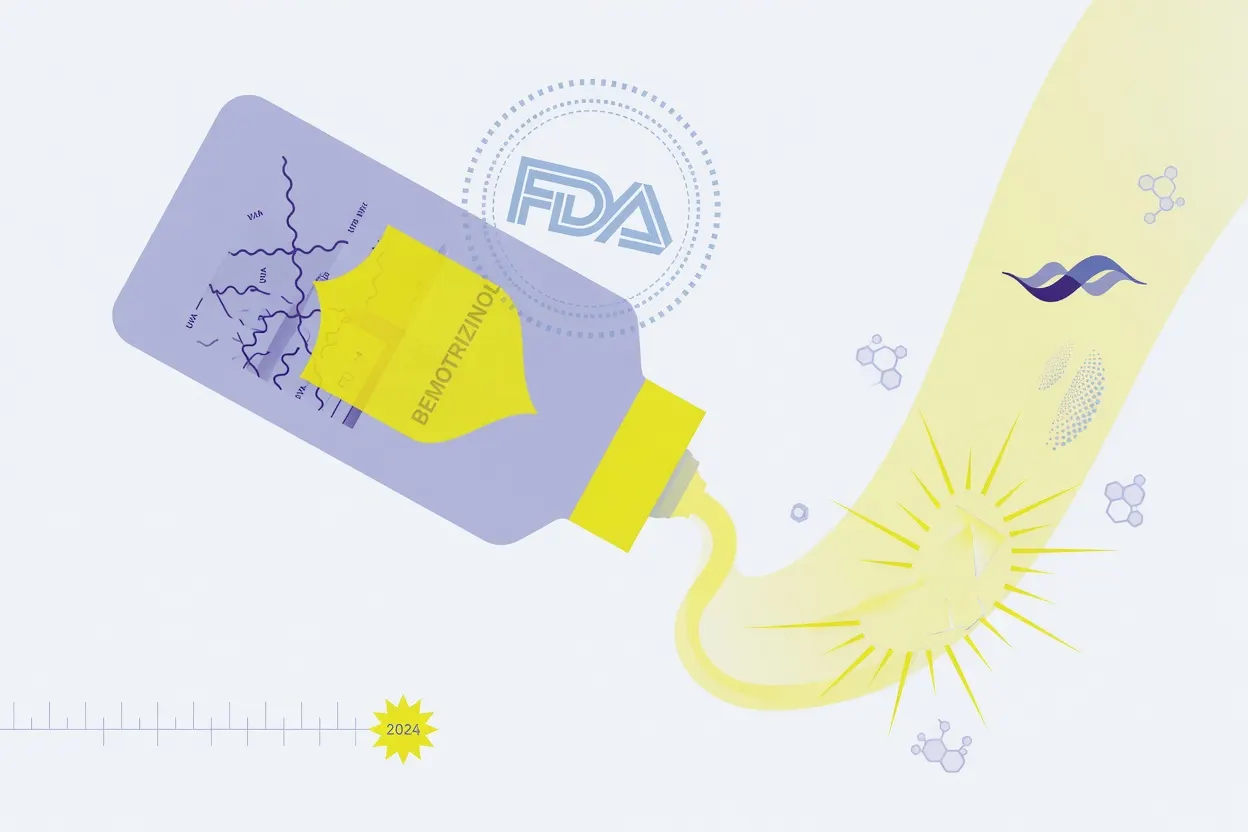
The FDA has approved bemotrizinol as an active sunscreen ingredient - the first addition to the US-approved list since 1996.
The ingredient has been in use in European, Asian, and Australian sunscreens since 2000, where it earned a following for enabling lighter, non-greasy formulations. It filters both UVA and UVB rays, doesn't leave a white cast, and is more photostable than most existing chemical sunscreen ingredients - meaning it degrades more slowly on skin. With the approval, it becomes only the third ingredient to receive GRASE status (generally recognized as safe and effective), joining the two mineral filters, zinc oxide and titanium dioxide, that previously held that designation alone. DSM Nutritional Products will bring it to US shelves first, in a product called Parsol Shield expected later this year; other manufacturers get access in roughly 18 months.
The approval gap exists because the US classifies sunscreens as drugs rather than cosmetics, demanding clinical evidence that most other countries don't require - even for ingredients with decades of real-world safety data on three continents. That regulatory structure is why consumers here spent 25 years using formulations that dermatologists elsewhere considered outdated. The approval pathway was unlocked by the CARES Act, the 2020 pandemic relief legislation, which created a faster route for over-the-counter drug approvals backed by sufficient existing evidence.
It took a COVID relief bill to fix a sunscreen backlog that had been building since the Clinton administration - the FDA's OTC review process may want to sit with that.