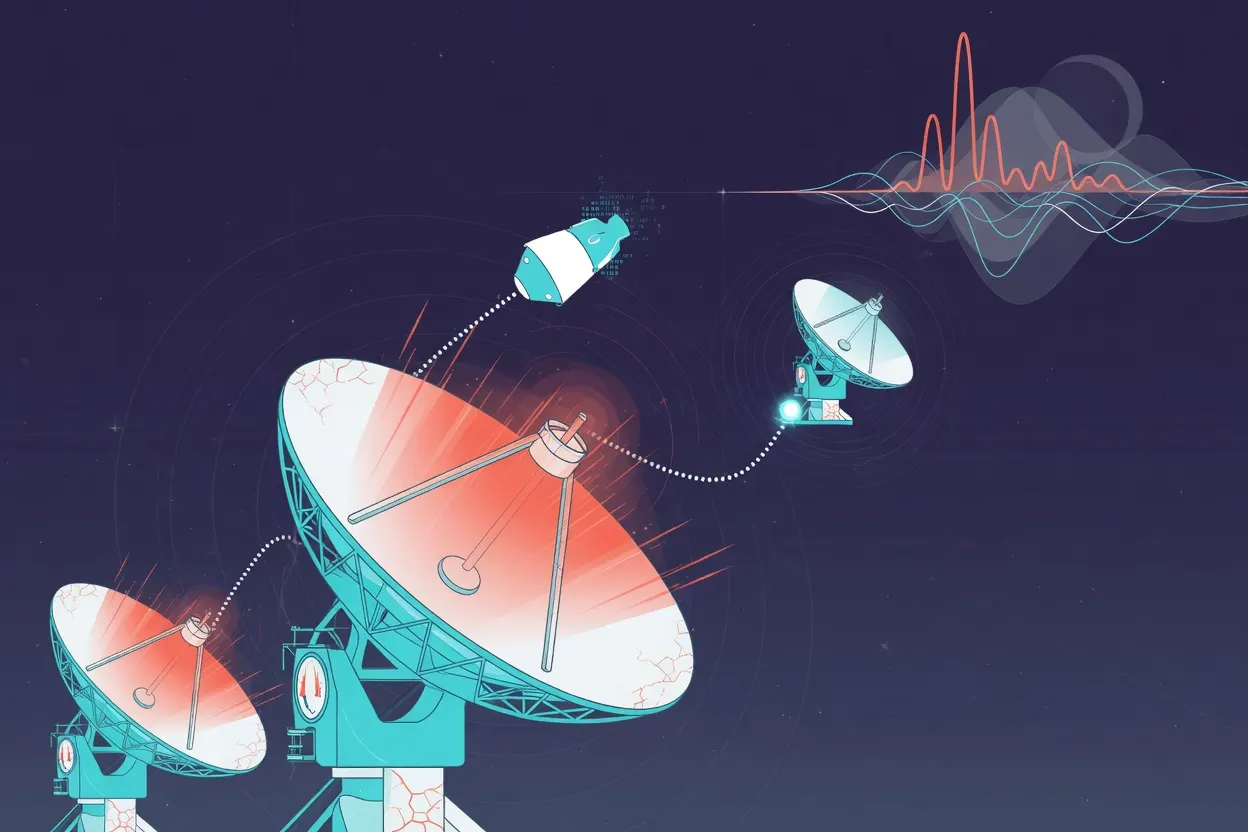
NASA's Deep Space Network made it through the Artemis II crewed mission without repeating its near-meltdown from 2022.
During Artemis I, which flew in late 2022, the global array of deep space antennas — responsible for keeping contact with more than 40 robotic science missions simultaneously — couldn't absorb the extra load of NASA's Orion capsule. Downlinks from the James Webb Space Telescope and Mars rovers were delayed or cut as Artemis I took communications priority. For Artemis II, launched April 1 with four astronauts aboard, NASA's appetite for Orion data was even larger. But the mission lasted just over nine days versus Artemis I's 25, and it carried fewer CubeSats requiring their own tracking and telecom services. Shorter mission, fewer satellites: the math was friendlier.
The DSN is a chokepoint that only makes headlines when something breaks, and the underlying tension — a fixed antenna network serving a growing roster of science missions plus an increasingly demanding crewed program — hasn't been resolved. Artemis III, which involves a lunar surface landing, will almost certainly run higher communications demands and for longer. A nine-day success is not the same as a solved capacity problem.
NASA got a favorable draw this time. The harder question is what happens when a crewed Moon mission doesn't cooperate with the calendar.