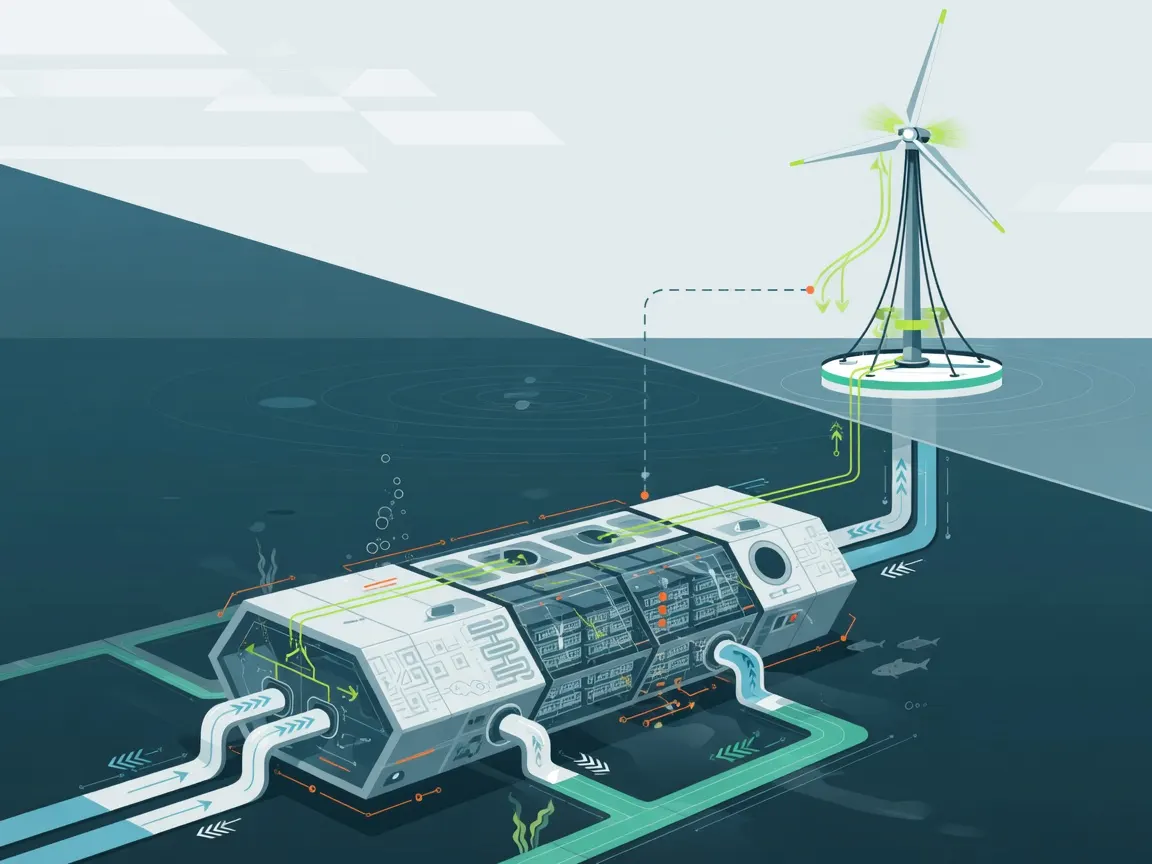
China has opened what it calls the world's first offshore wind-powered underwater data center, with an initial capacity of 24 megawatts.
The facility sits on the seabed and draws its power from offshore wind turbines rather than the national grid. It uses surrounding seawater as a passive cooling system, cutting out the chillers and cooling towers that consume a large share of energy at conventional facilities. At 24 MW the installation is modest by hyperscale standards, but it is positioned as a proof-of-concept combining two engineering bets: that submerged hardware can operate reliably over time, and that dedicated offshore wind can supply steady enough power to run it.
Both bets matter beyond this single site. Cooling is one of the hardest cost problems in data center design, and seawater sidesteps it almost entirely. Pairing the facility with its own wind farm rather than buying renewable-energy credits after the fact also means the sustainability claim is actual rather than accounting.
Microsoft ran a smaller seabed experiment off Scotland's coast and chose not to commercialize it. China's project is larger, wind-connected, and positioned as infrastructure rather than research. Whether it holds up under sustained load will tell the industry more than Microsoft's cautious trial did.