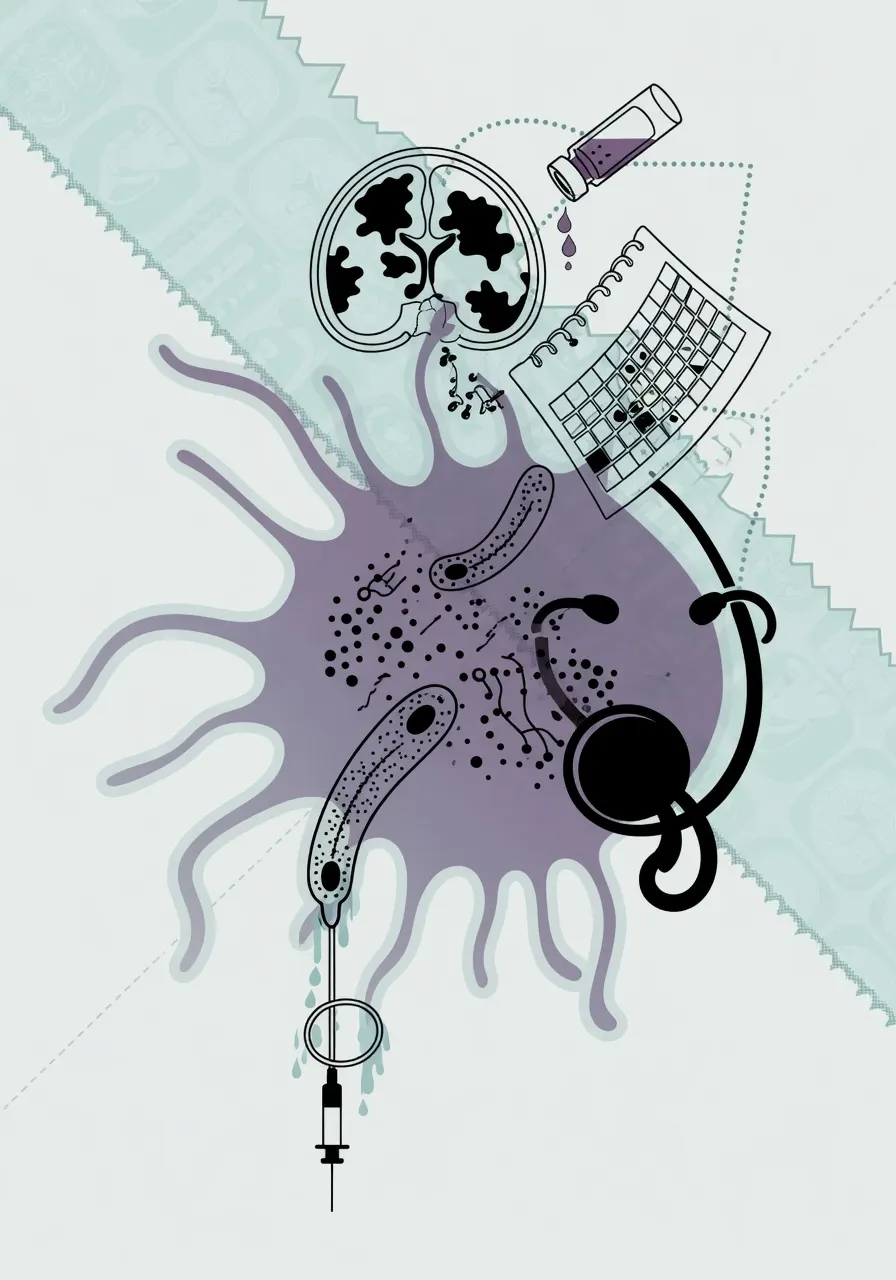
A man died after doctors spent months trying to understand why his skin was covered in necrotic lesions.
The 55-year-old patient's condition baffled physicians. Tests eventually confirmed the lesions were caused by free-living amoebas — microscopic organisms that can invade the body through breaks in the skin. By the time doctors identified the parasite and began treatment, the infection had spread too far. He died despite aggressive antifungal and antiparasitic therapy. Doctors suspect three factors — each unremarkable on its own — combined to create a fatal outcome.
This case highlights how difficult it can be to diagnose rare parasitic infections. The amoebas involved are common in soil and water worldwide, yet severe infections remain exceptionally uncommon. Most doctors will go their entire careers without seeing a case like this.
The lesson, if there is one, is less about avoiding a specific threat and more about the limits of modern medicine when faced with something outside the usual playbook.