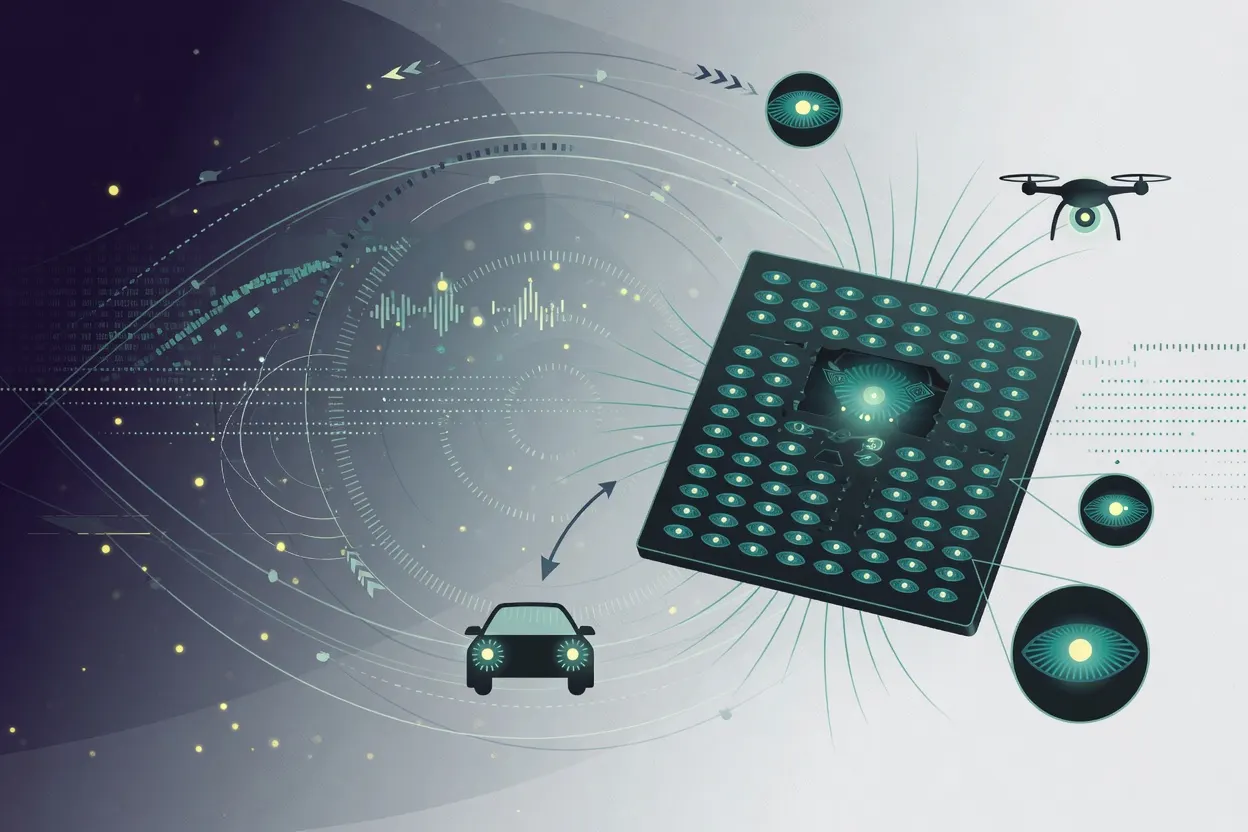
Penn State researchers have built a small sensor that adapts to changing light the way a human eye does — a capability that has long eluded self-driving cars and robots.
The sensor draws on how the eye manages sudden brightness shifts, a challenge that stumps current camera-based perception systems, which are typically tuned for a fixed exposure range and can wash out or go dark when lighting changes fast. The Penn State device targets self-driving vehicles and robots, both of which depend on vision that often falters in conditions that eyes handle routinely. The researchers say the sensor maintains visual accuracy across changing lighting environments.
Lighting transitions are among the more practical, persistent failure modes in autonomous perception, and they're harder to patch in software than they look — compensation algorithms add latency, and latency matters when an obstacle appears in the road. A sensor that handles dynamic range at the hardware level, before a frame ever reaches the processing stack, addresses the problem closer to the source.
The distance from a Penn State lab to a production vehicle is not short; sensor research rarely survives contact with the engineering constraints — cost, size, durability — that automotive suppliers actually demand.