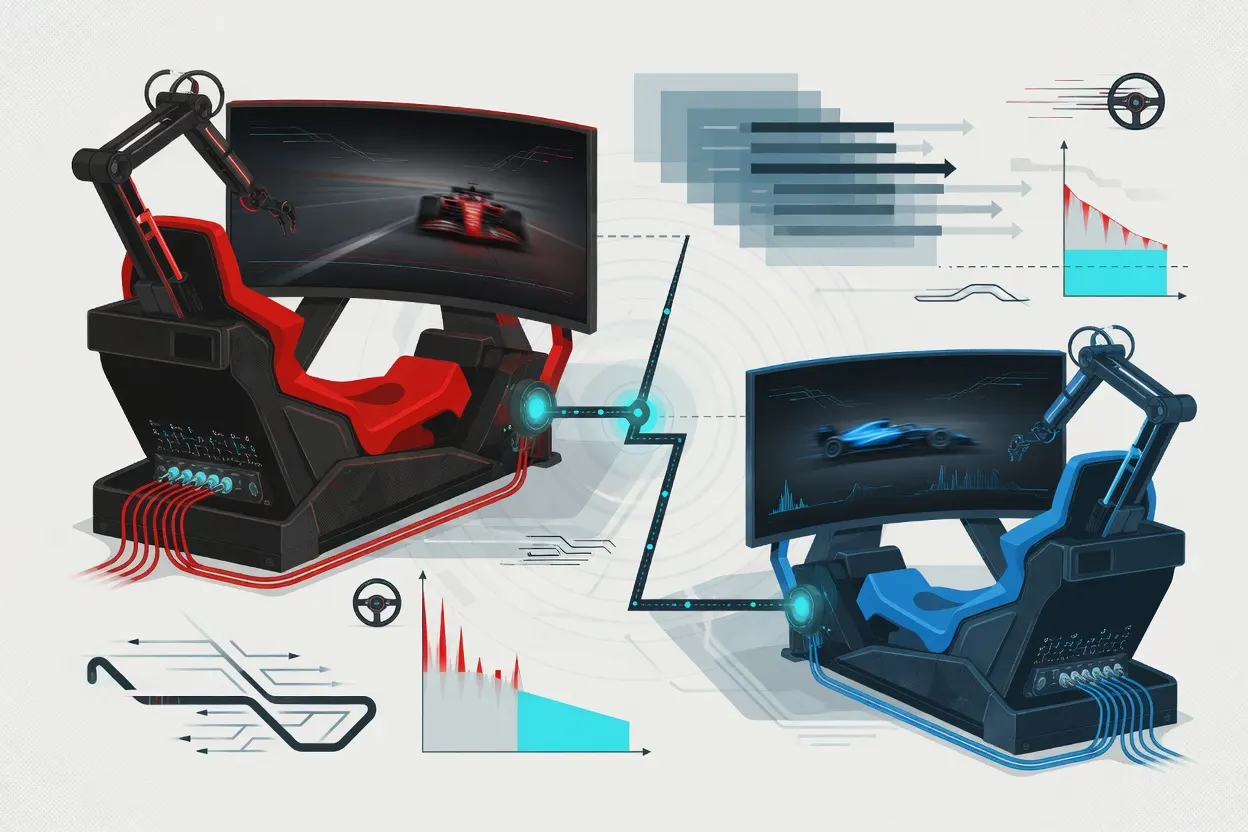
F1 teams are spending up to $10 million per simulator, and the key technical gap separating them from consumer rigs is not motion range or visual fidelity - it is latency.
Dynisma Motion Generators, a UK company that supplies Ferrari, Alpine, and soon Cadillac with driver-in-the-loop simulators, has put some numbers around what justifies that price tag. Founder and CTO Ash Warne describes the problem as a closed loop: driver input triggers a car response, the driver feels that response, and reacts again. Break any link in that chain - add even a small delay - and the simulator stops feeling like a car and starts feeling like a game. F1 teams have been building these systems since the early 2000s, probably starting at McLaren, and the secrecy around them has only deepened.
The latency point matters beyond feel. F1 has steadily tightened restrictions on in-season testing, which means simulator runs are now a primary vehicle development tool, not just a way to keep drivers sharp. Teams use the simulator to develop aerodynamic packages, suspension settings, and tire behavior before those choices are locked in for a race weekend. If the feedback loop is slightly wrong, the data it produces is wrong, and you find out at the circuit. A $10 million simulator is not a luxury; it is the substitute for track time the regulations no longer permit.
Consumer multi-axis rigs now cost tens of thousands of dollars, a dramatic improvement over a decade ago. Whether the gap is narrowing fast enough to matter is something F1 teams will not say - which is, in itself, an answer.