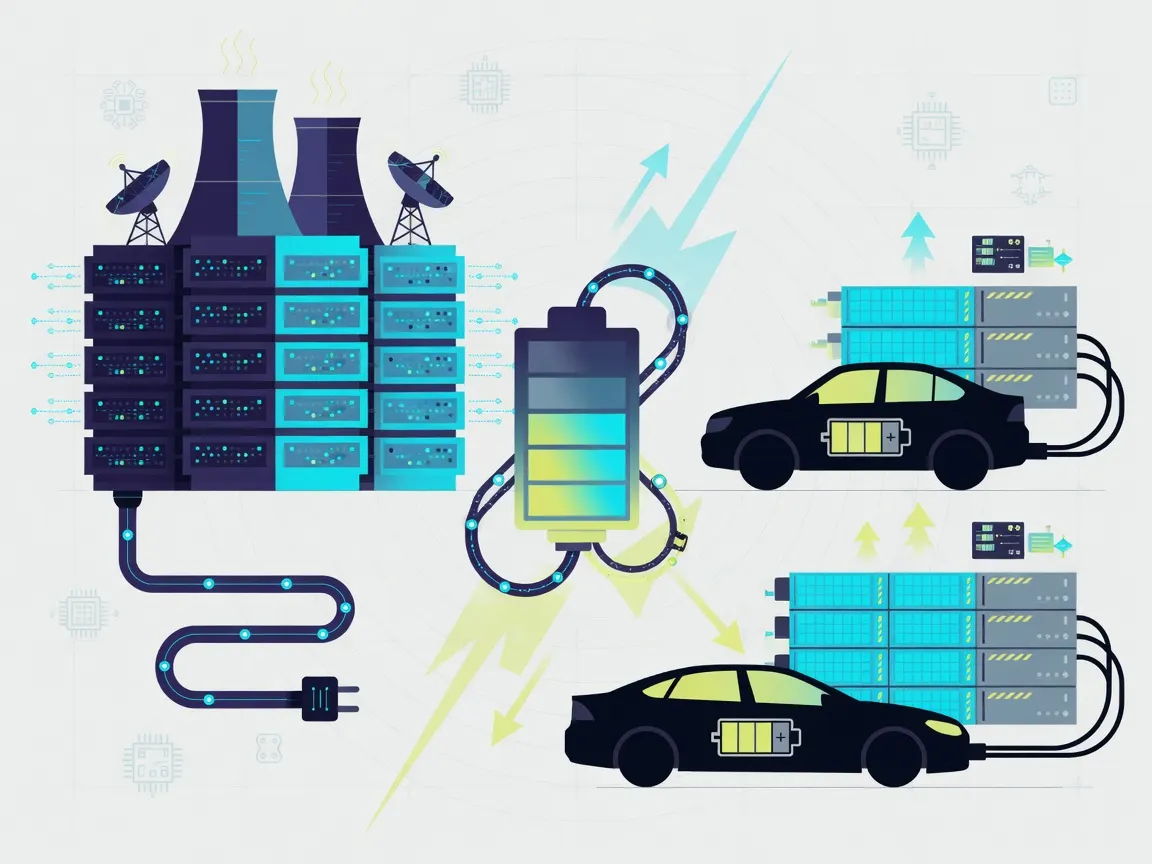
AI data centers need more power than the grid reliably delivers, and that gap is now pulling even car companies into the battery storage business.
Electricity demand from AI infrastructure has grown large enough to push a broad range of companies - including automakers GM and Ford - toward energy storage as a serious business line. The draw is Tesla, which built a battery division alongside its car operation that now looks prescient as power consumption climbs. The logic is not complicated: companies that already know how to manufacture battery cells have a plausible path into grid-scale storage.
For automakers that have found the consumer EV market harder to crack than expected, stationary storage offers a different kind of customer - data center operators signing long contracts, not households agonizing over public charging networks. It also shows how AI infrastructure spending is rippling well beyond the tech sector; the relentless demand for compute is now reshaping what a car company's revenue mix looks like.
Tesla got here first. In hardware markets with long procurement cycles and established customer relationships, that is not a small gap to close.