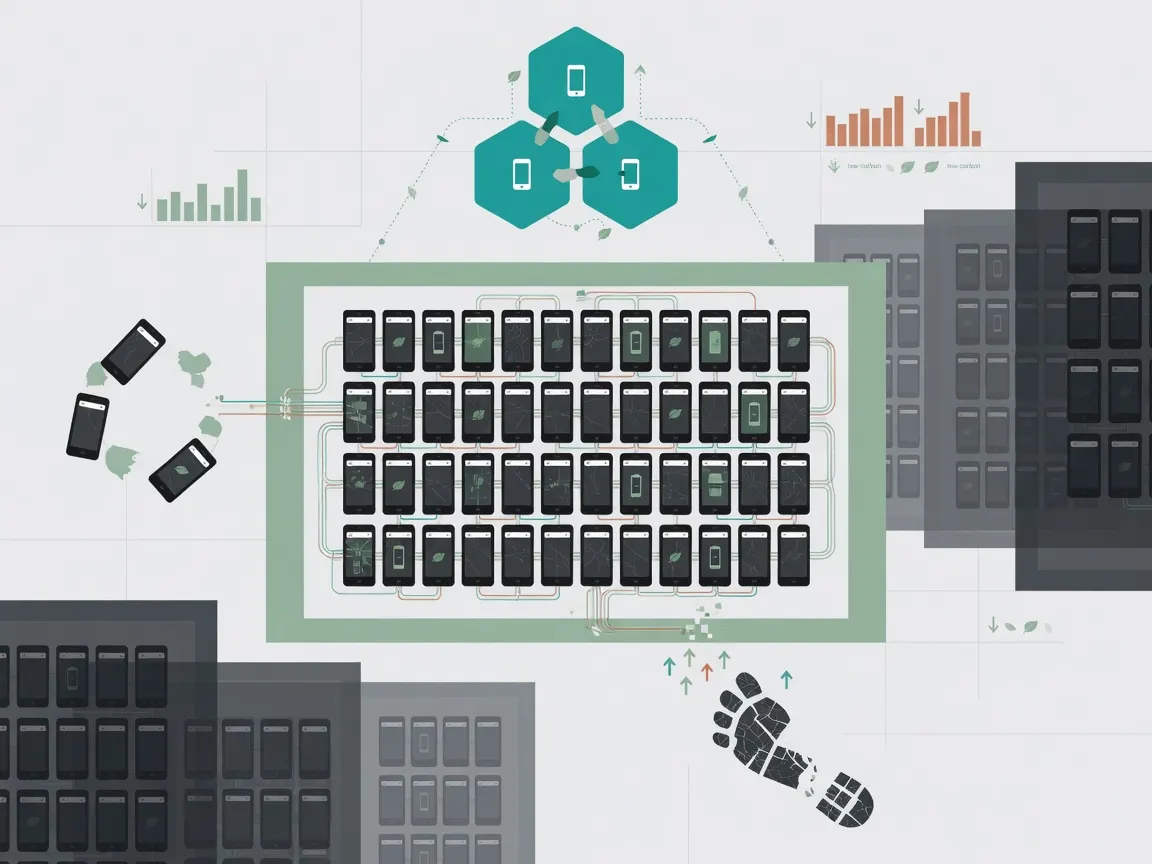
A team at UC San Diego is building a data center from discarded Google Pixel phones, stripping each one down to its motherboard and chaining them into a Kubernetes cluster.
The researchers remove batteries, screens, and every other component, leaving only the motherboard and its attached chips. Each phone gets a Linux distribution installed over Android — Android's memory-saving features would interfere with server workloads — and then joins a Kubernetes-managed cluster. A 20-phone prototype already handles peak submission loads for a class of more than 75 students, with grading latencies that beat the default AWS backend. The planned 2,000-phone deployment is designed to support a hundred such classes at once, targeting grading and lightweight research workloads inside the university's existing software stack. Google is backing the project.
The argument rests on a hardware mismatch that rarely gets stated plainly: modern smartphone processors have single-threaded performance on par with many multicore server chips, yet the average handset gets replaced every four years. Those chips do not depreciate at the same rate as the devices around them, and manufacturing their replacements generates emissions that a repurposed motherboard does not. It is one of the rare cases where the environmental argument and the cost argument point in the same direction.
Google's involvement is worth holding up to the light: the company whose surplus Pixels are being repurposed is also expanding its own data center footprint at a pace that makes a 2,000-phone cluster look like a rounding error.