Lead story / ram-shortage
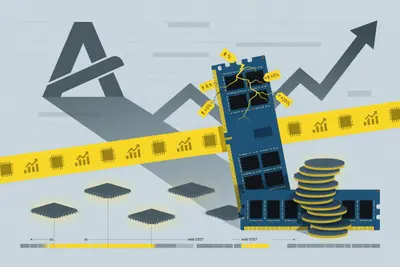
Micron Says RAM Crunch Worsens Through 2028, Robots Next
Micron says memory supply will stay tight through 2028, and warns humanoid robots could soon demand 200GB of RAM each, extending the shortage toward 2030.
The Revision reporting on Hardware — 347 stories on the wire, decoded into one clear voice.
Micron says memory supply will stay tight through 2028, and warns humanoid robots could soon demand 200GB of RAM each, extending the shortage toward 2030.
Wing's FAA-cleared delivery drone can fly six miles at 60 mph, but its first regular use case has been ferrying potatoes to bored kids on weekends.
Cadence, Synopsys, and Siemens claim massive AI speedups in chip design, but each measures progress with its own numbers and baselines.
Foxconn's assembly yields for the iPhone Duo sit just above 60 percent, and Apple may have to choose between quality and hitting launch week supply.
Chipmakers are letting AI write RTL, run verification, and probe architectures, but humans still decide what actually gets built.
SemiAnalysis estimates ByteDance rents nearly a fifth of China's data center capacity, making it the top customer for the country's wholesale operators.
OpenAI's inference ASIC works with rival AI models too, but the company says internal demand will keep it busy for a long time before any wider rollout.
OpenAI's hardware chief says AI cut its Jalapeno inference chip's design cycle to nine months, a new baseline for chip development speed.
Apple is testing four next-gen Vision Pro concepts, including an external battery puck like Meta's VR Glasses, but insiders favor an all-in-one design.
Thoughtful Things is crowdfunding Engram, an offline AI groovebox built to mangle and hallucinate sound instead of churning out polished hits like Suno.
BYD says its new solid-state EV battery technology is nearly ready, joining automakers expected to deploy the tech in the next few years.
A new reverse-engineering effort shows the 46-year-old Intel 8087 computes tangent with more than plain CORDIC, complicating the textbook story.
Tower and Japan are spending $4 billion on optical-chip fabs to meet AI demand, with Tower taking full ownership of Fab 7 in April 2027.
A wireless eGPU promises gaming laptop graphics over Wi-Fi 7, but its makers say the bigger goal is making any device AI-capable.
Intel's own roadmap math suggests a bigger lead over TSMC's A14, but its foundry chief is telling investors to expect only a 5% difference.
New Surface Pro and Laptop models meet the specs but skip the Copilot Plus label, suggesting Microsoft's AI-PC branding push has quietly fizzled.
Qualcomm's Snapdragon Sound Elite Gen 2 builds Wi-Fi 6E straight into earbuds, reviving a promise it made in 2023 and didn't quite keep.
SpaceX told enterprise maritime customers to expect gigabit speeds at sea as it preps its first V3 satellite launch, but only $2,000-dish owners qualify.
The International Federation of Robotics' 2026 report shows China installed 59% of all new factory robots in 2025 as EU installations dropped 11%.
Piper Sandler says Amazon, Apple, Google, Microsoft, Nvidia and others are evaluating Intel's 14A process, with a formal anchor customer still pending.
iFixit's teardown of Valve's Steam Frame headset shows a surprisingly repair-friendly design, from swappable batteries to modular optics.
Google will test whether its TPUs can survive and compute in orbit, launching a prototype satellite built with Planet on a SpaceX rideshare mission.
Europe's biggest company by market value says it booked no lithography orders there in 2026, and wants Brussels to manufacture demand, not just fabs.
Meta's new XR glasses weigh a fraction of the Quest 3 but cost $1,300, arrive without controllers, and lean hard on an AI assistant.
Meta's new VR Glasses swap the bulky headset for lightweight frames with a pocket puck doing the heavy computing, a lighter answer to Vision Pro and Quest.
Qualcomm's next flagship processor outperformed Apple's newest A20 Pro chip in an early benchmark test, raising questions about Apple's silicon lead.
Qualcomm's new Snapdragon Sound Elite Gen 2 chip aims to let earbuds and smart glasses handle AI tasks without a nearby phone.
The Snapdragon 8 Elite Gen 6 chip is built to run AI agents locally on phones, and Qualcomm is betting that's the next big battleground in mobile silicon.
A runtime-reconfigurable chip adapts on the fly to speculative decoding's shifting compute demands, beating fixed designs by up to 2.6x in FPGA tests.
Alibaba says its new Zhenwu V900 chip triples the performance of its predecessor, but the claim is self-reported and unverified by independent benchmarks.
Qualcomm says its newest flagship chip can run a 30-billion-parameter AI model entirely on-device, no cloud required.
Qualcomm is splitting its first 2nm flagship chip into two versions, one for video and one for agentic AI workloads.
AMD's stock is up 180% this year on AI chip demand, but its trillion-dollar valuation is still a fifth of Nvidia's.
Apple's M6 benchmarks make TSMC's new 2nm node look strong, but the chip's claimed 50% multi-core jump doesn't match the underlying math.
Nexstrom raised new funding to build tools for manufacturing two-dimensional semiconductor materials at industrial scale, a bet on life after silicon.
Early reviews say the M6 and M5 Pro Mac mini is fast, but a $300 price hike tied to memory chip shortages makes it a tougher sell.
Huawei says it can't make enough Ascend AI chips to meet Chinese demand, so its next-generation Atlas clusters won't get a real international push.
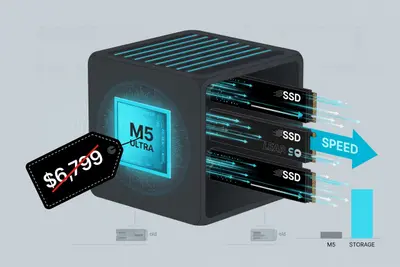
Reviewers say the new Mac Studio's fastest chip yet is overshadowed by a leap in SSD speed, even as the M5 Ultra costs $6,799 to start.
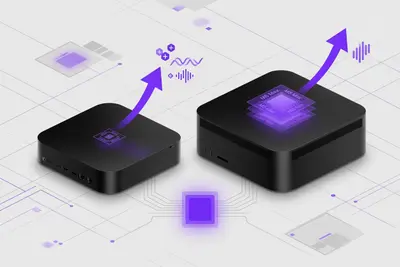
Apple's M6 and M5 Pro Mac mini and M5 Max/Ultra Mac Studio ship Tuesday with faster chips but the same designs as before.
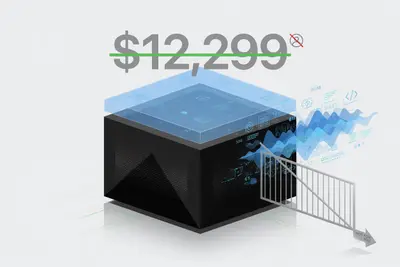
Apple's most powerful Mac Studio yet ships today with an M5 Ultra chip and 256GB of RAM for $12,299, built for AI developers, not everyday users.
Acer's CEO says RAM supply looks fine but still expects PC prices to rise 5-20% in Q4 2026, with relief not likely until mid-2027.
A small lithography company says Elon Musk's new chipmaking venture Terafab is too close to its own decade-old Tera-Fab trademark and wants it to stop.
A new network-on-chip fabric called MeshKV reroutes AI chip memory traffic to ease a bottleneck that limits how fast models generate long responses.
A new packing and quantization scheme squeezes DNN weights for edge accelerators while adding cheap bit-level protection against hardware faults.
Kawasaki will put chips from Pentagon-linked startup EdgeCortix into Japanese aerial defense systems under a deal running through 2028.
AeroVironment landed a $464.8 million Army contract for a high-energy laser system days after it downed three drones near the Mexican border.
Nvidia is buying into MediaTek's custom chip business, betting that even AI accelerators built by rivals will still need Nvidia's plumbing to work.
A Dongguan court's $318 million asset freeze hands Wingtech fresh leverage in its year-long battle to reclaim Nexperia from Dutch control.
Nvidia's $3.5 billion investment in the Taiwanese chipmaker looks less like generosity and more like insurance against Big Tech's custom AI chip push.
The chipmaker projects $20 billion in Vera Rubin sales this quarter, calling it the fastest product ramp in its history, even as unit volumes stay modest.