Lead story / nvidia
Nvidia Posts $96 Billion Quarter, Locks Up $279 Billion in Supply
Nvidia's quarterly revenue hit $96.2 billion, up 106% year over year, as it commits $279 billion to secure memory and chip supply for surging AI demand.
The Revision reporting on Hardware — 347 stories on the wire, decoded into one clear voice.
Nvidia's quarterly revenue hit $96.2 billion, up 106% year over year, as it commits $279 billion to secure memory and chip supply for surging AI demand.
Amazon is buying 2 million more Nvidia GPUs over the next two years, a bet that cloud AI demand still outpaces supply.
Nvidia has told its biggest customers that AI server prices will jump more than 15% starting early next year, citing rising memory costs.
Nvidia is reportedly discussing a partnership, investment, or acquisition with Korean AI inference chipmaker Rebellions.
ByteDance and Tencent got their first H200 shipments under tight quotas, a small slice of a huge order as domestic chips quietly take over China's AI market.
Nvidia says reports of a China specific LPU chip are wrong, but its narrow denial leaves room for standard LPU sales to Chinese buyers.
Record revenue and price hikes at China's top foundry show how US export controls created a captive domestic AI chip market it now dominates.
Samsung hiked advanced chipmaking prices as much as 15%, with China hit hardest, as AI chip demand tightens capacity in TSMC's stronghold.
Samsung raised 4nm, 5nm, and 8nm foundry prices as much as 15%, with Chinese customers paying the most while still undercutting TSMC's climbing rates.
A modular Flight Kit with no RF transmitters lets this camera-turned-drone dodge the ban that has grounded every other Chinese drone since December.
Samsung's Taylor and Pyeongtaek fabs are ramping on schedule, but 2nm yields near 55% and a steep price cut show capacity was never the real problem.
The Japanese chemical giant's alleged supply cut to Chinese chipmakers follows Beijing's rare earth export curbs and coincides with a confirmed 30% price hike.
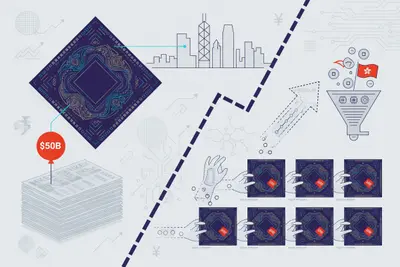
The Financial Times reports ByteDance and Tencent got about 10,000 Nvidia H200 chips each, as Beijing keeps most licensed volume in Hong Kong.
Cerebras packs three wafer-scale chips into one rack, betting brute scale beats smarter silicon in the inference speed race.
China reportedly approved 10,000 Nvidia H200 chips each for ByteDance and Tencent, a 20,000-chip total that signals a cautious loosening of export limits.
Cerebras published a page for a CS-4 chip without specs, leaving onlookers to speculate about its wafer-scale follow-up.
A $22,000 cluster of second-hand GPUs matches new $600,000 hardware on LLaMA-70B inference, but only where electricity is cheap and clean.
Ukraine reverse-engineered a Chinese drone Beijing wouldn't sell, then used the $48,000 clone to destroy a Tu-95 bomber at a Russian air base.
Apple reported 11.1 billion dollars in inventory, nearly double last September's figure, as it warns of significant supply constraints ahead.
Tim Cook says chip and memory shortages will hit iPhone, iPad, and Mac sales harder this quarter, driven by demand that outpaced Apple's own forecasts.
Samsung posted record quarterly profit even as it warned memory shortages will worsen through 2028, with customers now locking in multi-year supply deals.
Thousands of unionized workers at Hyundai's Ulsan plant staged early walkouts after 15 rounds of talks over humanoid robot deployment collapsed.
The Israeli specialty foundry will revive a dormant Panasonic-era fab and expand a running plant, targeting $3.6 billion in revenue by 2028.
TSMC's latest $100 billion pledge lifts its total US commitment to $265 billion and puts Arizona on track for 10 fabs, with no timeline attached.
The Taiwan-based chipmaker now has $265 billion committed to American production, with AI demand and tariff pressure both pushing the expansion.
The US has approved ZTE and Maginfra to purchase Nvidia's Hopper-generation H200 accelerators, expanding a short list of Chinese firms with sanctioned access.
ELiTeFormer combines linear attention with ternary weights to run large language models on FPGAs with a fraction of the memory and energy of a GPU.
Spherephones convert nearby robot movement into spatial lo-fi audio cues, giving factory workers a heads-up before danger enters their line of sight.
A new kernel library lets AMD's XDNA2 NPU run AWQ-style quantized models natively, cutting prefill latency in half and energy use by more than 64.6%.
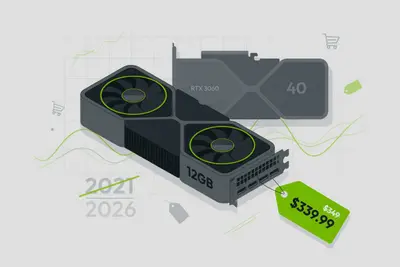
Five years after its debut, the RTX 3060 12GB is back at retail for $339.99 — almost exactly its original MSRP, and barely cheaper than newer cards.
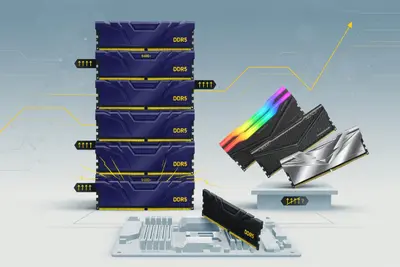
Lenovo warned that RAM prices could stay elevated for years, while kit makers respond by releasing ultra-fast memory almost no one will buy.
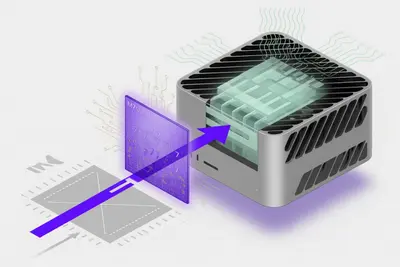
Apple is bypassing an M6 Ultra entirely, with a redesigned Mac Studio carrying M7 Ultra silicon and a new thermal system slated for 2028.
Samsung and SK hynix will cover nearly 90 percent of a national push to dominate AI memory production before any rival can catch up.
Jefferies forecasts 40-50% memory price hikes in Q3, another 30-40% in Q4, with no real recovery expected until 2028 at the earliest.
Kunlunxin is reportedly asking IPO investors to buy its chips too, blurring the line between capital raise and sales push.
A Bloomberg report says Apple will ship its long-rumored touchscreen MacBook Pro with M5 Pro and M5 Max chips, skipping a wait for next-generation silicon.
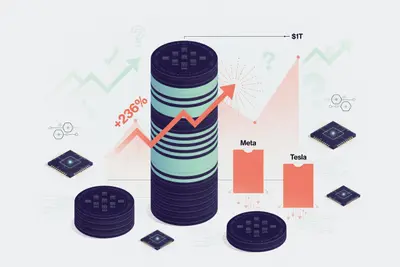
A 236% single-month stock surge lifted Micron past $1 trillion, but the revenue figure behind it could not be independently verified.
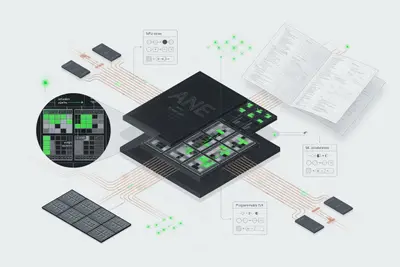
An arxiv paper examines the architecture and programming model of Apple's on-device AI accelerator, a chip block that rarely gets public scrutiny.
Apple is asking the Trump administration for permission to source chips from a Chinese company with reported military ties.
The FTC cleared Musk's bid for Mesh Optical, a startup built by three former SpaceX engineers who supply optical transceivers to AI data centers.
Apple raised prices on Macs, iPads, HomePods, and Vision Pro by up to 50 percent or more, blaming component shortages expected to last well into 2027.
Lenovo says pre-crisis memory prices are unlikely to return for years, while Microsoft warns console RAM costs could double again by fall 2027.
Micron's chief business officer implied aggressive price negotiations by Apple-style buyers starved the memory industry of the capital it needed to expand.
The power chip maker snaps up cash-strapped Synaptics to build a one-stop shop for edge AI hardware spanning compute, connectivity, and sensing.
The 2GB Uno Q goes from $44 to $59 while the 4GB jumps from $59 to $79, with both increases taking effect July 6th.
IBM's 0.7nm-class process stacks n- and p-type transistors on separate wafers, claiming 50% more performance and 70% better efficiency than its 2nm node.
Apple's next MacBook Pro will carry the M6, its first 2nm chip, with no Pro or Max variants until the M7 generation in 2027.
Apple is testing an M5 Ultra Mac Studio with up to 768GB of unified memory, though chip shortages could force a more modest launch around October 2026.
Apple hiked prices on 14 products by up to $1,300, citing a memory chip shortage driven by AI data center buildouts from OpenAI and Nvidia.
A report suggests Apple will launch the M6 chip in base form only, holding Pro, Max, and Ultra variants for the M7 in early 2027.