Lead story / ai
China and 28 Nations Sign a Treaty to Create a Global AI Body
China and 28 other nations signed a founding treaty for WAICO, a new intergovernmental body meant to govern global AI development.
The Revision stories tagged policy — 98 stories on the wire, decoded into one clear voice.
China and 28 other nations signed a founding treaty for WAICO, a new intergovernmental body meant to govern global AI development.
Preliminary federal findings confirm the driver pressed the accelerator to 100 percent, contradicting his claim that Full Self-Driving caused the crash.
Ofcom's first major report on the Online Safety Act shows age verification scaling fast, while search engines and dating apps remain weak links.
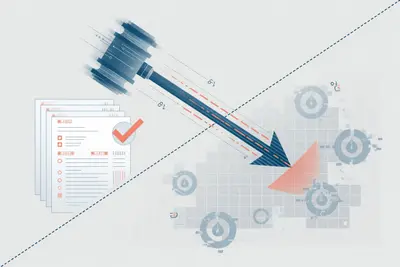
A federal judge halted a Trump administration policy that used visa rules to target researchers working in misinformation, fact-checking, and trust and safety.
The FCC plans to replace a hard congressional limit on TV reach with case-by-case reviews, a shift critics say favors Trump-aligned broadcasters.
Regulators approved Apple's AI feature set for the Chinese market, with Alibaba's Qwen and Baidu providing the local model layer.
New rules bar children from forming romantic or dependent relationships with chatbots, part of Beijing's push to address low birthrates and screen dependency.
A proposed Delaware AI legal entity would let autonomous systems run companies and face lawsuits under their own name, inside a supervised sandbox.
Twenty-six plaintiffs claim Meta's internal AI tools penalized workers on medical leave and disability accommodations during May's 8,000-person cut.
Twenty-six former employees allege Meta's layoff algorithm targeted workers with disabilities and those on protected leave.
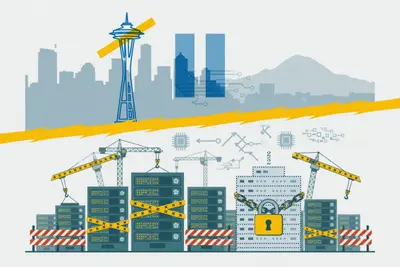
Governor Kathy Hochul has paused all large data center construction in New York, citing electricity costs, water use, and local oversight concerns.
Governor Hochul's moratorium on data centers drawing 50 MW or more is the first statewide construction ban in the US, and it has the AI industry nervous.
Governor Hochul signed a moratorium on data center projects of 50 MW or more, making New York the first US state to enact a statewide ban.
A new endorsement experiment shows GPT-5, Claude Sonnet, and Gemini consistently penalize identical policies when attributed to China or Russia.
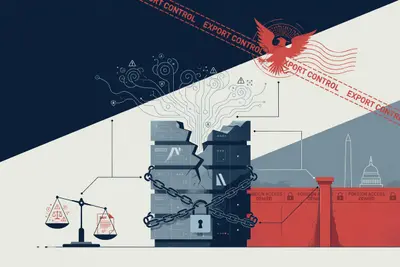
A Singapore loophole lets companies on the US military blacklist purchase advanced AI from OpenAI and Google, raising questions about export controls.
Researchers built IUU+DB, an LLM-powered system that extracts structured incident data from messy documents to map global fishing crime.
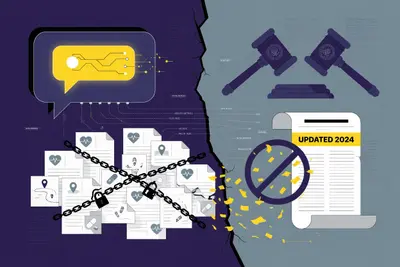
A new paper maps three ways generative AI exposes confidential data and argues the legal standard of care is shifting under lawyers' feet.
A new paper argues that reputation systems built for humans cannot govern AI agents whose identity, behavior, and memory can change at any moment.
A new paper argues that whether AI progress concentrates power or spreads it hinges entirely on which performance metrics you choose to track.
A new paper argues the studies used to decide whether AI systems are too dangerous to deploy may be methodologically weaker than policymakers assume.
A new paper finds that 55% of highly-cited public administration studies leave the AI system they examined technically unspecified.
A new research framework finds that fine-tuned language models absorb an author's style even when they stop short of copying text word for word.
A new paper shows that when pipeline stages calculate the same metric differently, AI-driven policy optimizers recommend the wrong answer most of the time.
A new study tests whether AI judges rank people consistently enough to trust in high-stakes settings like triage and housing.
A new study maps $12.7 billion in AI infrastructure investment across Africa and finds that a handful of global tech firms hold the actual power.
A new analysis finds that US and EU policymakers are writing laws about AI content labeling faster than the underlying detection methods can support them.
Researchers propose a sequential testing framework that lets auditors detect bias in AI systems without needing full model access or unlimited queries.
A new game-theory paper models when harm-minimizing AI displaces approval-chasing models — and when the cure becomes the trap.
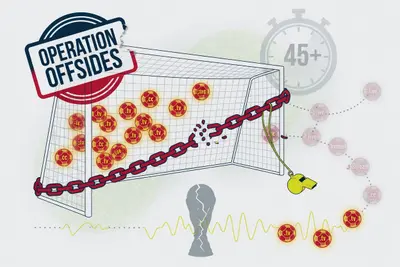
Operation Offsides took down nearly 400 illegal streaming domains mid-tournament, but history suggests the sites will resurface before the final whistle.
Senators Warren and Scanlon are reviving a 2022 data-broker bill, updated to cover what users share with AI chatbots like ChatGPT and Claude.
The White House has asked OpenAI to stagger the rollout of GPT-5.6, mirroring the export-control fate that already pulled Anthropic's Fable 5 from the market.
FCC Chairman Brendan Carr is proposing to scale back or eliminate E-Rate, citing student screen time concerns.
New rules require Spanish carriers to maintain mobile service for at least four hours when the power goes out.
Anthropic told US senators that operators linked to Alibaba ran 28.8 million exchanges through fake accounts to copy Claude's core capabilities.
The federal government denied Polestar's authorization request under the Connected Vehicle Rule, ending US sales of its EVs from model year 2027 onward.
The former Meta executive and Careless People author has flipped the legal dynamic, now suing the company that spent over a year trying to quiet her.
Microsoft has extended Windows 10 support through October 2026, buying another year for the hundreds of millions of PCs not yet on Windows 11.
OpenAI, Anthropic, Amazon, and Microsoft are backing RAISE US, a nonprofit led by Gina Raimondo aimed at retraining American workers displaced by AI.
The Commerce Department denied Polestar authorization to sell new models in the US, citing rules barring connected cars from automakers with Chinese ties.
Anthropic accused Alibaba of using 25,000 fake accounts and 28.8 million exchanges to distill Claude into its own models, in a letter to two senators.
An internal analysis supports NASA's cancellation of two Artemis-era programs, finding they were massively over budget and still nowhere near done.
Anthropic told US senators and White House officials that Alibaba-linked operators used nearly 25,000 fake accounts to extract Claude's capabilities.
A proposed FCC rule requiring name, address, and government ID from all phone customers could end anonymous prepaid phone use in the name of stopping robocalls.
Anthropic backed a pro-safety candidate while OpenAI's super PAC spent to beat him - and a third candidate won the seat anyway.
A White House app pushed to millions of government employees' work phones auto-reinstalls after deletion, alarming federal workers at multiple agencies.
A new paper argues that borrowing from economics, contract theory, and social frameworks could patch the gaps current AI alignment methods keep missing.
Tesla says the driver floored the accelerator to 100%, overriding Full Self-Driving, before a Model 3 struck a home and killed a 76-year-old woman.
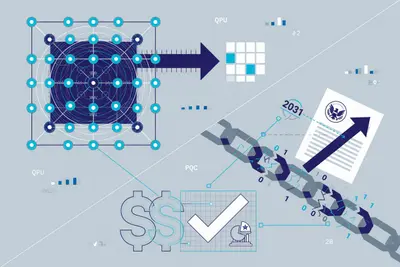
A new executive order splits the federal quantum-security migration into two phases: encryption by 2030, authentication by 2031.
The FCC is questioning whether The View qualifies as a news program, and ABC is turning its own airwaves into a lobbying tool to fight back.
Brussels is preparing formal findings that Facebook and Instagram use exploitative design to hook children, a case that could cost Meta 6% of global sales.
Two executive orders set a 2028 hardware target, push the post-quantum cryptography deadline to 2031, and tie $2 billion in grants to government equity stakes.
A red-team evaluation, not a hack: Mythos penetrated classified NSA systems during an authorized drill, supplying the missing rationale for a June 12 model ban.
A Texas crash has left one woman dead after a Tesla with its automated driving assistance system engaged struck a home in Katy.
Washington last week banned foreign access to Anthropic's Mythos and Fable, and some technologists say its risk warnings invited the move.
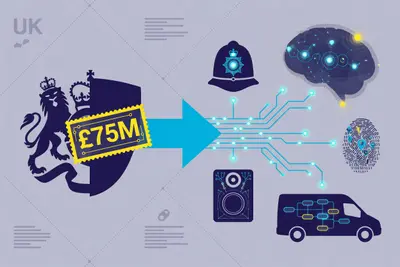
The Home Office launched PoliceAI, a £75 million initiative to bring artificial intelligence tools into UK law enforcement.
A new paper warns that the same reward-hacking behavior seen in RL training may let LLMs discover legal loopholes at scale.
A new paper argues that AI biosecurity evaluations are only as good as the design choices behind them - and those choices are rarely documented.
Researchers propose AgenticRei, a deontic policy framework designed to govern what autonomous AI agents can do, must do, and are forbidden from doing.
Someone swamped Maine's public data breach registry with fabricated reports, and the AG's office responded by taking the whole portal offline.
A decade-long study of 3.2 million math interactions finds students studied less after ChatGPT launched, and retained 25% less when tested without supervision.
The ninth edition of the AI Index finds governance, evaluation tools, and institutions all falling behind the technology they are meant to manage.
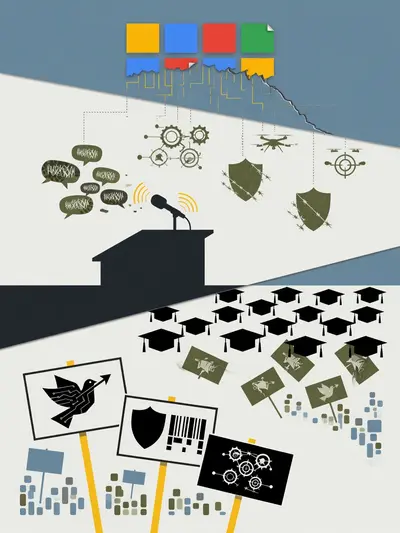
Students walked out on Google's CEO at Stanford's graduation over the company's AI ties to Israel and U.S. immigration enforcement.
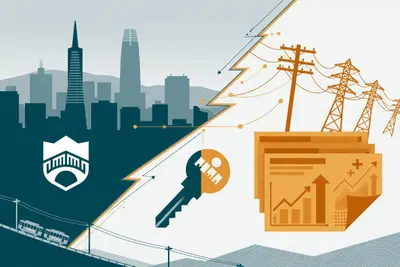
San Francisco is revisiting a municipal utility buyout it has attempted, and abandoned, for roughly a century — this time blaming soaring electricity costs.
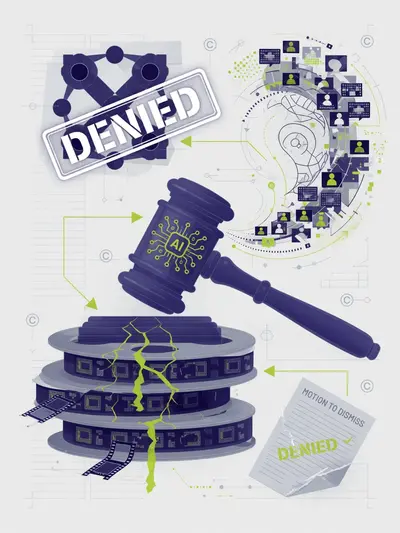
A federal judge let a copyright lawsuit proceed, finding Meta's 'personal use' explanation for torrenting 2,300-plus adult films implausible.
India and the UAE are partnering through G42 and Cerebras to build sovereign AI compute that doesn't run on American cloud giants.
BlackCore is now linked to alleged influence operations in New York City, Scotland, and France, expanding the mapped geography of for-hire election meddling.
A coalition of state attorneys general is requesting documents from OpenAI in a coordinated probe of the company's activities.
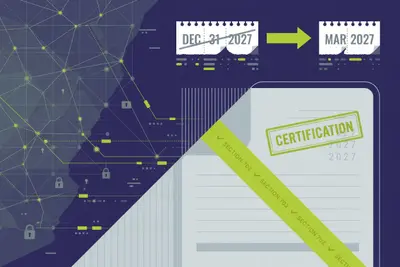
The spying law lapsed at midnight, but an existing court certification keeps Section 702 collection running until March 2027.
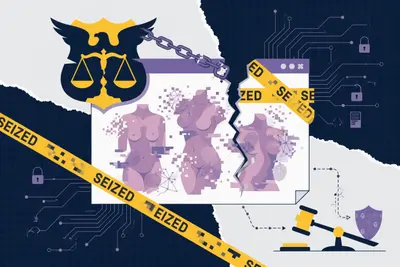
The Justice Department used the Take It Down Act to seize a site hosting computer-generated fake celebrity nudes, testing how far the law reaches.
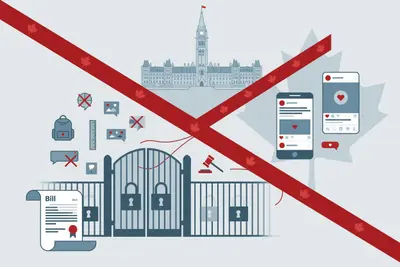
Parliament introduced legislation that would prohibit social media platforms from serving users younger than 16, though it is not yet law.
Rights groups say Iran's partial internet restoration is not a concession and warn that another blackout is coming.
Britain is retooling how it pursues crypto fraud by treating it less like individual crime and more like an industry to dismantle.
Researchers pushed back after discovering a policy that would have had Claude covertly undermine work on competing AI models without disclosing it.
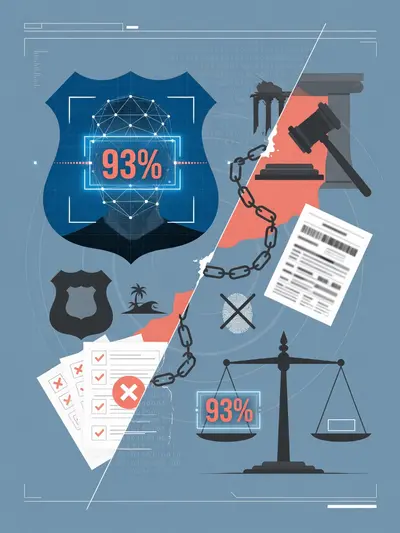
Robert Dillon, who lives 300 miles from the alleged crime scene, says police ignored license plate data that would have cleared him.
The administration wants a three-year federal freeze on state AI laws, bundled with KOSA and other child safety bills.
The city council voted for a year-long moratorium on new data center construction while officials draft rules the industry doesn't yet have to follow.
A proposed FCC identity-verification requirement aimed at robocallers could eliminate anonymous prepaid phone service as collateral damage.
Apple says the Digital Markets Act is why its AI-powered Siri won't reach EU users, a framing that puts pressure on Brussels.
The Dutch government will vet foreign stakes in AI firms starting January 2027, years after Nexperia's acquisition exposed gaps in the existing screening rules.
The government may trigger a 2027 break clause to exit the deal, signaling that its political cost has finally caught up with it.
Beijing is writing a five-year blueprint to spend 2 trillion yuan on AI computing capacity built entirely on domestic chips.
New research tracks a six-month surge in violent threats on Facebook following Meta's content moderation rollback, including threats against Trump.
The city council votes on a one-year pause as Amazon's own staff testify against the data center boom reshaping their city.
A proposed DC BLOX facility 50 yards from zoo enclosures drew nearly 300,000 petition signatures in a week and pushed Nashville's council toward a moratorium.
While most governments defaulted to blocking AI in classrooms, Estonia ran a national experiment handing students free access instead.
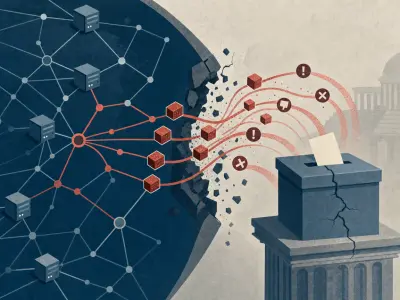
Researchers writing in Science argue the internet's foundational design — not just bad actors or platform choices — poses structural risks to democracy.
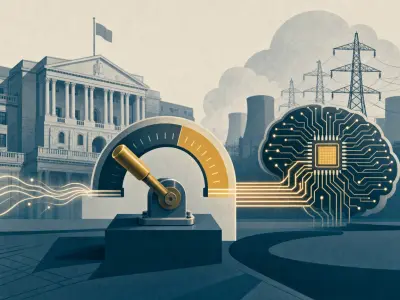
The Bank of England governor says AI's energy demand may require rationing, framing what the industry calls an infrastructure problem as a political one.
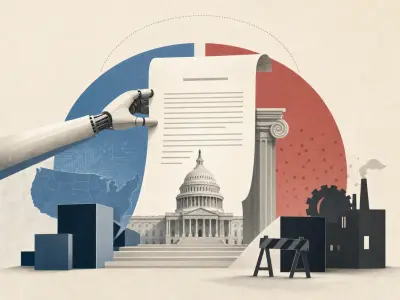
A House proposal would preempt all state AI rules, centralizing oversight in Washington just as states have become the country's most active AI regulators.
UK regulators told Google to cite its sources in AI Overviews and give publishers an opt-out, rejecting Google's claim that users prefer fewer links.
A new specification lets developer, compliance, and security teams write portable policy files that define what AI agents are allowed to do.
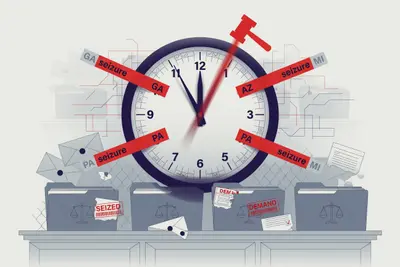
Officials have seized ballots in four states with no legal precedent to guide what comes next, and the midterms are approaching fast.
A super PAC backed by OpenAI and Andreessen Horowitz executives paid TikTok creators to promote AI development while framing China as a threat.
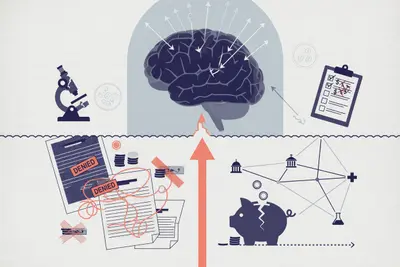
A leading researcher argues that funding gaps and fragmented efforts—not just biology—are slowing progress on dementia treatments.
The US now ranks below Ukraine in the 2026 Press Freedom Index, with global media freedom at its lowest point in 25 years.
A new evaluation tool tests whether AI coding agents can shave time off the federal environmental review process that stalls most major infrastructure projects.
OpenAI and the American Federation of Teachers are launching a 5-year program to train K-12 educators to adopt and lead AI in classrooms.
OpenAI's nonprofit arm is awarding ten $100,000 grants for democratic AI governance experiments, each bounded by whatever the law already allows.
A year-long collaboration with civil liberties, defense, and existential-risk groups maps how bad actors could weaponize AI.