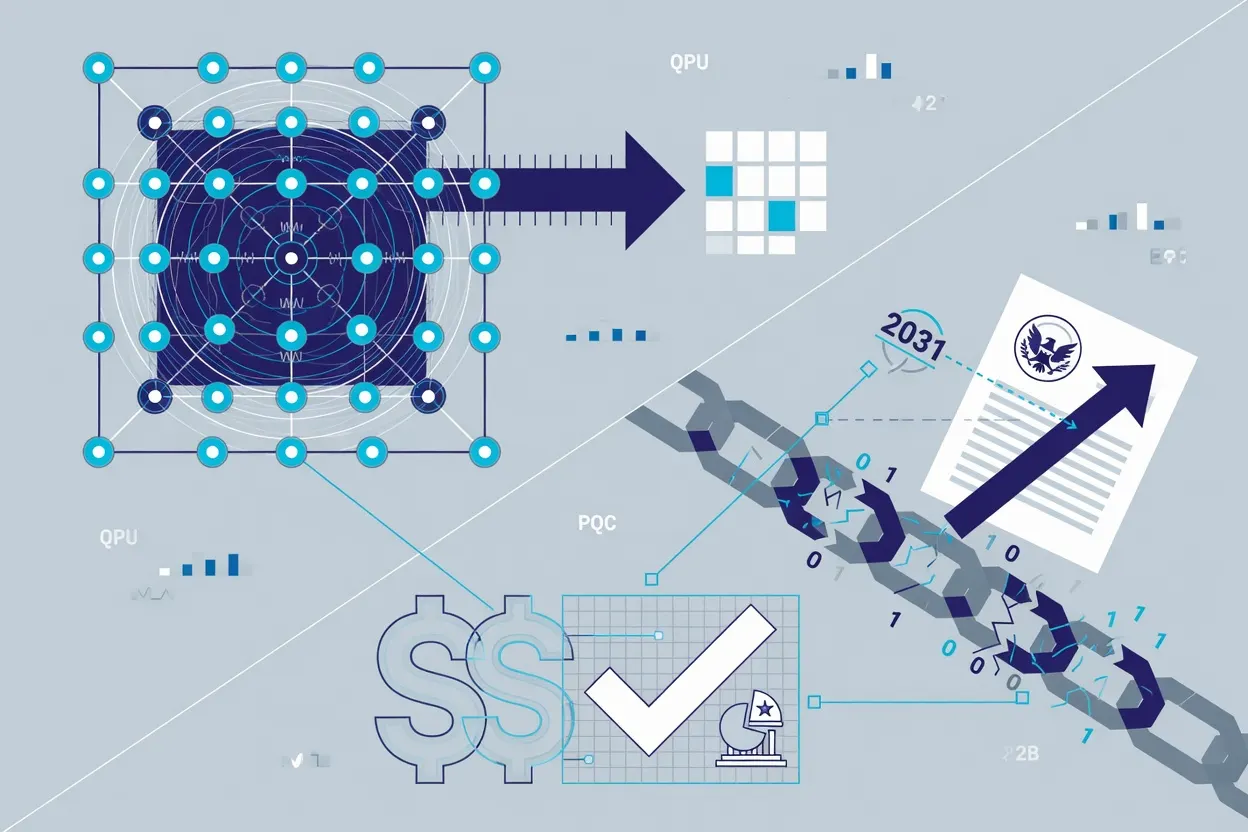
The White House has put a two-year deadline on quantum computing ambitions — and attached strings to the money.
President Trump signed two executive orders on June 22, 2026, directing the federal government to pursue a quantum computer capable of meaningful scientific research by 2028. The orders also push the deadline for agencies to complete their post-quantum cryptography transitions to 2031 and make $2 billion in federal grants conditional on the government receiving equity stakes in recipient companies. The scope spans both hardware development and the security infrastructure needed once capable quantum machines exist.
The equity condition is the part worth watching. Tying research grants to government ownership stakes is an unusual move that blurs the line between public funding and industrial policy — and could reshape how startups and universities calculate the cost of federal money. The 2031 cryptography deadline, meanwhile, is a soft extension that gives agencies more runway but does nothing to close the gap between quantum ambition and current cryptographic readiness.
Whether a research-grade quantum computer by 2028 is achievable is genuinely contested; every major lab and tech firm has missed its own timeline at least once. A government deadline does not change the physics, but it does change the funding landscape.