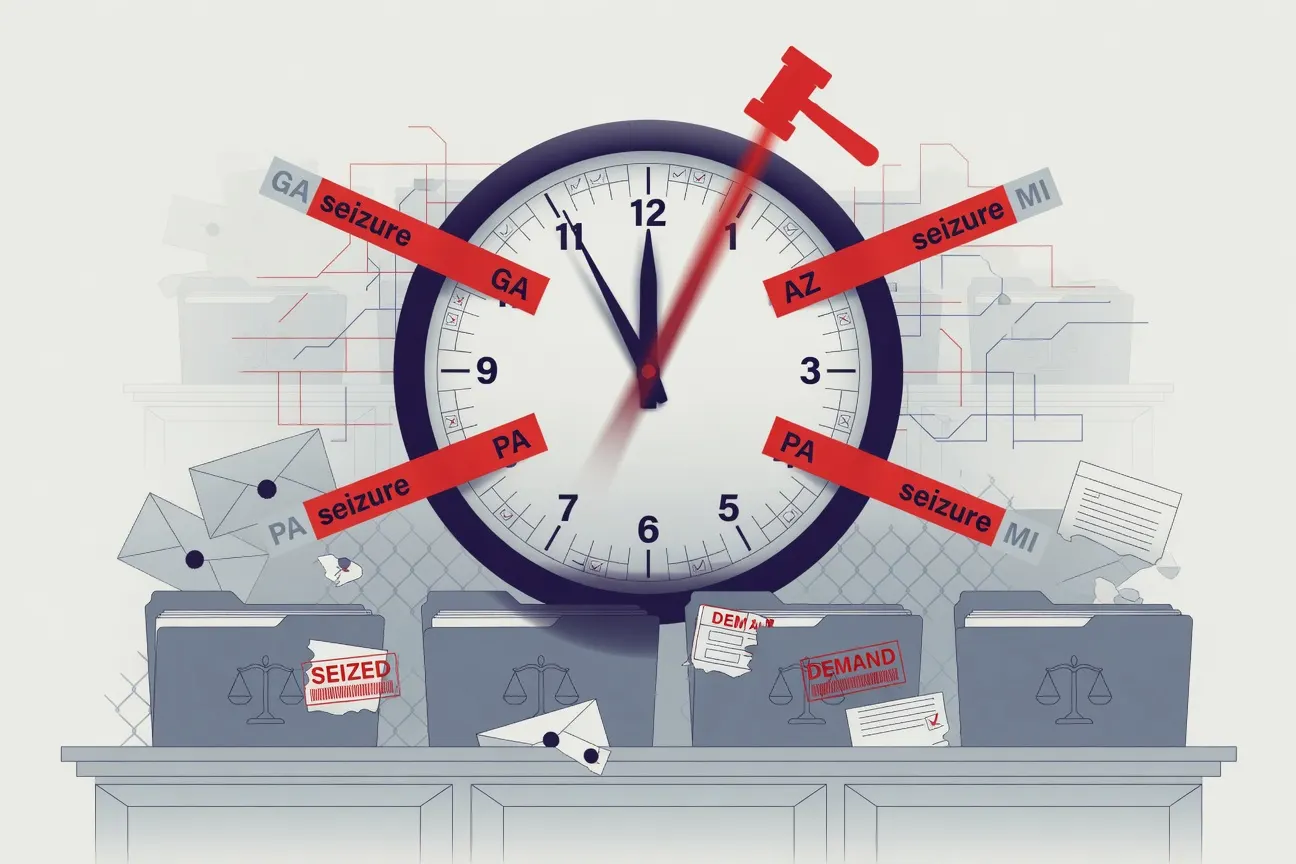
Authorities have seized or formally demanded ballots from elections in four states so far this year, and courts have not yet established whether any of it is legal.
The seizures span multiple states and multiple types of elections, though the specifics differ by case. What they share: none has been resolved through a clear legal ruling. Election law experts warn that the absence of settled precedent is the real problem. Courts, if pushed, could draw a line before November. So far, they haven't.
With the midterms approaching, that ambiguity is a meaningful vulnerability. Ballot seizures — even ones later ruled improper — create uncertainty about vote counts and invite legal challenges that can take weeks to resolve. A contested seizure during a close race could drag a result into court long after election night, with no established framework for what comes next.
It's worth noting how much the tactics have escalated. Physical seizure of ballots is a considerable step beyond the litigation and post-election audits that defined earlier disputes. Whether these moves reflect genuine legal inquiry or are designed to cast doubt on results, the practical effect is the same: the ground rules for November remain unsettled, and courts are running out of time to set them.