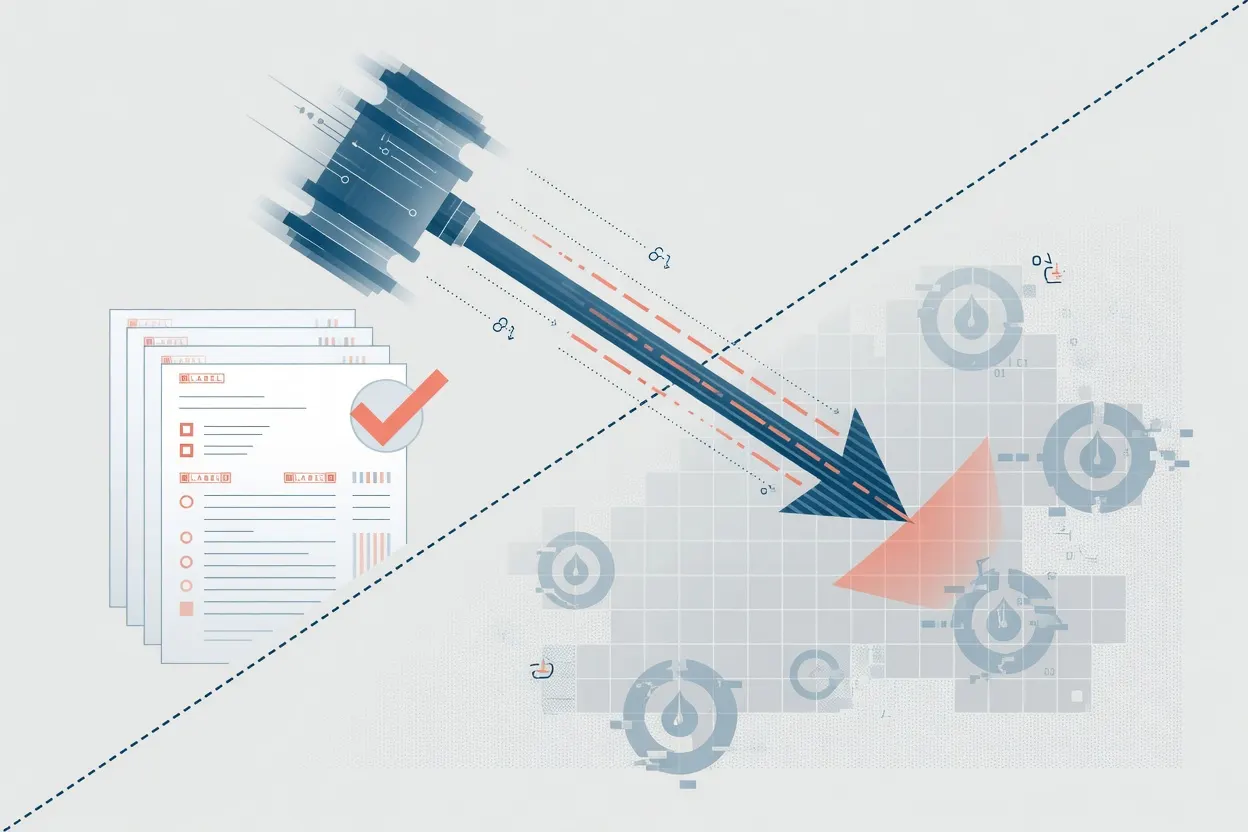
Lawmakers are moving to mandate AI watermarking before anyone agrees on how it works.
Researchers combed through legislative and policy documents from the US and EU on generative AI content transparency, coded them inductively, and mapped the results against actual technical capabilities. Their conclusion: there is a significant disconnect between what the bills demand and what watermarking, metadata tagging, and content detection tools can currently deliver. The analysis identifies patterns, ambiguities, and outright gaps in how policymakers are framing the problem — including cases where the language is vague enough to be unenforceable or technically incoherent.
That gap matters because several recent US bills have moved from discussion to real legislative momentum, and the EU is already embedding content-provenance requirements into its AI Act framework. If the mandates outpace the methods, companies will either comply on paper with weak implementations or face rules that no available technology can satisfy. Neither outcome builds the public trust the laws are designed to create.
Watermarking generated text remains an unsolved problem at scale — models can be prompted or fine-tuned to strip statistical signals, and detection accuracy drops sharply on short outputs. Policy enthusiasm has a habit of running ahead of engineering reality; this paper is a reminder that "we should track AI content" and "here is a reliable way to track AI content" are still two very different sentences.