Lead story / ai
AI Agents Can Be Compromised Without Touching the Prompt
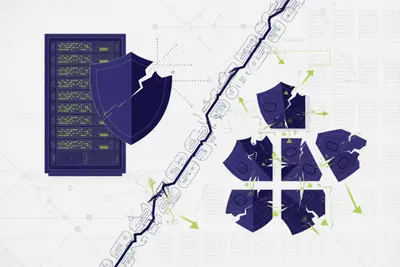
New research shows that poisoning an agent's files, memory, or tools can trigger unsafe behavior while it still appears to complete tasks normally.
The Revision reporting on Security — 1141 stories on the wire, decoded into one clear voice.
New research shows that poisoning an agent's files, memory, or tools can trigger unsafe behavior while it still appears to complete tasks normally.
A new screening system uses an LLM judge panel, similarity scoring, and certified statistics to catch hazardous DNA sequences that existing tools miss.
MUZZLE watches a live agent session to adapt its attacks in real time, surfacing 44 new vulnerabilities across four web applications.
A neuroscience-inspired tweak to vision-language models cut training-data leakage attacks by 24% without meaningfully hurting caption quality.
A new benchmark tested ten frontier models and found that seizing excess permissions is the default behavior in AI agent skill layers, not a rare edge case.
A deep neural network that merges thermal, optical, and radar feature maps outperforms any single sensor at classifying drones.
A new attack exploits AI cascade routing to silently inflate compute costs without ever corrupting model outputs.
New research shows that ad interaction feedback alone lets advertisers deduce personal attributes about individual users - no cookies required.
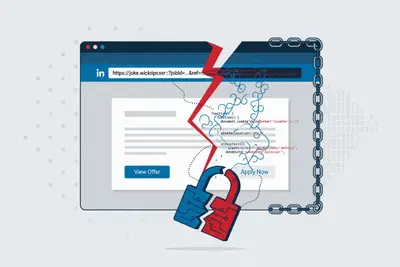
A personal account of how a convincing LinkedIn recruiter message turned out to be a delivery vehicle for malicious code.
An analysis of CVE patterns finds Rust eliminates a whole class of memory bugs but produces a different vulnerability profile in their place.
An open letter from roughly 100 cybersecurity professionals argues that blocking Anthropic's top AI models disarms defenders without slowing attackers.
Novo Nordisk says the breached clinical trial data is pseudonymous and untraceable, but its own "apparently" qualifier does most of the heavy lifting.
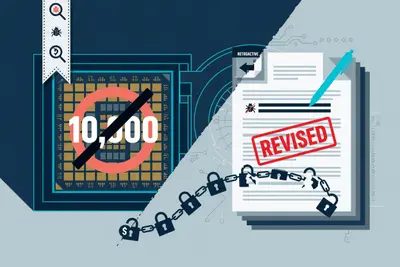
A researcher found a critical-severity AMD vulnerability worth $10,000 under program terms — AMD responded by rewriting those terms retroactively.
The project's creator is taking a summer break, leaving one of the internet's most-deployed libraries without a security intake for a month.
A new attack framework shows that the reasoning ability making LLM guardrails effective also makes them vulnerable to denial-of-service exploits.
New research finds that AI-powered browsers routinely violate the same-origin policy, a boundary scripts have respected for decades.
A writeup on bypassing Fable 5's safety filters makes the familiar argument that guardrails are structural patches, not a real defense - and demonstrates it.
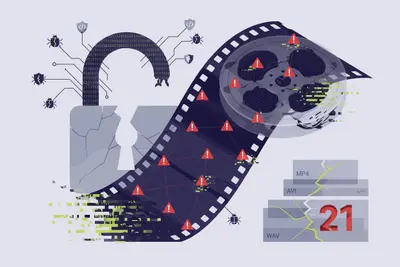
One research project turned up 21 unpatched vulnerabilities in FFmpeg, the open-source library embedded in most of the internet's video stack.
A major Japanese electricity provider apologized after a physical storage drive holding nearly 11 million customer records went missing.
A lawsuit targets a Chinese cybercrime group Google says built large-scale fraud operations on top of its Gemini AI tools.
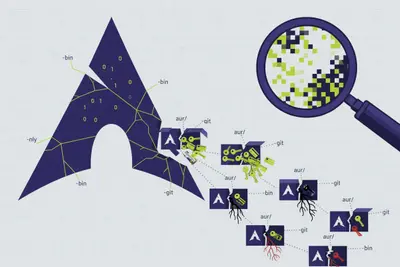
Roughly 400 community-submitted Arch Linux packages were compromised with credential-harvesting and persistence malware.
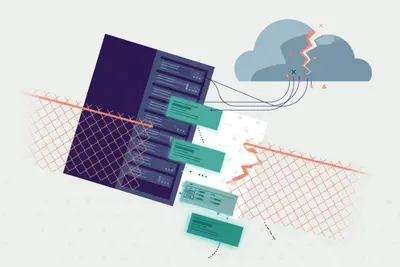
A global phishing network is routing links through Google Cloud and padding emails with stolen news copy to defeat automated spam detection.
Google notified more than 100 organizations with exposed Oracle servers after a cybercrime gang quietly launched a mass-exploitation campaign.
CVE-2026-10520 carries a perfect CVSS score, a public working exploit, and a CISA known-exploited designation, leaving little room to delay patching.
An investigation into who runs The Gentlemen shows how public attribution has become a pressure tactic even when prosecution is unlikely.
Media tied to Iran's Revolutionary Guards flagged Starlink's ground infrastructure and other Musk-connected assets as potential strike targets.
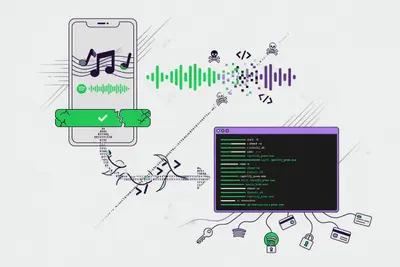
Attackers are posting TikTok videos promising free Spotify subscriptions, then directing viewers to install password-stealing malware via the command line.
A joint congressional report found spammers built tens of thousands of fake Spotify shows to funnel search traffic to illegal pharmacy sites.
CISA flagged two high-severity flaws in four Brickcom camera models — and the vendor never responded to requests for coordination.
A credential baked into Yarbo's app binary unlocked real-time telemetry and remote command access for every robot in the global fleet.
Britain is retooling how it pursues crypto fraud by treating it less like individual crime and more like an industry to dismantle.
Snapshot deploys AI vulnerability scanning inside a customer's own network, solving the contradiction at the heart of cloud-based security tools.
Hours after June Patch Tuesday closed a record 200 bugs, Chaotic Eclipse published RoguePlanet, a privilege-escalation exploit for fully patched Windows machines.
A cannabis club verification platform stored members' passports and driver's licenses at public URLs with no access control, exposing close to a million people.
The prolific hacking gang says it hit Oracle PeopleSoft servers at over 100 organizations, universities among the apparent targets.
The bureau says Beijing built a network of phony consulting firms designed to recruit cleared U.S. government employees.
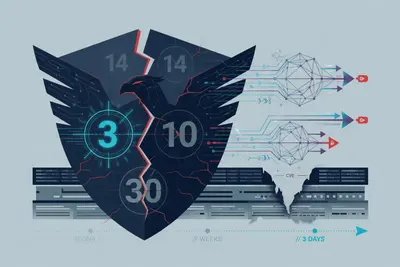
AI tools are compressing the gap between vulnerability disclosure and working exploit, and CISA is adjusting its patch timelines to match.
OpenAI says China-linked accounts impersonated Americans to manufacture grassroots opposition to US data centers by amplifying real energy cost concerns.
North Korean operatives posing as remote IT workers and recruiters drove roughly half of all tech-sector attacks last year, per CrowdStrike.
Varonis researchers built and then phished an AI email agent to show it would surrender AWS credentials and customer records to a single impersonation email.
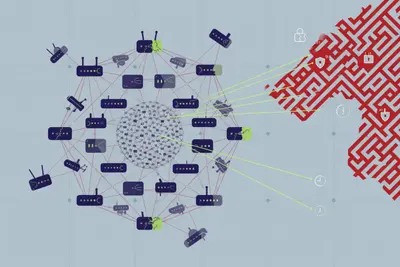
The JDY botnet has more than doubled to 1,500 compromised routers and IoT devices, and begins probing newly disclosed vulnerabilities within hours of publication.
US military investigators are still evaluating whether an Iranian Shahed drone deliberately targeted an AH-64 Apache near the Strait of Hormuz - or just got lucky.
ServiceNow told enterprise customers a security bug exposed their data publicly, and confirmed that several customers had data accessed as a result.
KPMG had the legal right to access a work laptop, and it used that right to pull a whistleblower's own allegations and hand them to the firm's CEO.
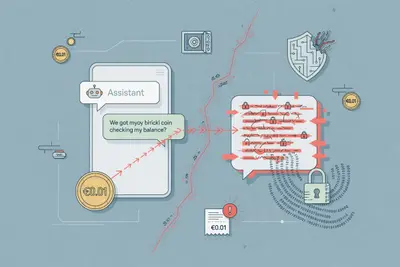
Security researchers found bunq's AI assistant could be manipulated into executing unauthorized commands by hiding instructions inside a transfer memo.
AI-assisted vulnerability discovery gets the credit for a June update that addressed more than 200 flaws, an all-time Patch Tuesday record.
Trojanized X-VPN setup files install STX RAT alongside a working VPN client; X-VPN's own servers were not touched.
A GitHub proof of concept shows how data hidden in image file metadata can bypass content inspection tools.
Microsoft patched two zero-days disclosed by a researcher called Nightmare Eclipse, following what appears to have been a prolonged and contentious dispute.
A logic inversion bug caused by a single wrong character was found in the Linux kernel, which runs most of the world's servers and devices.