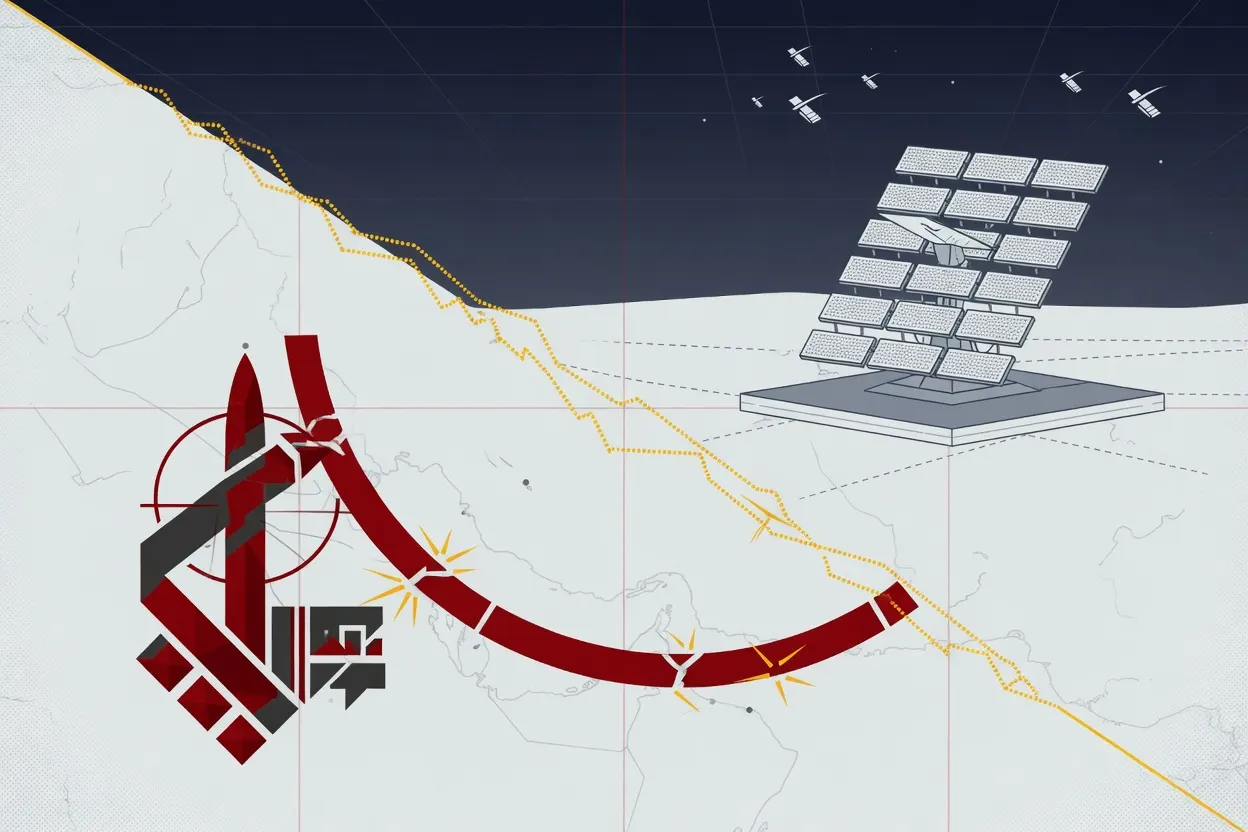
Iran-linked media has put Starlink ground facilities in the Middle East on a potential target list.
A news agency with ties to Iran's Revolutionary Guards published a threat to strike Starlink's terrestrial infrastructure across the region, along with unspecified assets connected to Elon Musk's other companies. The framing was conditional — the report said Iran could target these sites, stopping short of declaring imminent action. Starlink ground stations are the relay points that connect the satellite network to the broader internet; taking them offline would black out regional coverage without requiring anyone to target the constellation in orbit.
What matters here is the category of target: commercial infrastructure owned by a private American company, not a state military asset. Starlink has been deployed across conflict zones throughout the region, which increasingly puts it in the same threat column as military communications. Striking ground stations also carries a lower escalation threshold than antisatellite weapons, which historically trigger far more serious diplomatic and military consequences.
Iran regularly uses state-adjacent media to float threats before committing to anything official. Even as posturing, explicitly naming a commercial satellite operator's ground infrastructure as a deliberate military target — rather than treating it as collateral damage — marks a shift in how adversaries are drawing their target maps.