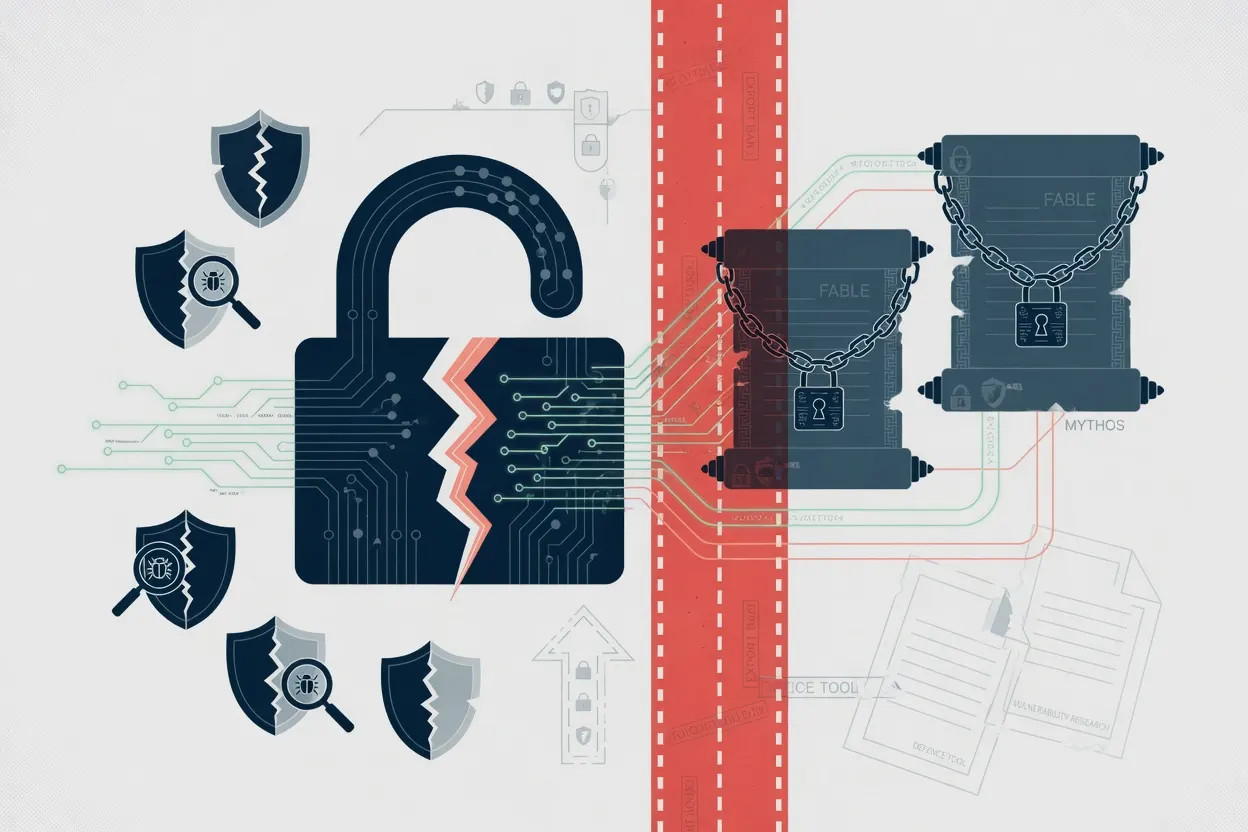
Roughly 100 cybersecurity professionals have published an open letter urging the White House to lift export control restrictions on two of Anthropic's most advanced AI models.
The US government ordered Anthropic to restrict access to Fable 5 and Mythos 5 roughly three days before the letter appeared. The signatories, drawn from prominent security research and practice, argue the order backfires: defenders use these tools to find vulnerabilities and harden software, while attackers face no equivalent restriction. Pulling the most capable AI from the people trying to secure systems, the letter contends, is not a safety measure but a handicap.
The argument has a structural logic the government has not publicly addressed. Export controls are designed to keep sensitive technology from adversaries abroad, but cybersecurity is asymmetric: the attacker needs only one gap, and the defender must close all of them. Denying security teams access to frontier AI while nation-state actors build their own is a bet that export controls hold, a bet with a poor historical record when it comes to dual-use technology.
Whether the White House treats a hundred security researchers as a lobbying campaign or a substantive technical warning may determine how quickly, if at all, the restrictions get revisited.