Lead story / data-breach
Insurance Regulators Hit by Oracle Zero-Day, 3.1TB Claimed Stolen
ShinyHunters says it took 3.1TB from the NAIC by exploiting an Oracle PeopleSoft zero-day that went unpatched for two weeks.
The Revision reporting on Security — 1141 stories on the wire, decoded into one clear voice.
ShinyHunters says it took 3.1TB from the NAIC by exploiting an Oracle PeopleSoft zero-day that went unpatched for two weeks.
A compromised third-party vendor injected malicious scripts into Polymarket's frontend, draining crypto from roughly 11 users before the platform caught it.
A patched high-severity bug in Amazon Q Developer allowed a malicious repository's config file to silently run commands and exfiltrate AWS credentials.
Hackers stole close to $3 million from Polymarket users' crypto wallets, with one analyst pointing to a phishing scheme as the method.
After ransomware group Icarus stole Klue customer data, an unnamed second group stole it from Icarus and is now extorting those customers directly.
A newly documented macOS backdoor called Gaslight embeds fake system messages to trick LLM-assisted triage tools into abandoning analysis.
CISA and the FBI updated their warning on Russian intelligence targeting commercial messaging apps with new tactics and phishing samples.
INSEE says a cyberattack exposed personal data for roughly 12,800 current and former employees, detected on June 19.
Hackers injected malicious code into Polymarket's prediction market site via a compromised vendor, draining roughly $3M in crypto from at least 11 users.
Polymarket confirmed hackers stole user funds through a third-party breach and says it will reimburse affected users.
The market intelligence firm says the original attackers are deleting stolen data, but a fresh group has emerged demanding payment.
A forensics device supposedly off-limits to Russia was used to break into an activist's phone, raising questions about how well export controls actually work.
Operation Endgame dismantled infrastructure behind SocGholish, Amadey, and StealC — but no arrests means the clock is already ticking on a rebuild.
Zscaler found a campaign using fake Outlook update sites and a Teams phishing lure to install a backdoor extension that breaks out of the browser sandbox.
Unit 42 researchers found five malicious OpenClaw skills on ClawHub, including two macOS infostealers that slipped past automated scanners.
A Citizen Lab report links forensic evidence and a Russian court document to Cellebrite tools used on a detained opposition politician's phone.
Security researchers found evidence Russian authorities used Cellebrite phone-cracking hardware against a political opponent despite the company's stated ban.
Coordinated action by international authorities and tech firms disrupted Amadey and StealC, two separate cybercrime tools linked by shared infrastructure.
Criminal interest in deepfake tools is rising fast, and experts warn the next wave of CEO fraud will be harder to spot.
Hackers accessed LastPass contact records via a compromised OAuth token at sales intelligence vendor Klue, in an attack that hit dozens of other companies too.
A Senate hearing revealed NSA told lawmakers that Mythos found vulnerabilities in nearly all classified systems within hours during a controlled exercise.
A Huntress report details how the EvilTokens phishing-as-a-service operation used AI to scale personalized attacks and bypass MFA.
A new security analysis finds that the AI agents built for offensive security work share design flaws that let attackers steal credentials and escape sandboxes.
Hackers used a leftover 2022 credential to access a system holding keys for accessing Klue customers' data, raising questions about credential hygiene.
The Peter Thiel-backed private events group blames a criminal breach, but the exposed member data appears to have required no break-in at all.
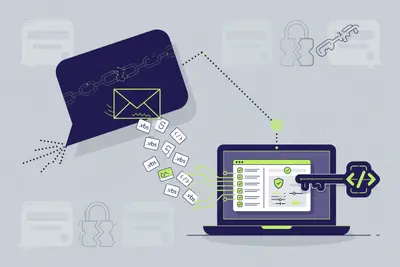
Attackers hijack WhatsApp accounts to send VBScript files that install a legitimate endpoint manager, handing over remote system access.
CISA added four actively exploited vulnerabilities to its KEV Catalog, including three Ubiquiti UniFi OS flaws and a Lantronix code injection bug.
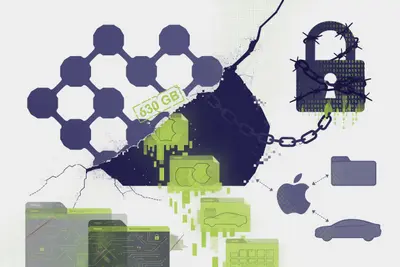
A ransomware group claims to have stolen 630 GB from Tata Electronics, including design files allegedly belonging to Apple and Tesla.
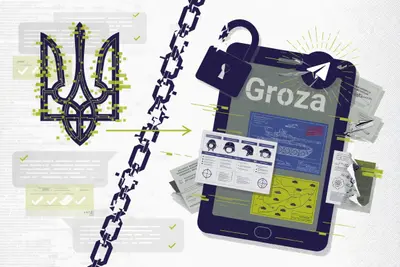
The Glaz/Groza breach exposed training materials, patents, and a battlefield platform whose updates were distributed via Telegram.
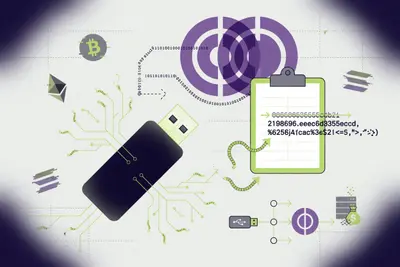
Microsoft researchers found a script-based worm that spreads via USB drives, hijacks clipboard wallet addresses, and phones home over Tor.
A red-team evaluation, not a hack: Mythos penetrated classified NSA systems during an authorized drill, supplying the missing rationale for a June 12 model ban.
A new protocol backed by Chrome, Firefox, and Edge would issue anonymous tokens to verify human visitors without CAPTCHAs or logins.
Vague prompts and off-the-shelf AI agents were enough for one novice to compromise 14 organizations, per a full working-directory analysis by OALABS.
OpenAI's new Daybreak suite pairs a coding agent with a security-tuned model to find and fix vulnerabilities at scale, the company says.
A new study finds that feeding LLMs output from both Ghidra and RetDec catches more malware than relying on either tool alone.
A new research paper argues that vector databases used in AI pipelines lack the fine-grained access controls that sensitive data actually requires.
A new paper warns that leaning on LLMs for post-quantum cryptography work erodes secure coding habits over time and proposes a gamified framework to push back.
Handala claims it could have cut off water access to seven California districts but chose not to — a threat dressed as restraint.
A Cybernews study found apps tied to 10 different AI toys each requested permissions classified as dangerous under standard mobile security frameworks.
A Texas government breach exposed 3 million driver's licenses and passports, but the disclosure names neither the agency nor the breach window.
A working proof-of-concept called usbliter8 exploits a USB controller bug in Apple's A12 and A13 chips - and no software update can ever fix it.
One researcher's sweep of GitHub turned up roughly 10,000 repositories quietly distributing trojan malware to unsuspecting developers.
Researchers show that open-source retrieval models can be directly edited to inject malicious knowledge into RAG pipelines, bypassing text-based defenses.
Russian-speaking attackers breached 74,000 Fortinet devices and dumped plaintext credentials for Oracle, Chevron, a NATO contractor, and more.
Firmware 1B211 patches a flaw that let anyone in Bluetooth range listen through an unpaired Studio Buds microphone.
Someone swamped Maine's public data breach registry with fabricated reports, and the AG's office responded by taking the whole portal offline.
Over 1,500 Arch Linux community packages were seeded with credential-stealing malware last weekend, and no vulnerability was required to do it.
A missing authorization check in FactoryTalk Analytics PavilionX versions before 7.01 lets attackers manage users and roles without credentials.
A 9.4-severity authentication flaw in Rockwell's factory-floor adapters lets any network attacker change the device password with a single HTTP request.
Researchers taught a model to encode hidden instructions via semantic associations — a technique that bypasses both backdoor and prompt injection defenses.