New Language Goose Claims to Beat C++ and Safe Rust on Speed
Goose is a new experimental language claiming to beat C++ and safe Rust on speed while remaining memory safe, and it's drawing early Hacker News attention.

The Revision reporting on Dev Tools — 127 stories on the wire, decoded into one clear voice.
Goose is a new experimental language claiming to beat C++ and safe Rust on speed while remaining memory safe, and it's drawing early Hacker News attention.
A new memory-safe language says early benchmarks show it edging out C++ and safe Rust, though the numbers so far come only from its own creator.
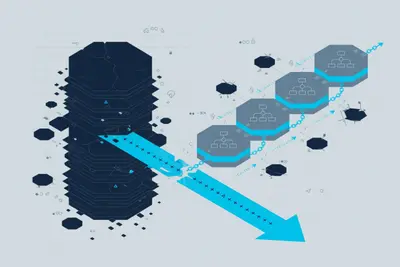
Bend compiles ordinary code to run in parallel across CPUs and GPUs automatically, without hand-written threads or locks.
A new educational code library pairs simple tabular and deep reinforcement learning implementations so students can see the same logic scale up.
Quanta stitches vector search, full-text search, and graph traversal into one Python library, betting that rank fusion beats fragile score normalization.
A paper titled The Biomimetic Architecture of Software 4.0 argues LLM coding tools need a new language, not more scaffolding, to fix a broken execution model.
Consort forces AI coding agents to pass immutable tests on a live database, betting code discipline beats prompt discipline.
SCPP wraps 40 fuzzy, probabilistic, and deep-learning clustering algorithms into one scikit-learn-style interface for benchmarking.
A new benchmark testing whether language models can reason through formal Rust proofs finds they crumble when steps go missing.
A new domain-specific language enforces AI coding workflows step by step, driving a 14-22 point SWE-bench Verified gain over prose instructions.
TDD-Agent has the model write tests before code, then refines both together with execution feedback, beating retrieval and agent baselines on repo-level tasks.
RAGas is a new research framework that uses AI to spot and fix wasteful Ethereum code, cutting gas costs by up to 11% in tests.
A new research framework combines LLM code rewrites with traditional compiler checks and formal verification to catch mistakes before they ship.
OGX, a two-year-old open-source server, lets developers swap AI inference engines, vector stores, and safety tools without rewriting agent code.
A research system predicts why code changed, flags AI drift from that intent, and highlights the lines that most need human review.
A new study finds LLM confidence when writing code tracks language design more than correctness, with Shell scoring worst and Java best.
The kernel's creator backed an AI-assisted review tool and told skeptics to fork the project or leave, marking a clear shift from his 2024 skepticism.
A new parallel algorithm finds conditional data dependencies up to 318 times faster, making large-dataset profiling practical on ordinary hardware.
A new testing system runs real browser interactions to catch dynamic WCAG failures that page-level scanners and manual audits routinely overlook.
A new paper shows that most web servers already have what they need to stop stalling on hardware offloads — no framework rewrite required.
The CUDA-on-AMD translation layer drops commercial backing for the second time, but version 6 still lands 32-bit PhysX support and PyTorch fixes.
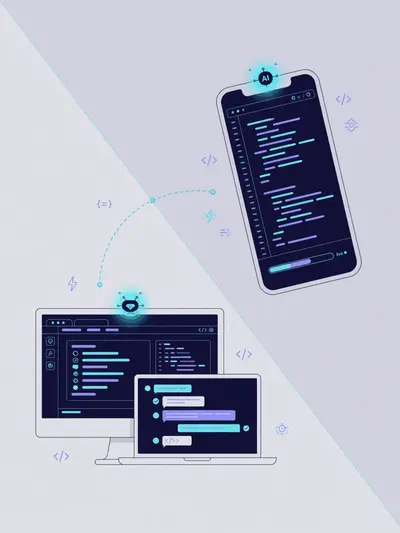
Cursor's new iOS app lets developers start and monitor AI coding sessions from their phone, tethered to the desktop client.
The latest Git release teaches repack to write incremental multi-pack index chains, cutting the cost of routine maintenance on large repositories.
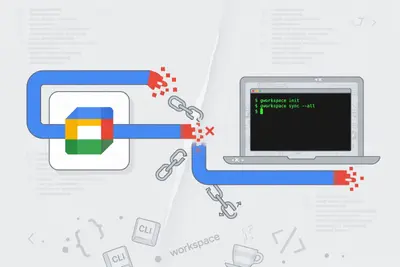
Justin Poehnelt says Google terminated his employment after he created a command-line tool for Google Workspace.
The community-built Swift package registry has joined Apple, though what the arrangement actually looks like remains publicly unclear.
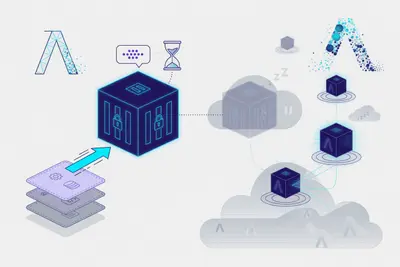
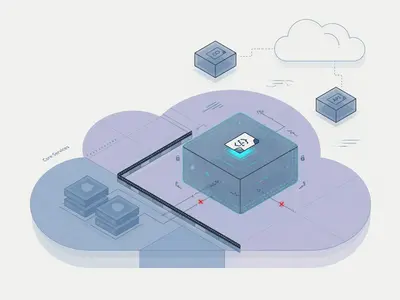
Lambda MicroVMs give developers per-user Firecracker sandboxes that launch from snapshots, retain state, and suspend when idle - no VM expertise required.
A new multi-agent framework lets large language models read compiler internals and runtime feedback to beat hand-tuned optimization settings.
An open-source platform with 45-plus pre-built components wants to stop conversational search teams from rebuilding the same pipeline for every study.
A new framework combines retrieval-augmented generation and fine-tuning to automatically rewrite Python for better runtime performance.
A community thread on replacing cloud AI with local models for daily coding drew 59 upvotes, a sign developers are taking the question seriously.
The Bytecode Alliance ships the third WASI preview, adding native async support to close the biggest gap in the WebAssembly component model.
A developer argues their domain-specific language still makes sense in a world where language models generate code from plain English.
Encrypted Spaces is an open-source framework that gives developers the building blocks for Slack-style apps that even the platform operator cannot read.
A developer post-mortem on WebRTC failures is a useful reminder that VPN mesh networks quietly reshape device networking in ways that break peer discovery.
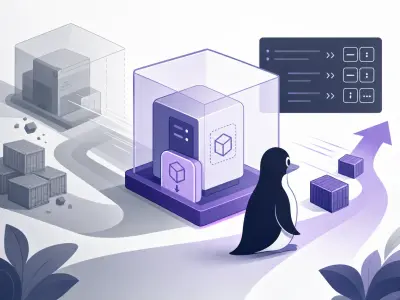
Apple's container tool for macOS wraps each Linux container in its own lightweight VM, trading density for stronger isolation.
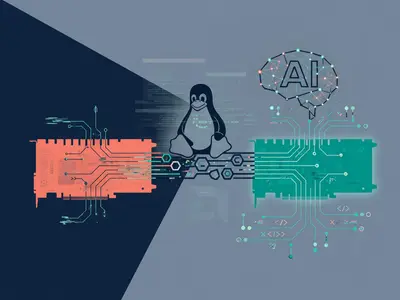
Community developers are applying vibe coding to older AMD GPUs that lost official Linux support — no kernel expertise required.
The API integration platform published a technical breakdown of how it isolates customer-written code without letting one bad script take down the rest.
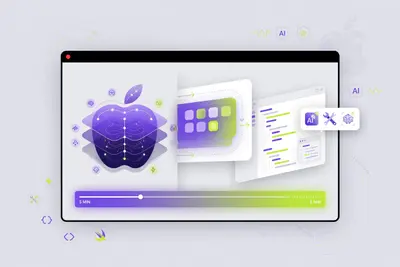
Apple's WWDC26 developer recap reveals Foundation Models rebuilt using Google's Gemini technology, while Anthropic, OpenAI, and Google all get native Xcode agent access.
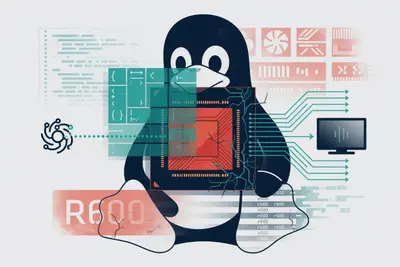
A Linux developer used GitHub Copilot to refactor the R600 driver, keeping AMD Radeon HD 2000 through HD 6000 cards alive on Linux.
The CRDT framework argues that concurrent creation of data structures deserves the same principled merge semantics as concurrent edits.
Nightwatch plants read-only agents inside each environment to group alert storms and hand investigators a head start, not a remediation bot.
A new GitHub library attempts what Google Docs and LibreOffice have long struggled with: rendering Office documents in the browser without layout drift.
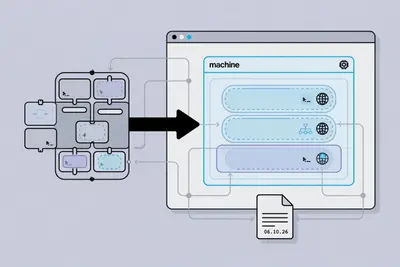
Version 6 of the daemonless container runtime focuses on making the VM-backed machine setup less painful on macOS and Windows.
The cznic/sqlite package transpiles SQLite's C source into pure Go, cutting the CGo dependency that breaks cross-compilation and complicates container builds.
A new open-source CLI generates source-backed tutorials for obscure technical domains and makes you type every line yourself.
An open-source proxy tool lets developers intercept and rewrite HTTP requests without installing a desktop app.
ntsc-rs is a free emulator that adds authentic analog TV noise and VHS degradation to digital video, no plugin subscription required.
Python's governing body has formally asked the team behind CPython's experimental JIT compiler to halt development, raising questions about the feature's future.
A new project ditches config files in favor of eBPF programs that hook directly into Linux's kernel networking stack.
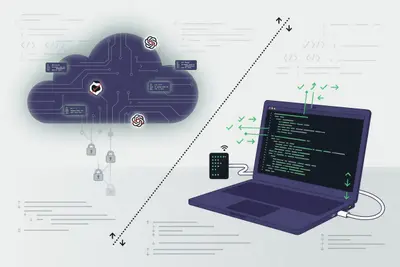
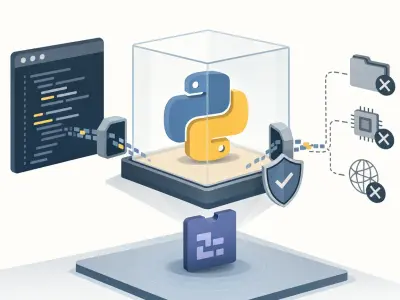
A stripped-down Python runtime compiled to WebAssembly provides an isolation layer for untrusted code execution without containers or a full interpreter.