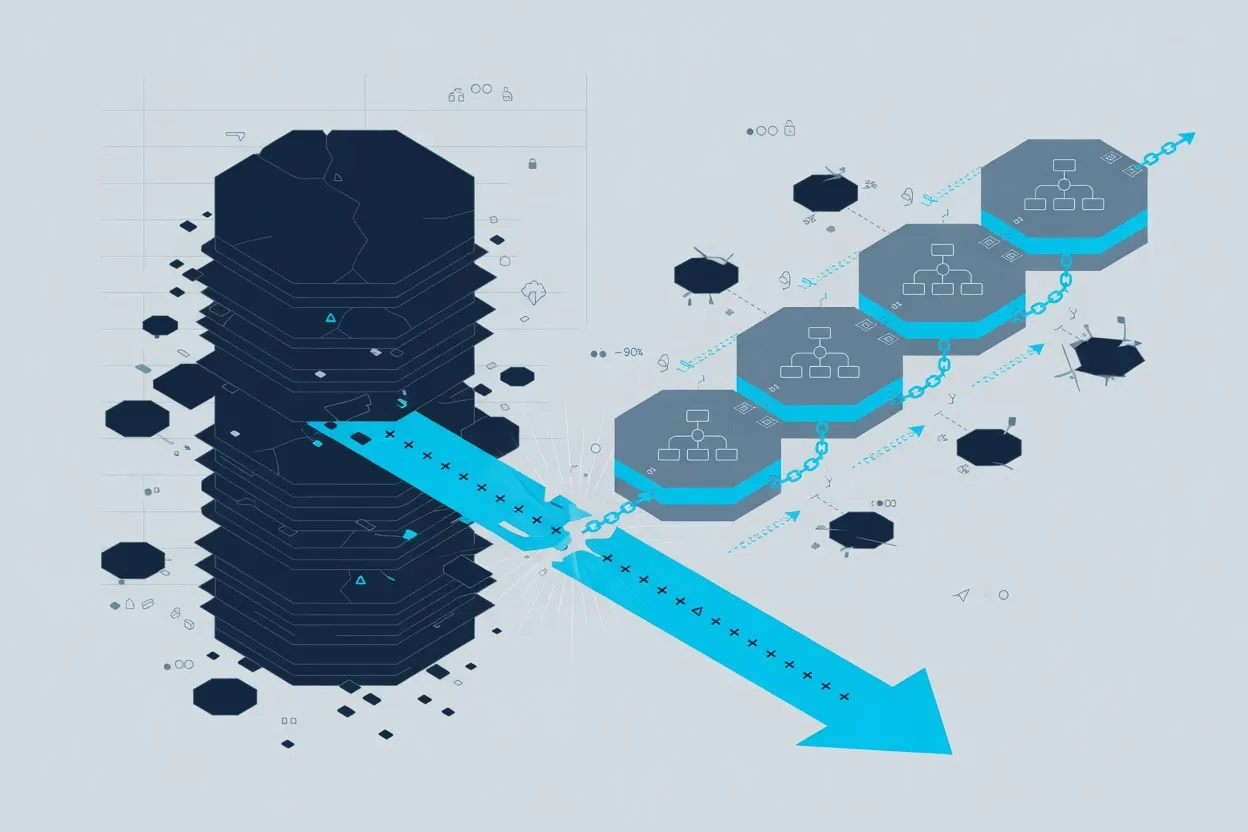
Git 2.55 is out, and the headline change is smarter pack maintenance for repositories that have grown too large to rewrite cheaply.
Git stores repository contents as objects packed into compressed packfiles, each with its own index. A multi-pack index (MIDX) gives Git a single index across all those packs — useful, but expensive to update when the repository is already huge. Git 2.47 introduced an incremental MIDX format that stores the index as a chain of layers rather than one monolithic file. Git 2.55 completes that picture by teaching git repack to write those chains directly via --write-midx=incremental. Paired with the existing --geometric flag, the command now applies a logarithmic compaction rule: newer, smaller layers get rewritten more often; older, larger ones are left alone unless they genuinely need merging. The split factor is tunable via repack.midxSplitFactor.
For most developers this is invisible plumbing, but for teams running large monorepos or self-hosted Git infrastructure, it matters. Routine maintenance no longer has to choose between an ever-growing chain of tiny layers and a full rewrite of a MIDX that covers millions of objects. GitHub itself uses MIDX as part of its repository maintenance strategy, so the feature arrives with real-world motivation behind it.
The release also drew contributions from 33 first-time Git contributors out of more than 100 total — a reminder that the version control tool underpinning most of the industry's code still gets better the old-fashioned way, one patch at a time.