Lead story / flock
Flock CEO Says Its Mics Only Detect Gunshots. Site Says More
Flock's CEO downplayed what its microphones capture, but the company's own marketing describes broader audio detection, fueling privacy advocates' concerns.
The Revision stories tagged surveillance — 72 stories on the wire, decoded into one clear voice.
Flock's CEO downplayed what its microphones capture, but the company's own marketing describes broader audio detection, fueling privacy advocates' concerns.
Amid reports of misuse, Flock's chief executive insists the surveillance firm has not dropped a single police agency as a client.
A Georgia business owner claims Coweta County deputies and Flock's license plate camera network tracked him for months without any real case behind it.
A new report says ICE is planning a $100 million domestic surveillance effort informally called Nightmare, raising privacy concerns.
A London startup's camera system is going into a Gdańsk hospital's operating theatre while EU rules on workplace monitoring AI sit delayed until 2027.
Elgin Community College asked Flock to remove its cameras over data sharing fears, but the company says its contract doesn't require it to comply.
Flock is cutting staff as privacy criticism mounts, and won't say whether CEO Garrett Langley is taking a pay cut too.
Emails show the agency considered feeding voter rolls into Palantir-supported software built to flag deportation targets.
A federal jury in Texas found Bexar County's license plate reader program led to an unconstitutional stop, awarding the driver a symbolic $76.
Psiphon, used by 18 million people, says it would relocate rather than comply with Bill C-22's expanded surveillance powers.
Multiple lawmakers introduced bills to curb Flock Safety's surveillance cameras after 404 Media's reporting on the company.
Windscribe says Canada's Bill C-2 would force it to log and hand over user data, so the Toronto VPN provider is preparing to relocate instead of comply.
While red states and cities ditch Flock's license plate cameras over privacy fears, San Francisco renewed its 400-camera network with only modest new limits.
North Richland Hills, Texas, demanded $2.3 million for Flock records based on a 14-year labor estimate that doesn't add up.
A federal judge ruled a Tulsa deputy's warrantless Flock camera search unconstitutional, adding fuel to a national backlash against license-plate tracking.
Bernie Sanders new bill would bar federal agencies from using Flock's license plate cameras and cut funding to states and cities that keep using them.
Unsealed court filings show DHS agents tracked people observing ICE operations in Maine and stored their information in a Palantir-built database.
Cities are adopting rooftop drones that respond to 911 calls faster than officers, but many are rejecting the program over surveillance and data-sharing fears.
Automated license plate readers in US cities are quietly routed into HIDTA, a multi-agency federal program overseen by the White House drug policy office.
Amazon's new delivery glasses capture nearly constant photos during a shift, and the company says it hasn't decided if customers can opt out.
Protesters gathered outside OpenAI's DevDay this week, per PCMag, to oppose the company's AI work in surveillance and military use.
A Flock Safety system told police a driver was uninsured when she wasn't, showing how automated enforcement pushes the cost of errors onto the misidentified.
A researcher exposed 335,701 Flock camera locations via an unauthenticated flaw, and now Flock wants his map taken down over trademark use.
Flock's CEO skipped a Senate hearing on AI surveillance networks, even as senators singled out the company by name.
A file upload bug in Siemens Siveillance Control lets an attacker on the network gain root access to the surveillance server, and Siemens has issued a patch.
Flock is offering employees voluntary buyouts as dozens of cities cancel contracts for its license plate reading cameras.
A new calibration system lets multi-camera trackers align themselves using live metadata, not recorded video, dodging privacy and bandwidth limits.
A detection-plus-prediction tracking system holds target identity through long occlusions, beating a rival on two benchmarks including a military dataset.
Anthropic's latest threat report shows attackers tried using Claude for surveillance, weapons research, and propaganda before the company intervened.
Anthropic's new report details Claude misuse for bioweapon research, drone engineering, and state surveillance, and argues AI now favors bad actors too.
Clearview AI is testing InquiryIQ, a prototype built on an xAI model, that would let police pull social accounts and associates from a single face match.
A DHS unit reportedly builds predictive profiles from Americans' financial data to flag drivers for police stops, according to a new report.
A Massachusetts judge ruled state police must disclose where their license plate readers are, ending a three-year ACLU lawsuit.
After a Navy veteran lawfully recorded a traffic stop, Wisconsin police ran his license plate through Flock's tracking network more than 100 times.
Florida has banned Flock's license plate reader cameras from state roads, joining a growing wave of pushback against the technology.
The agency has bought phone-hacking tools that require no tap, no link, and no mistake from the person being watched.
Florida ordered police to strip license plate readers from highway rights-of-way, joining a fast-spreading revolt against Flock and its rivals.
Florida banned Flock Safety's license plate cameras from highways and Texas froze funding for them, both in the same week.
Florida and Texas are pushing to restrict Flock's 130,000-camera license plate network amid bipartisan privacy concerns.
Florida's DOT is revoking all license plate reader permits, citing misuse and privacy concerns, and giving operators 30 days to clear state highways.
Texas halted state funding for Flock's license plate cameras after a report found $30 million in grants funded them, as bipartisan backlash builds nationwide.
DHS is quietly using a rarely invoked summons power to gather records on journalists, non-profits, and unions, with little independent oversight.
Ninety cities and counties dropped Flock's camera network in August alone, a fourfold jump, as backlash over surveillance and cost keeps building.
A Senate letter demands Flock explain data retention and wrongful arrest cases tied to its plate reading cameras, with answers due September 8.
Slovak officials found a hidden backdoor in Russian-made traffic cameras, reviving worries about foreign hardware in critical infrastructure.
Slovakia deactivated 279 EU-funded speed cameras after finding SMS-triggered Russian backdoors and open access to live feeds.
After questioning his city's use of Flock surveillance cameras, a police officer faced five internal affairs investigations in less than two years.
As Los Angeles and other cities cut ties with Flock's license plate readers, the fight over who controls that surveillance data is just getting started.
A system already running in over 100 UK stores is about to escalate from flagging shoppers to calling police automatically, in real time.
A new model called AViS-Mamba lets the visual stream actively reshape how audio is processed, rather than blindly fusing both signals together.
FuseMamba-VD uses a dual-branch state-space architecture to detect violent acts in footage more efficiently than CNN or Transformer approaches.
A forensics device supposedly off-limits to Russia was used to break into an activist's phone, raising questions about how well export controls actually work.
A Citizen Lab report links forensic evidence and a Russian court document to Cellebrite tools used on a detained opposition politician's phone.
Security researchers found evidence Russian authorities used Cellebrite phone-cracking hardware against a political opponent despite the company's stated ban.
A White House app pushed to millions of government employees' work phones auto-reinstalls after deletion, alarming federal workers at multiple agencies.
Meta quietly ran a program logging employee keystrokes and screen activity, then killed it after someone inside leaked details of the surveillance.
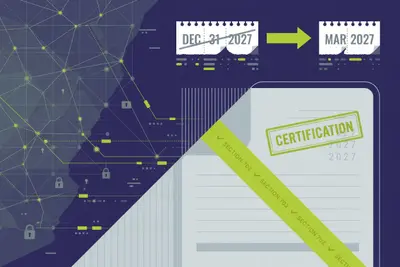
The spying law lapsed at midnight, but an existing court certification keeps Section 702 collection running until March 2027.
EU regulators are considering whether existing surveillance law covers camera-equipped glasses that silently record bystanders in public.
The House voted 218-198 against a short FISA extension, letting the warrantless surveillance program lapse while Congress debates what warrant rules to attach.
The San Francisco startup wants to layer AI onto cameras organizations already own, skipping the costly hardware rip-and-replace that usually comes with physical security upgrades.
Stockton approved millions in Flock drones for first response, but residents say the city is building an aerial surveillance network dressed as public safety.
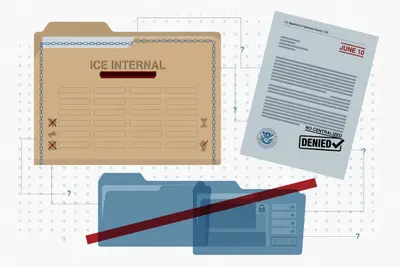
ICE says it has no protester database, but a letter to Congress offers a more detailed account of what the agency actually does.
Face recognition and anti-drone systems are being deployed at 2026 World Cup venues across three countries with distinct privacy laws.
Roskomnadzor wants to fix the developer access problem it created by proposing a VPN it fully controls - which rather misses the point of a VPN.
Keir Starmer's mandate to block explicit content on children's phones has privacy advocates warning the scanning infrastructure will outlast its stated purpose.
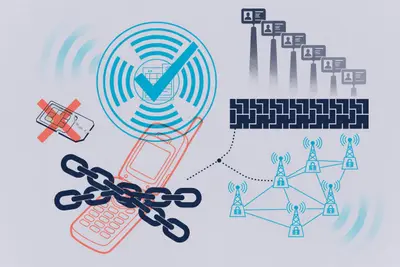
A proposed FCC rule would require telecoms to verify every subscriber's identity, effectively ending anonymous prepaid phone service in the US.
San Diego State installed hundreds of AI-enabled cameras in residential housing without telling the students who live there.
Robot dogs, net-shooting drones, and AI cameras are being deployed across 16 World Cup cities, and what gets built for the tournament rarely gets dismantled.
A stored cross-site scripting flaw in CP Plus 8-channel NVRs scores 8.4 and puts admin sessions at risk across critical facilities in four countries.
The theme park confirmed it deployed facial recognition at its California entry points, joining a growing list of venues experimenting with the controversial technology.
OpenAI banned a network of China linked accounts that used its AI models to research and profile critics as part of surveillance planning.
The company shut down likely China-based accounts that used its models to draft surveillance-tool pitches, analyze documents, and debug code.