The most-watched soccer tournament in history is also shaping up to be the most watched, in the other sense.
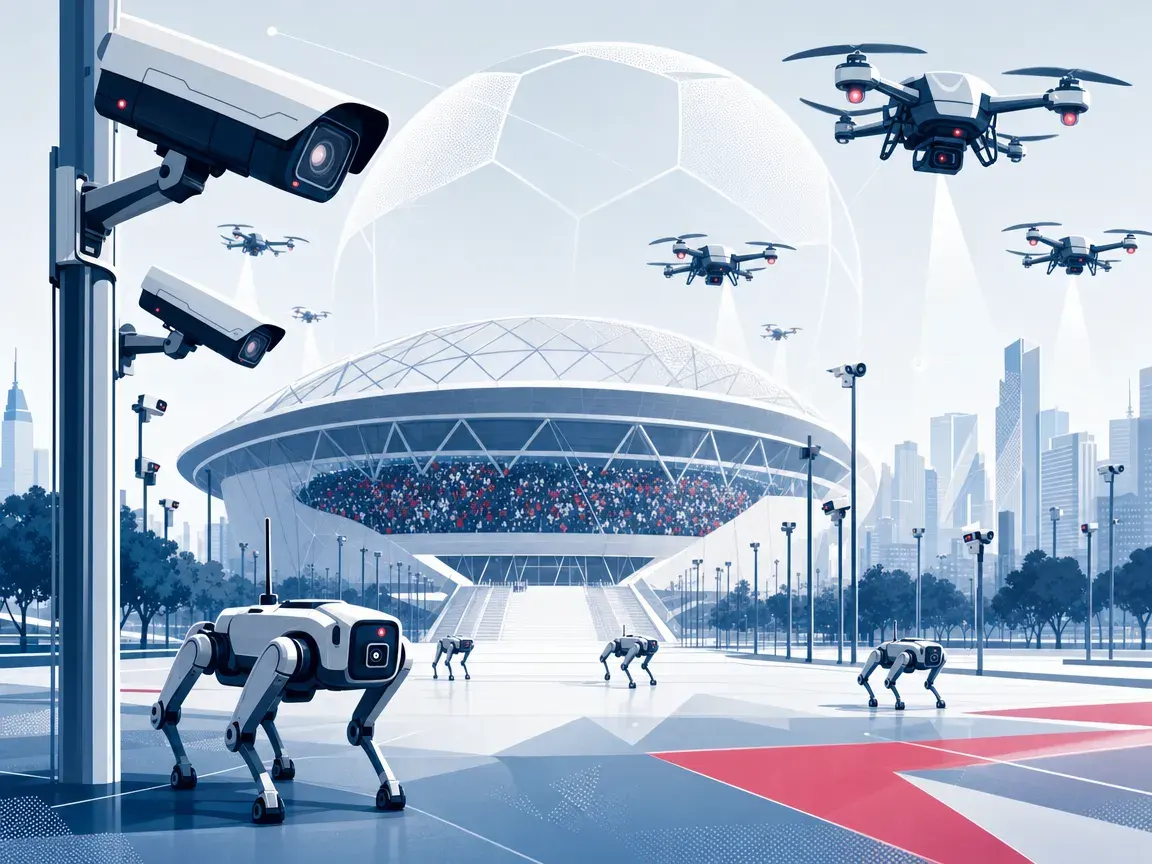
The 2026 FIFA World Cup opens next week across 16 cities spread across the US, Mexico, and Canada — 48 teams, 104 matches, 39 days. Security forces are deploying robot dogs, autonomous drones that shoot nets to disable rogue aircraft, and thousands of AI-powered cameras at venues. Organizers and law enforcement have described it as the most technologically surveilled sporting event ever staged.
That framing should land with some weight. Mega-events have historically served as accelerators for surveillance infrastructure — equipment and data pipelines that tend to get absorbed into city law enforcement budgets long after the closing ceremony. Spreading this across three countries simultaneously creates a patchwork of privacy regulations: what US authorities can legally retain, share, or act on differs from what Canadian or Mexican law permits, and no single oversight body spans that gap. The civil liberties concerns that follow AI camera deployments at large public events have never been cleanly resolved; the 2026 World Cup is scaling the experiment.
Robot dogs at a soccer match makes for a striking image. What happens to the surveillance infrastructure in Dallas, Toronto, and Mexico City in 2027 is the actual story.