Lead story / apple
Apple Intelligence Clears China With Alibaba's Qwen Models
Chinese regulators approved Apple Intelligence for launch in China, with Alibaba's Qwen AI standing in for Apple's own models.
The Revision stories tagged china — 49 stories on the wire, decoded into one clear voice.
Chinese regulators approved Apple Intelligence for launch in China, with Alibaba's Qwen AI standing in for Apple's own models.
Regulators approved Apple's AI feature set for the Chinese market, with Alibaba's Qwen and Baidu providing the local model layer.
New rules bar children from forming romantic or dependent relationships with chatbots, part of Beijing's push to address low birthrates and screen dependency.
Chinese regulators cleared Apple's on-device AI system this week, with Alibaba's Qwen model set to power it for users across iOS, iPadOS, macOS, and visionOS.
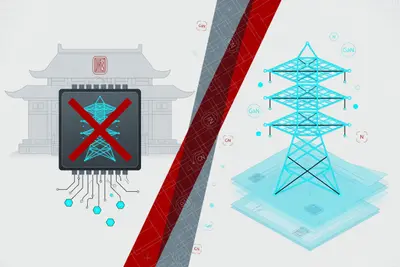
The US has approved ZTE and Maginfra to purchase Nvidia's Hopper-generation H200 accelerators, expanding a short list of Chinese firms with sanctioned access.
Under pressure from Washington, Nvidia has slashed its roster of verified buyers in Asia, sending inspectors to data centers to weed out shell companies.
Beijing's cybersecurity alert targeting Anthropic's coding tool is accelerating a migration already under way toward domestic Chinese alternatives.
A Singapore loophole lets companies on the US military blacklist purchase advanced AI from OpenAI and Google, raising questions about export controls.
A group tracked as UNK_MassTraction has been raiding Roundcube mail servers at US and Canadian universities since May, stealing credentials from research staff.
Beijing's NVDB alleges Claude Code versions 2.1.91-2.1.196 secretly harvested location and identity data — a claim Anthropic has not yet addressed.
LongCat-2.0 is Meituan's answer to US export controls: a massive AI model built entirely on domestic silicon, no Nvidia required.
DeepSeek closed the largest first-time raise by a Chinese startup, a sign that US pressure may be accelerating capital into China's AI sector.
China's Zhipu AI released GLM-5.2, an open-weight model that researchers say rivals US-restricted AI on bug-finding and cybersecurity tasks.
A Chinese lab's GLM-5.2 claims to match Anthropic on cybersecurity, but the Anthropic model it names as competition has no verified public existence.
Kunlunxin is reportedly asking IPO investors to buy its chips too, blurring the line between capital raise and sales push.
With DRAM prices up fourfold, Apple is pressing the Trump administration to let it buy chips from Pentagon-listed CXMT.
As Anthropic restricts Claude access by location, Chinese users are routing around the blocks with proxies, fake identities, and Telegram-sourced workarounds.
The federal government denied Polestar's authorization request under the Connected Vehicle Rule, ending US sales of its EVs from model year 2027 onward.
Export controls have pushed black-market prices for Nvidia AI servers to almost three times their US retail cost, according to new reports.
Anthropic accused Alibaba of using 25,000 fake accounts and 28.8 million exchanges to distill Claude into its own models, in a letter to two senators.
With 46% of revenue from China, Qualcomm is building export-compliant AI chips for Chinese data centers — a lane Nvidia already abandoned.
Anthropic accuses Alibaba of illicitly extracting capabilities from Claude, raising fresh questions about AI intellectual property enforcement.
The bank now expects 50,000 humanoid robots to ship in China this year, citing a shift from stage demos to real factory and retail deployments.
China's LineShine system posted 2.198 exaflops on the standard benchmark using only domestic CPUs - but the real story is that China chose to submit it at all.
Qualcomm is in talks to design custom chips for ByteDance, a move that signals the chipmaker's pivot away from the saturating smartphone market.
The Beijing AI lab is exploring a major fundraising round after its Hong Kong shares soared, but profitability remains an open question.
With smuggling routes shut and legal imports blocked, Chinese buyers are paying triple for aging Nvidia AI hardware with nowhere else to turn.
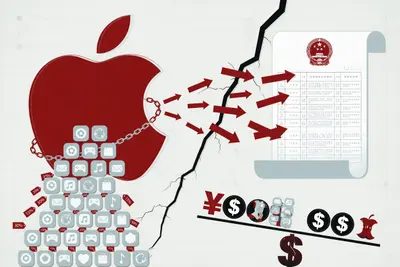
A group of Chinese iOS developers petitioned China's market regulator, alleging Apple broke a promise to offer them the lowest available commission rate.
China's Supreme People's Court upheld an injunction against Infineon, handing domestic rival Innoscience a major win in an ongoing multi-region patent dispute.
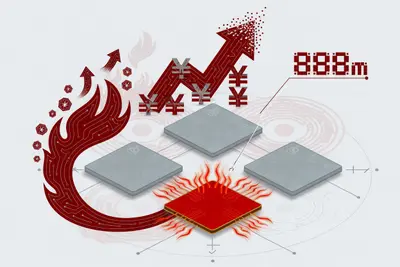
Tencent-backed Enflame is the final member of China's homegrown AI chip quartet to win stock exchange listing approval, seeking $888 million.
Shanghai Jiao Tong University's new photonic computing lab signals Beijing's bet that light-based chips can substitute for the silicon it can no longer import.
After export controls gutted its GPU sales in China, Nvidia is now pitching its Vera CPU, a product that may sidestep current restrictions.
Anthropic's Fable 5 launched with controls blocking China's AI labs, but the loudest complaints came from Anthropic's own community.
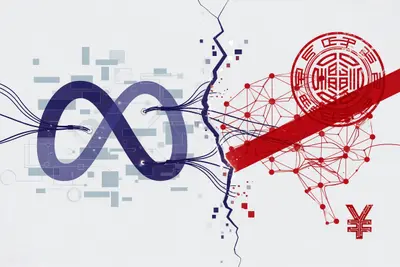
Meta has cut the Chinese-founded agentic AI startup off from its systems and is sunsetting the platform after Beijing demanded the acquisition be reversed.
Workers' Daily, the official organ of China's state-controlled trade union federation, has called on the government to put guardrails on AI job displacement.
The bureau says Beijing built a network of phony consulting firms designed to recruit cleared U.S. government employees.
OpenAI says China-linked accounts impersonated Americans to manufacture grassroots opposition to US data centers by amplifying real energy cost concerns.
The JDY botnet has more than doubled to 1,500 compromised routers and IoT devices, and begins probing newly disclosed vulnerabilities within hours of publication.
A proposed blanket ban would go further than blacklist-based controls, turning any AI chip sale to China into a potential crime.
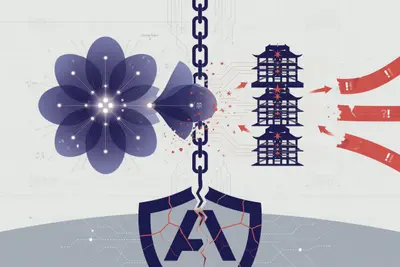
Hundreds of Azure positions cut in China signal that US-China tech decoupling has reached cloud infrastructure itself.
The Defense Department's updated list now names two of China's most recognizable tech companies, adding political risk to any U.S. business dealings with them.
Beijing is writing a five-year blueprint to spend 2 trillion yuan on AI computing capacity built entirely on domestic chips.
The Defense Department's 1260H list now names 188 companies, and the latest additions include some of the most recognizable brands in global tech.
A Chinese startup says nanoimprint technology lets it make photonic wafers without the Western lithography equipment that export controls have largely cut off.
China's drug regulator approved NeuraMatrix's NEO implant for spinal cord patients, putting it ahead of Neuralink on the commercialization timeline.
The Kimi chatbot maker is raising up to $2 billion at a $30 billion target, six months after investors priced it at $4 billion.
An FBI advisory says Chinese military operatives are using LinkedIn and Indeed to pay freelancers for research reports that end up in intelligence hands.
The world's largest digital rights conference was called off after Zambia, under pressure from Beijing, demanded organizers exclude Taiwanese participants.
Chinese automakers are packing vehicles with displays and artificial intelligence, but whether Western buyers care is another question.