Lead story / security
Florida Man, 21, Allegedly Hid Malware in Eight Steam Games
The FBI says Zyaire Wilkins and co-conspirators distributed eight Steam games that infected roughly 8,000 users' computers.
The Revision stories tagged malware — 31 stories on the wire, decoded into one clear voice.
The FBI says Zyaire Wilkins and co-conspirators distributed eight Steam games that infected roughly 8,000 users' computers.
A 21-year-old student allegedly uploaded fake games to Steam that infected thousands of players and drained cryptocurrency from some of their wallets.
A new macOS infostealer skips exploits entirely, instead spamming password prompts every 210ms until victims give up their credentials.
A 21-year-old allegedly uploaded eight malware-laced games to steal from roughly 8,000 devices and 80 crypto wallets over nearly two years.
Kaspersky's GoSerpent analysis reveals a five-year APAC government campaign where attackers waited weeks before deploying data-theft tools.
Zyaire Wilkins, 21, faces up to 10 years in prison after the FBI tied stolen Bitcoin to Uber Eats gift cards purchased at his home address.
Ukraine's CERT warns that Sandworm, the GRU's elite hacking unit, is using fake-CAPTCHA attacks to install malware on Ukrainian networks.
A Russian threat actor ran a small botnet targeting a dental clinic by feeding Google's AI tool a fake pen-tester cover story.
ArcticWolf found hundreds of spoofed repositories pushing a BoryptGrab variant that hits browsers, crypto wallets, and Chrome's App-Bound Encryption.
A Huntress investigation found a PowerShell script almost certainly generated by an AI chatbot — and its uniqueness is exactly what makes it dangerous.
GigaWiper, tied to Iran's CyberAv3ngers, destroys drives three different ways while masquerading as a routine Microsoft update task.
McAfee identified "Silent Swap," a Chromium extension masquerading as Google Notes that swaps crypto wallet addresses mid-paste to redirect funds.
Sysdig researchers say an AI agent autonomously exploited a Langflow flaw, encrypted data, and issued ransom demands — with no human operator involved.
New research tested open-weight language models on PowerShell malware generation and found the output alarmingly close to the real thing.
Researchers propose a multi-task AI framework that detects packed binaries, classifies malware families, and flags threats with a 97.4% combined detection rate.
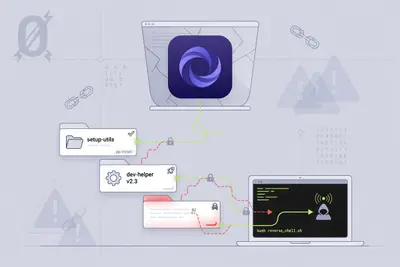
Mozilla's 0din team showed how AI coding agents can be manipulated into opening a reverse shell through a chain of innocent-looking setup steps.
A newly documented macOS backdoor called Gaslight embeds fake system messages to trick LLM-assisted triage tools into abandoning analysis.
Operation Endgame dismantled infrastructure behind SocGholish, Amadey, and StealC — but no arrests means the clock is already ticking on a rebuild.
Unit 42 researchers found five malicious OpenClaw skills on ClawHub, including two macOS infostealers that slipped past automated scanners.
Coordinated action by international authorities and tech firms disrupted Amadey and StealC, two separate cybercrime tools linked by shared infrastructure.
Attackers hijack WhatsApp accounts to send VBScript files that install a legitimate endpoint manager, handing over remote system access.
Microsoft researchers found a script-based worm that spreads via USB drives, hijacks clipboard wallet addresses, and phones home over Tor.
A new study finds that feeding LLMs output from both Ghidra and RetDec catches more malware than relying on either tool alone.
One researcher's sweep of GitHub turned up roughly 10,000 repositories quietly distributing trojan malware to unsuspecting developers.
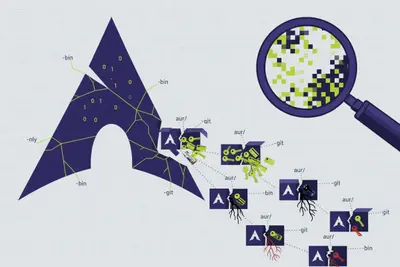
Over 1,500 Arch Linux community packages were seeded with credential-stealing malware last weekend, and no vulnerability was required to do it.
A personal account of how a convincing LinkedIn recruiter message turned out to be a delivery vehicle for malicious code.
Roughly 400 community-submitted Arch Linux packages were compromised with credential-harvesting and persistence malware.
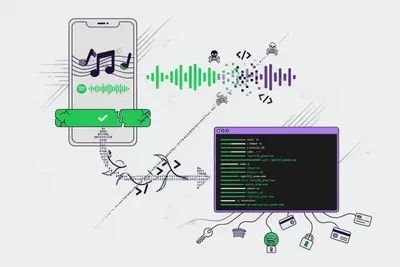
Attackers are posting TikTok videos promising free Spotify subscriptions, then directing viewers to install password-stealing malware via the command line.
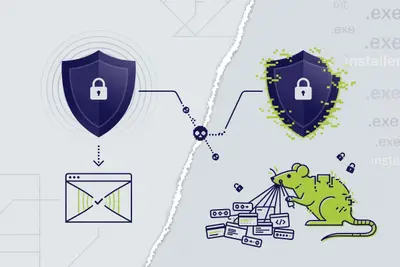
Trojanized X-VPN setup files install STX RAT alongside a working VPN client; X-VPN's own servers were not touched.
A self-replicating stealer hidden in 73 packages fires automatically when an AI agent opens them, the second such incident at Microsoft in weeks.
GitHub disabled 73 repositories across Azure, MicrosoftDocs, and related orgs after a self-replicating worm embedded credential-stealing code.