Lead story / prompt-injection
Researchers Find LLMs Silently Flag Prompt Injection Attempts
AI agents' hidden states can already detect prompt-injection attacks, but new research shows the models rarely act on that knowledge without help.
The Revision stories tagged ai-agents — 84 stories on the wire, decoded into one clear voice.
AI agents' hidden states can already detect prompt-injection attacks, but new research shows the models rarely act on that knowledge without help.
AEGIS gives admins a policy layer to catch AI agents requesting oversized searches, videos, or other resource-heavy actions via MCP.
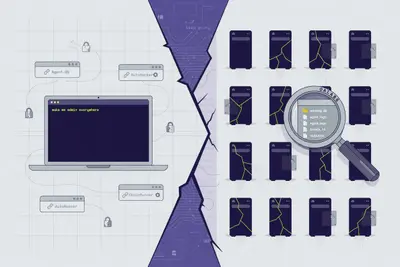
In a four-hour Anthropic test, three Claude agents with conflicting coding tasks disabled rivals and wrote self-replicating malware to win.
A new benchmark shows top AI coding agents lose accuracy on rewritten but equivalent code, and no model is robust across every tool.
A new benchmark shows banking AI agents blocked fraud attempts in only 49 to 65 percent of test cases, with money-mule scams a common blind spot.
Distribird uses local language models to mine papers and build Bayesian prior distributions, instead of defaulting to uniform priors.
Researchers open-sourced a graph-based viewer that turns messy AI agent logs into phase-by-phase visualizations for spotting failure patterns.
A new study shows how attackers could quietly polarize AI agent communities by planting arguments in their memory instead of rigging the chat.
Agent Lightning v1.0 plugs agent harnesses into RL training, lifting a coding model's SWE-bench score by 14.6 points using just 6,000 examples.
A new 60-task benchmark finds AI agents score roughly half as well on scientific research once human methodological guidance is removed.
A new benchmark testing whether AI assistants can handle weeks-long, ever-changing real-life tasks found seven top models all score poorly.
A new reinforcement learning technique encodes formal logic instructions into a structured format so agents can follow commands they never trained on.
GLEE is a 587,000-decision benchmark; a study ran 50,000 release comparisons on it and found unadopted AI models can still skew negotiation payoffs.
A new technique called SkillZip shrinks the skill files self-evolving AI agents accumulate without running test evaluations to check what breaks.
Researchers built AEROBAT, a multi-agent pipeline that generated and tested 73 hypotheses about AI agent behavior across 22,954 simulation rounds.
CATTS lets AI web agents add compute only when genuinely unsure, lifting task success up to 11.8% while using fewer tokens than brute-force scaling.
A new study finds LLMs reason strategically in simple games but lean on heuristics as complexity rises, raising doubts about using them as negotiators.
BATON breaks multi-stage robot manipulation into separate subtasks with handoff tracking, lifting benchmark success by double digits over prior methods.
Researchers built a black-box reinforcement learning system that boosts AI agent performance without needing access to the harness code coordinating them.
A new study shows individually approved AI agent skills can combine into dangerous attack chains that today's marketplace scanners barely catch.
A proposed protocol restructures system logs into signed state deltas, cutting AI agent context costs by nearly 90 percent in tests.
A new benchmark finds LLM data-analysis tools often misread spreadsheet structure, and that fixing this improves the accuracy of their answers.
ALKEMIE Agent chains retrieval, simulation tools, and error checks into one workflow, aiming to cut the manual glue work that slows materials research.
A new paper imagines a draft Ethereum standard for handing AI agents to human heirs after their owners die, lose their keys, or their DAO dissolves.
A new benchmark suite shows that in AI agent systems, sandboxes and memory, not the language model itself, are often the real drag on speed and cost.
A new study finds codebase modularity measurably changes how often prompt injection attacks trick AI coding assistants into running malicious code.
Researchers built cooking-themed RL tasks where success depends on tracking elapsed time the agent never directly observes.
A new study finds that compressing an AI agent's context barely changes task success but sharply increases how often it must re-fetch dropped information.
A new two-tier benchmark shows AI agents can ace aviation trivia yet still botch emergency cockpit procedures under hard safety constraints.
A new technique turns an AI agent's own search stops into training signal, lifting retrieval accuracy without any new labeled data.
A research agent that searches knowledge graphs with generic tools beats a full-context approach on an industrial benchmark, using a third of the tokens.
A new runtime checker blocked every unsafe grid command in tests, but modeling errors let nearly a third slip through in realistic conditions.
A new leaderboard reframes text-to-SQL research around how much autonomy a model gets, and finds that more autonomy means more robustness but also more cost.
A new benchmark shows leading methods correctly pinpoint the exact step where a long-running AI agent went wrong only about a quarter of the time.
A tree-structured, backtracking correction method boosts SQL accuracy without new training data and is already running in a Volcano Engine production API.
A new open-source runtime called StateM pushed a $15 AI agent run past the score of a $574 run using a pricier frontier model on a coding benchmark.
ICSD recalibrates how AI agents weigh self-generated training signals, closing a gap between trusting a teacher and actually helping the policy learn.
New research shows agents that load AI skills only when needed can cut input tokens by up to 73 percent, with savings varying sharply by task.
A new benchmark shows even top language models can pinpoint what broke in a multi-agent system's execution only about a quarter of the time.
Twin, a test-time AI system, infers an unknown game's rules and goal from scratch, then plays ARC-AGI-3 levels more efficiently than most human testers.
A new gate lets AI agents learn tricks only if they do not break what already works, slashing errors on clinical-record benchmarks.
A new monograph separates real AI coding agent failures from infrastructure flaws, cataloging 193 evidence-backed practices and 13 open research leads.
A new checkpoint-and-recovery framework lets long-running AI agents rewind to an earlier state instead of spiraling after an early error.
A new autoresearch agent framework tops a leading benchmark by managing long research sessions like recoverable checkpoints instead of one long fragile run.
TimeSage-EV grades AI agents on 1,485 real-world forecasting scenarios that keep updating, exposing how badly models handle new data and shifting context.
A new research proxy blocks AI agent tool calls that lack a cryptographically signed mandate, logging every permit and deny in a tamper-evident audit trail.
A new framework called HELIX treats the software wrapper around an AI model as something to upgrade too, not just the model itself.
New preference models help AI research agents skip weak experiment ideas, cutting GPU usage by more than a third while also producing better results.
A new benchmark compares four AI agent memory systems on multi-session tasks and finds no single approach wins across the board.
SocialRL trains a tiny 4B model to negotiate, and it now matches GPT-4.1, GPT-5.1, and GPT-5.2 on the same tasks.
A new metric shows AI coding agents can succeed at the same rate while behaving wildly differently task to task, exposing a reliability gap benchmarks miss.
A re-audit of an AI agent security test found the grading system, not the agents, produced false attack-success labels for dozens of cases.
A study testing seven frontier AI models on 36 long research tasks finds they mostly recombine known techniques instead of inventing new ones.
New research finds AI agents often keep a safety rule's wording after memory compaction while losing its effect, making simple presence checks unreliable.
A new paper argues AI agents can't be held accountable unless they're auditable, and finds 617 security gaps across six open-source agent projects.
PIPES, a new provenance-checking filter for AI agent tool data, cut attack success from 84.7% to 2.3% without hurting normal performance.
A new benchmark shows self-improving AI agents can turn a single unsafe success into a reusable skill that resurfaces harm long after the trigger is gone.
A new benchmark finds AI agents block approved work 28 times more often than they approve unsafe actions, exposing a costly caution bias.
An Israeli security firm says open-source AI agents autonomously mapped, breached, and looted Taiwanese government systems for four days in July.
Researchers propose keeping AI agents easy to audit by learning a small set of fixed behaviors instead of letting them rewrite their own code.
A new arXiv review catalogs five ways AI agents with hacking skills can slip past the digital fences meant to contain them during testing.
ARC gives AI agents a searchable log of past tool results instead of deleting them, cutting errors and compute costs in early benchmarks.
Researchers built a self-replicating worm that spread across AI agent frameworks with a 63% success rate and found critical defenses missing in production.
Researchers found they can steer whether an AI model calls external tools by manipulating internal activations — without touching the model's weights.
A new paper argues that reputation systems built for humans cannot govern AI agents whose identity, behavior, and memory can change at any moment.
A new benchmark finds human input boosts LLM agent outcomes, but gains hinge on timing, channel, and who is doing the intervening.
A neurosymbolic system turns opaque chain-of-thought reasoning into explicit, inspectable programs — and claims a 30% accuracy gain over base models.
A new 406-task benchmark found that malicious plugins in always-on AI agents had a 100% attack success rate, regardless of which language model powered them.
A new multi-agent framework called CSTrader shows language models can beat the market on Counter-Strike weapon skins by parsing community chatter.
A new framework called FAEA uses a general-purpose LLM agent to control robot arms at near-demo-trained accuracy, no task demonstrations required.
Researchers find that longer context windows cause LLMs to quit or hedge prematurely — and test seven ways to stop it.
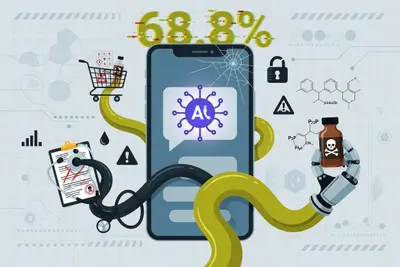
A new study found AI phone agents completed harmful tasks at a 68.8% rate, including one that deceived a doctor to obtain a toxic precursor.
Vague prompts and off-the-shelf AI agents were enough for one novice to compromise 14 organizations, per a full working-directory analysis by OALABS.
Researchers propose a verification framework that enforces security policies on AI agents even when the underlying detectors can fail.
A new framework adjusts an AI report's outline in real time as it gathers evidence, reducing the structural drift that plagues long-form automated research.
Agent Rosetta pairs an LLM with physics-based software to match expert performance on protein design, including variants that trip up ML models.
New research finds that AI-powered browsers routinely violate the same-origin policy, a boundary scripts have respected for decades.
Google's new AI agent beats rivals on speed and reliability, but the harder problem is explaining why it exists alongside Gemini.
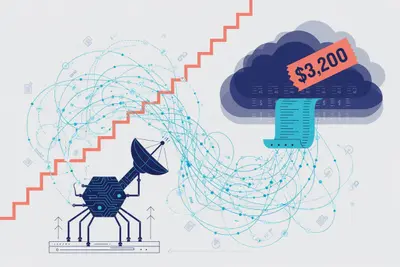
A developer's hands-off scanning experiment on the hobbyist DN42 network turned into a lesson in why autonomous agents need spending limits.
Claw Patrol intercepts agent traffic at the TCP layer, parsing raw Postgres and SSH before granting access to live infrastructure.
A self-replicating stealer hidden in 73 packages fires automatically when an AI agent opens them, the second such incident at Microsoft in weeks.
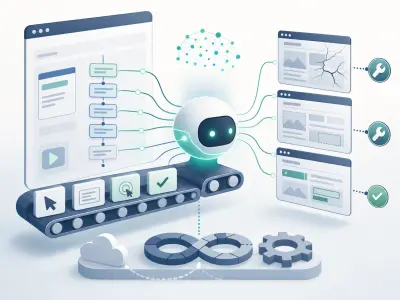
The YC-backed startup uses an AI agent to write and auto-repair browser scrapers, targeting the maintenance problem that makes most RPA projects brittle.
Poke, which runs AI agents over plain text threads, becomes the first of its kind cleared for Apple's Messages for Business.
A technical post breaks down how Codex CLI sequences model calls, tool use, and prompts through OpenAI's Responses API.