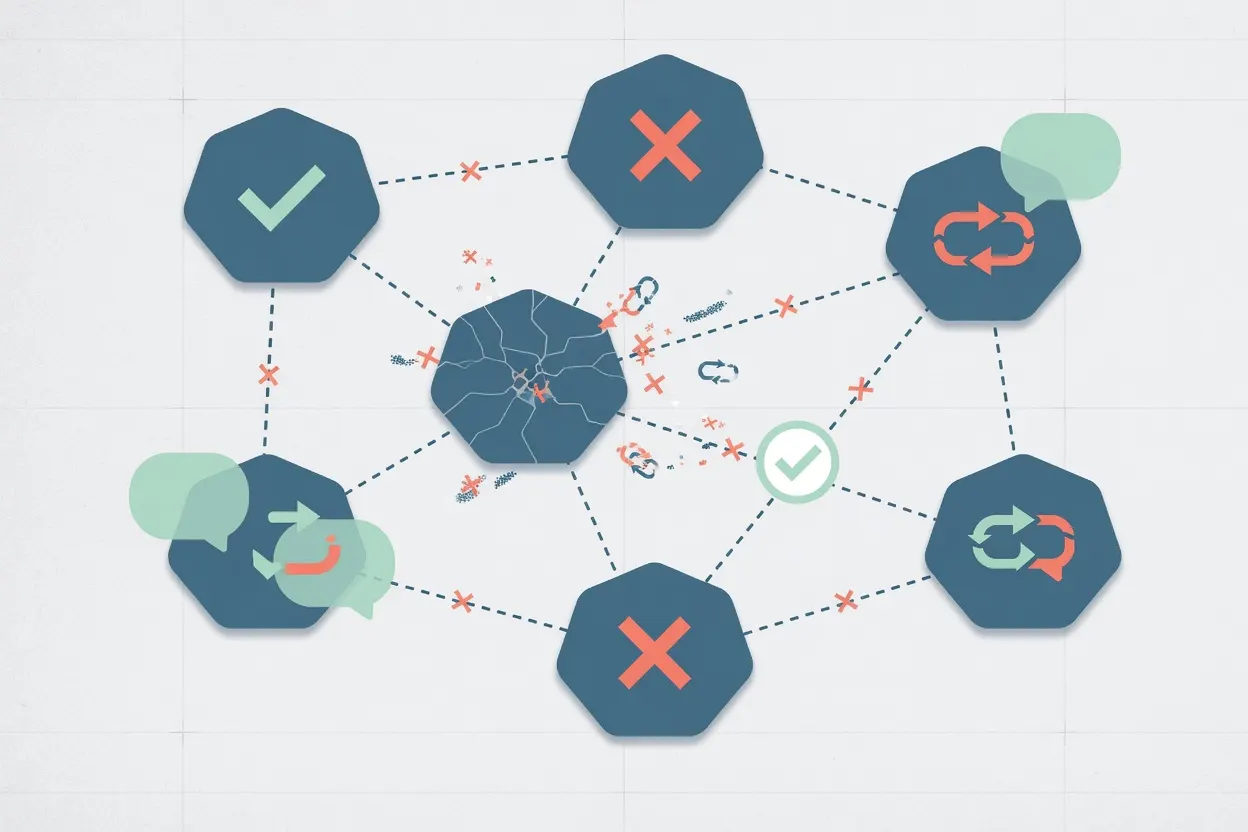
Multi-agent AI systems are supposed to make each other smarter — but a new paper finds they can also make each other dumber.
Researchers built a framework in which separate language models first answer multiple-choice questions on their own, then swap reasoning traces and revise their answers. The setup was tested across domains including cybersecurity, networking, and general knowledge. The core finding: inter-agent communication produces both positive transitions (wrong-to-right) and negative ones (right-to-wrong), and the balance between them determines whether collaboration actually helps. When one agent's flawed reasoning is persuasive enough, it can flip a neighbor that had the correct answer all along.
That asymmetry matters because most multi-agent AI pitches assume collaboration is net positive by default. This research pushes back on that assumption with evidence from real domains — including security, where a miscorrected answer is not just an academic problem. Runtime monitoring of answer revisions, the paper argues, is needed to catch error propagation before it compounds across a system.
The AI industry has been racing to chain models together in agentic pipelines, betting that multiple heads are better than one. This work is a useful reminder that more agents talking is not the same as more agents being right — and that without checks on what gets revised and why, the pipeline can launder bad reasoning as efficiently as it spreads good reasoning.