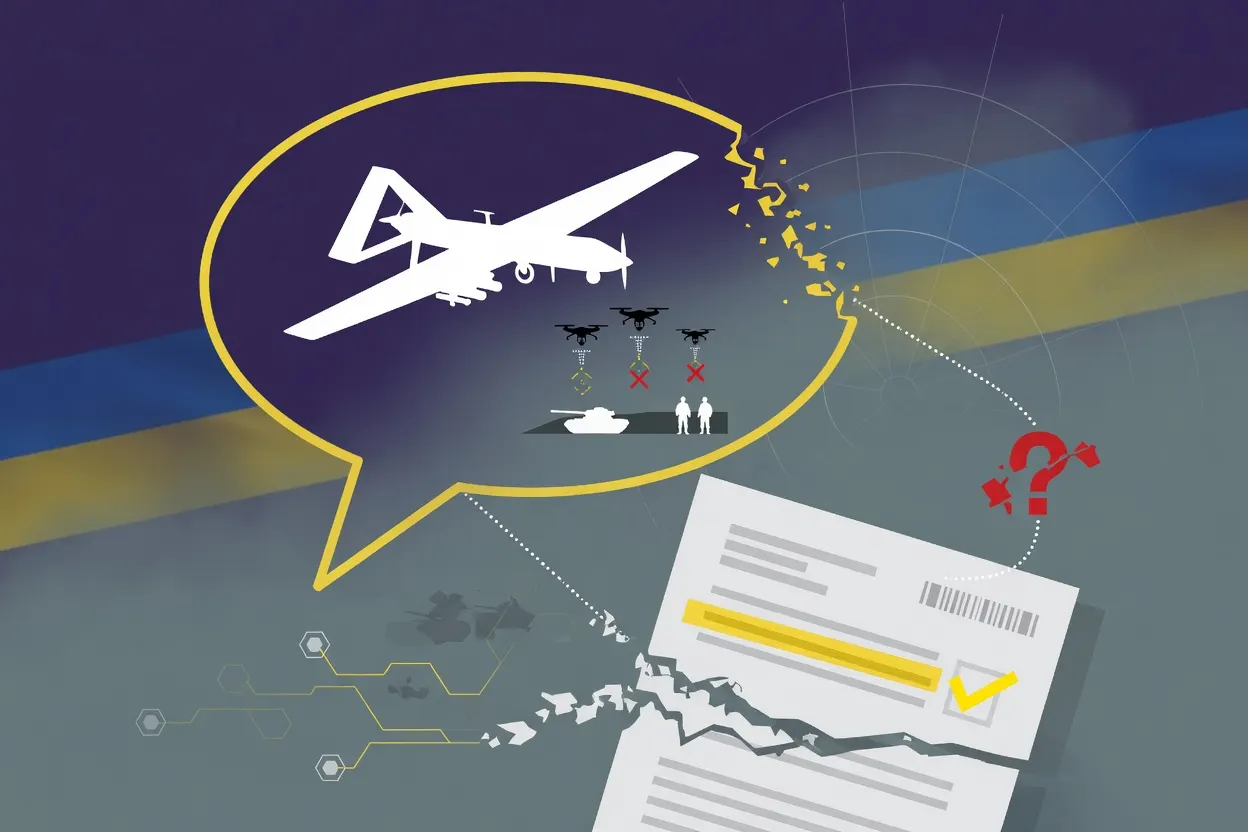
A Ukrainian drone maker says its fully autonomous drones killed Russian soldiers in a battlefield test two years ago. The evidence is thin.
Alexander Kokhanovskyy, CEO of Aero Center, disclosed the test at a Ukrainian embassy press event in London, describing it to New Scientist. The drones were preprogrammed quadcopters that flew to a front-line area, then activated what the company calls "Terminator mode" — an AI targeting system set to seek out and attack anything within a defined zone, with no human input after launch. No video feed captured what they hit. The conclusion that the autonomous drones killed anyone at all rests on one data point: human-piloted drones dispatched to check the area afterward found what Kokhanovskyy described as "a couple" of dead Russian soldiers.
If the account holds, it marks a threshold that military planners and arms-control advocates have long argued over: a fully autonomous system that identified and killed targets without a human in the loop, in active combat. Ukraine's war with Russia has driven drone development faster than any conflict in recent memory, but autonomous lethal targeting sits in a different legal and ethical category from remote-piloted systems or precision-guided munitions — one with no agreed international framework and no enforcement mechanism.
"Terminator mode" is doing a lot of narrative work for a conclusion that amounts to: drones flew in, soldiers were found dead on the other side.