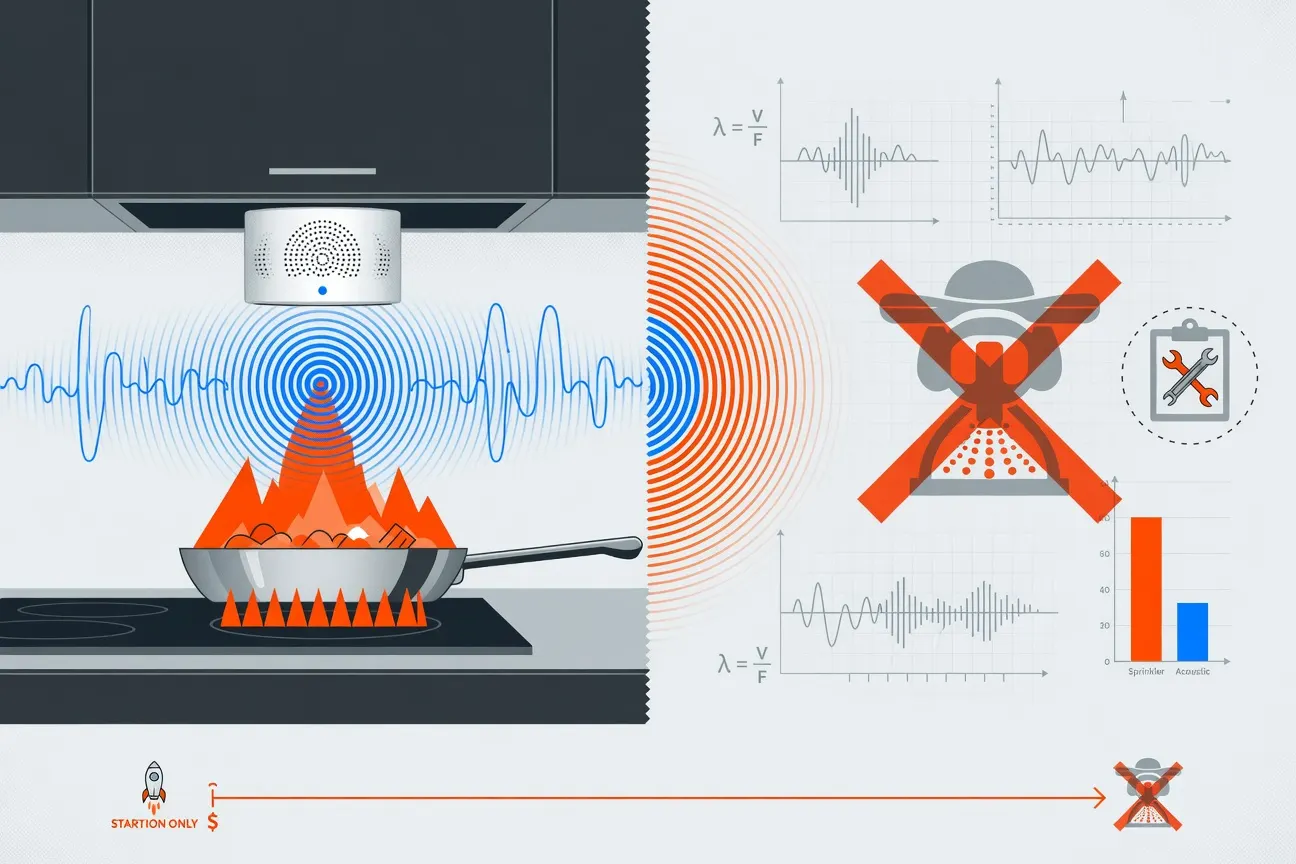
A startup called [name] has begun selling a commercial system that uses low-frequency sound waves to extinguish small fires. The technology, called acoustic fire suppression, targets flames directly with infrasound — sound below the range of human hearing — which disrupts the combustion process.
The system works by generating focused sound waves that create pressure fluctuations around the flame. According to the company, this removes the heat needed to sustain combustion. Early tests on small grease fires — the kind common in commercial kitchens — showed the flames extinguished within seconds. The startup is now marketing the devices for restaurants, hospital kitchens, and industrial food preparation areas.
The catch: no independent testing has validated these claims at scale. Fire protection engineers point out that sprinklers have decades of proven performance and work without electricity or precise positioning. Acoustic systems require the speaker to be pointed directly at the fire and consume power continuously. They also haven't been tested on fires larger than a few square feet.
Fire marshals and insurance underwriters typically require sprinkler systems in commercial kitchens. Whether a sound-based system could meet those codes — or convince adjusters to accept it as equivalent protection — remains entirely unclear. The startup is positioning the technology as a supplement, not a replacement, but its marketing leans hard on the replacement angle.
The technology isn't new. Researchers have experimented with acoustic suppression since the early 2000s. What changed is a startup decided to package it for commercial sale. Whether it works in the real world, with real grease fires and real consequences, is a question nobody has answered yet.