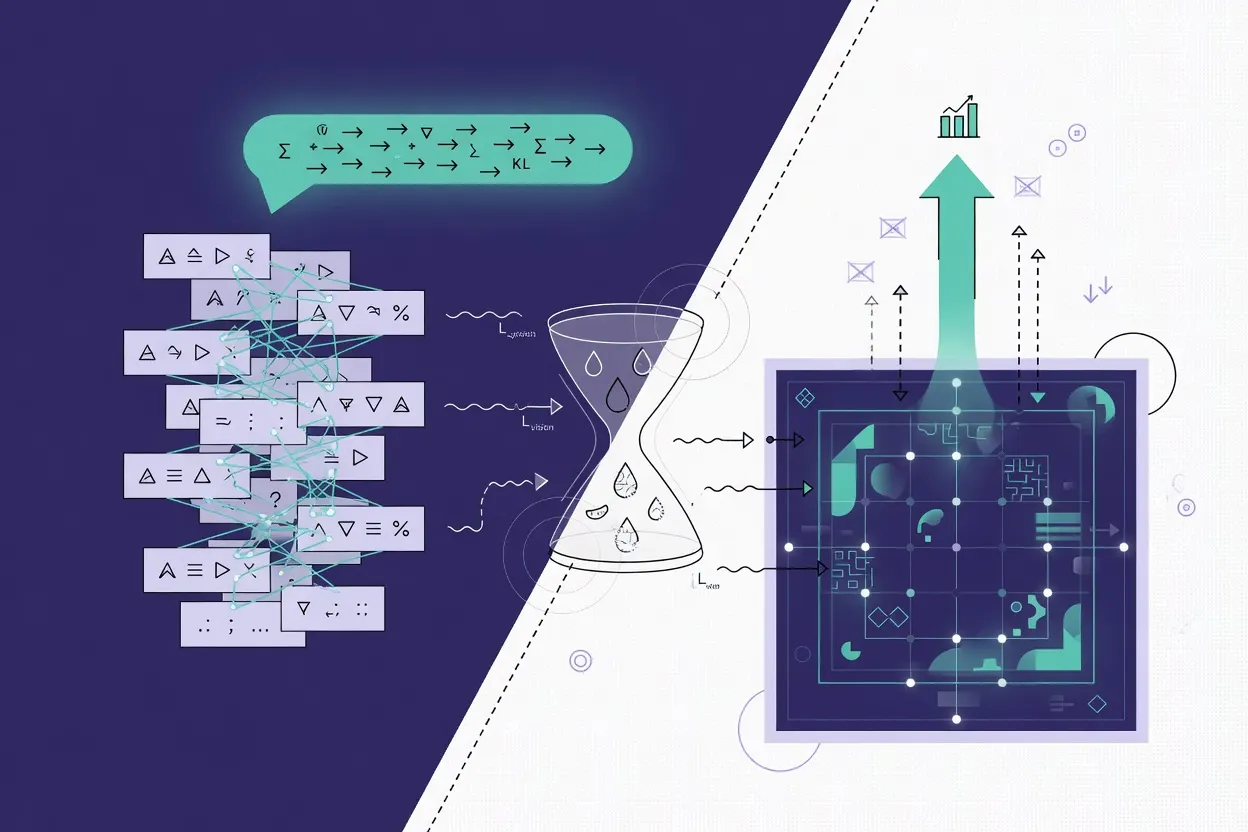
A research framework called LaViD transfers conceptual knowledge from a text-only language model to a vision model — no images required on the teacher's side.
The system, short for Language-to-Visual Knowledge Distillation, works by prompting a language model to generate multiple-choice questions that probe the semantic differences between visual categories. Each visual class gets mapped to a distribution of answers across those questions, creating what the researchers call a "conceptual signature." That signature then guides the vision student model through an auxiliary training loss — no paired image-text data needed.
The interesting part is the benchmark result: LaViD outperforms MaKD, a method that distills knowledge from vision-language models that actually have access to images. It also matches or beats dedicated visual distillation methods like DKD and MLKD. On the Waterbirds dataset, a standard test for whether models rely on spurious background cues rather than the actual subject, LaViD improved worst-group accuracy by a meaningful margin — a sign it is learning more robust distinctions.
The implicit claim here is that language models have accumulated richer conceptual knowledge about visual categories than most vision-only or even vision-language models have managed to encode — and that structured question-answering is a practical way to extract and transfer it. Whether that holds across domains beyond the benchmarks tested remains an open question, but the results suggest the text-heavy pretraining corpus contains more useful visual semantics than the field has bothered to tap.