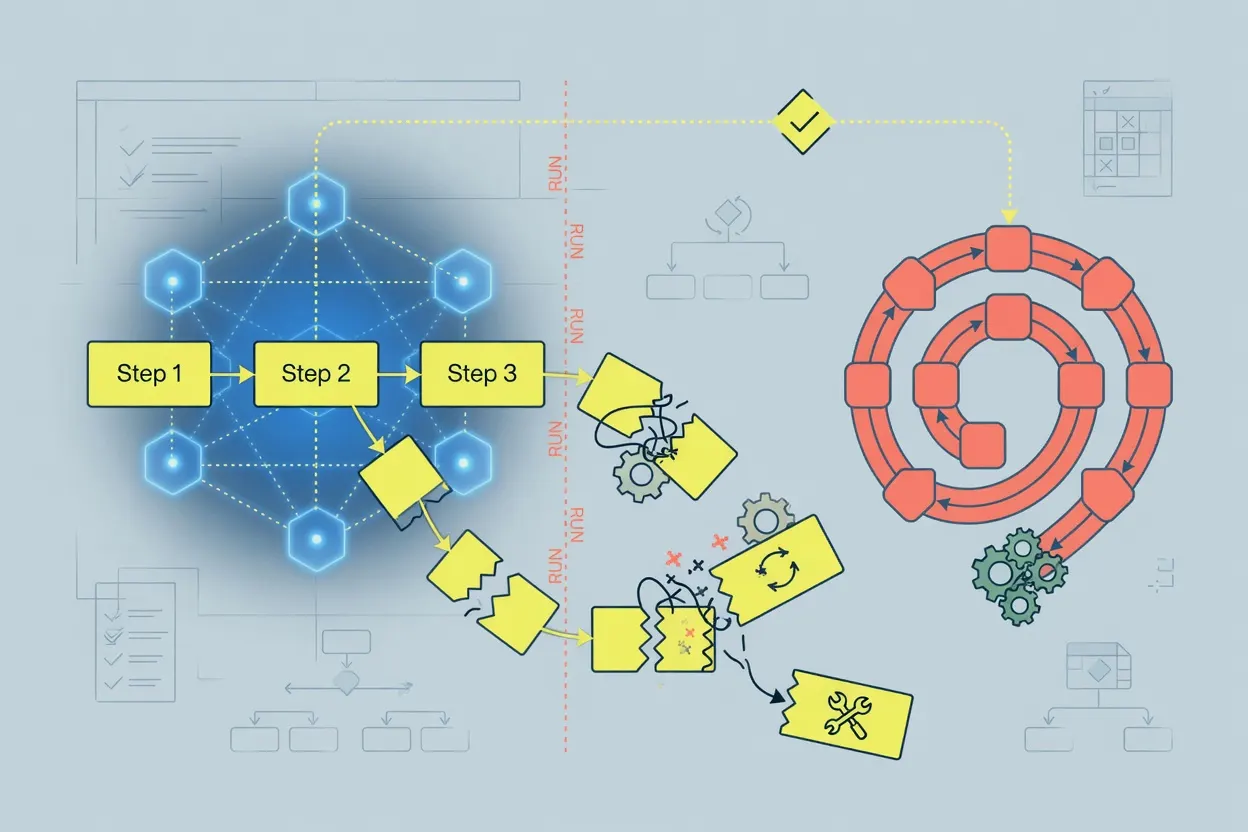
LLMs deployed in autonomous systems keep generating planning logic that cannot be verified or run — and a new research framework targets that gap directly.
Researchers have released NL-PDDL-Bench, a multi-domain benchmark that tests how well language models translate natural-language instructions into PDDL, a symbolic planning format used in robotics and autonomous decision systems. The benchmark scores outputs not just on whether they parse correctly, but on whether a real planner can actually execute them. The team also built a planner-in-the-loop framework that feeds validator and planner error signals back into the model, letting it make targeted fixes to broken specifications without needing live planner calls during training. The training recipe layers parameter-efficient fine-tuning with preference optimization derived from planner outcomes.
The stakes are higher than a leaderboard number. When an LLM is embedded in a safety-sensitive pipeline — think logistics routing, infrastructure control, or medical decision support — a plan that looks syntactically fine but fails at runtime is worse than no plan at all, because it may silently produce unsafe behavior downstream. External verifiability, the researchers argue, is the missing check that pure language-model evals cannot provide.
PDDL has been a planning standard since the late 1990s, which makes the gap notable: even with decades of tooling, getting LLMs to reliably emit correct symbolic specs is still an open problem. The code and benchmark data are public, so the real test is whether downstream teams building agentic systems bother to add a planner in the loop — or keep shipping on vibes.