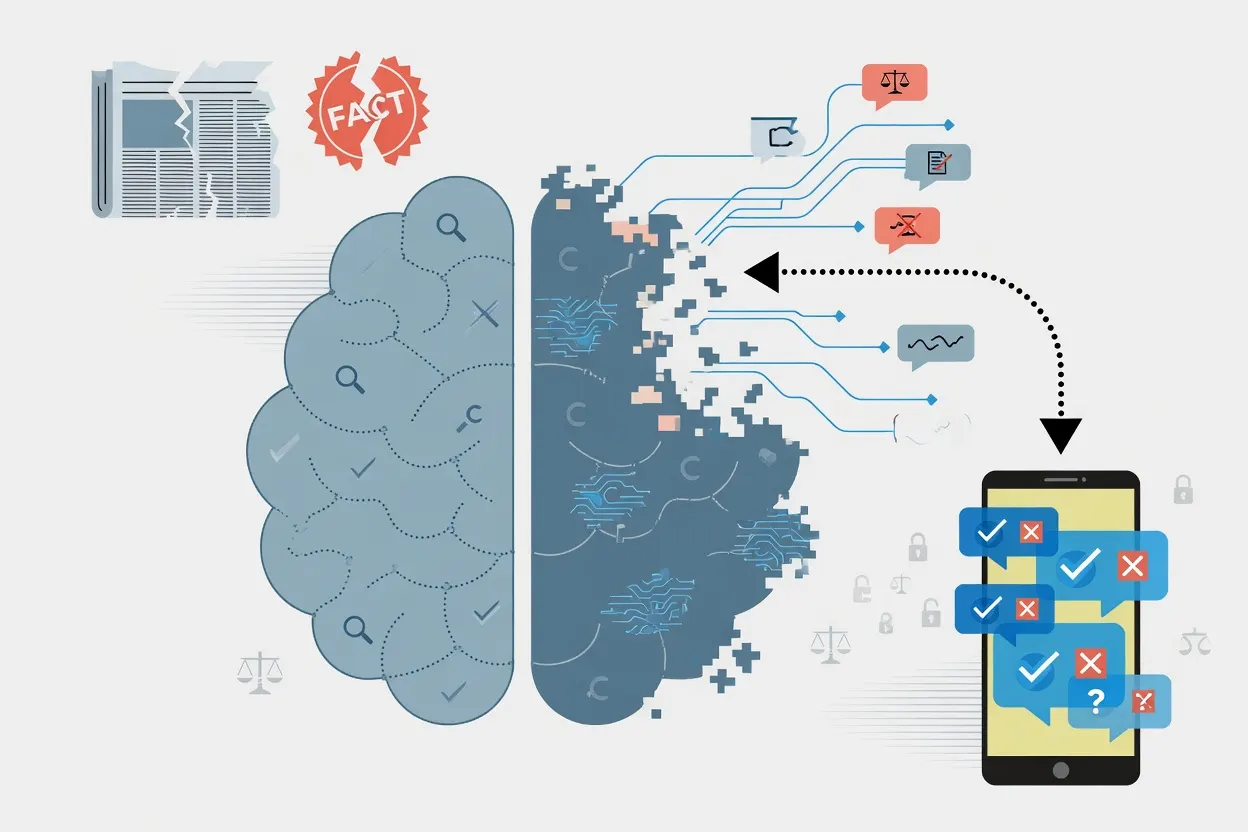
MIT researchers say leaning on AI chatbots to verify news may make you worse at spotting misinformation on your own.
A team at MIT studied how reliance on tools like ChatGPT affects users' capacity to identify false claims independently. Their core finding: the more a person offloads fact-checking to an AI, the weaker their independent verification instincts become. The research doesn't claim AI tools are always wrong; it argues that the habit of delegating that cognitive work has a measurable cost. This is less about AI accuracy and more about cognitive dependency.
The concern maps onto a familiar pattern. GPS eroded spatial navigation skills. Spellcheck degraded spelling. The question was always when outsourcing a cognitive task to a machine starts to hollow out the human version of that skill. For news literacy, the stakes are higher: a population that can only evaluate claims with AI assistance is one hallucination away from being confidently misled. ChatGPT and its competitors were not designed as fact-checking tools - they were designed to produce fluent, confident-sounding text, which is nearly the opposite qualification you'd want in a misinformation filter.
AI companies have been actively marketing their products as research and information aids. That pitch sits uneasily alongside evidence that heavy use may trade short-term convenience for long-term epistemic fragility.