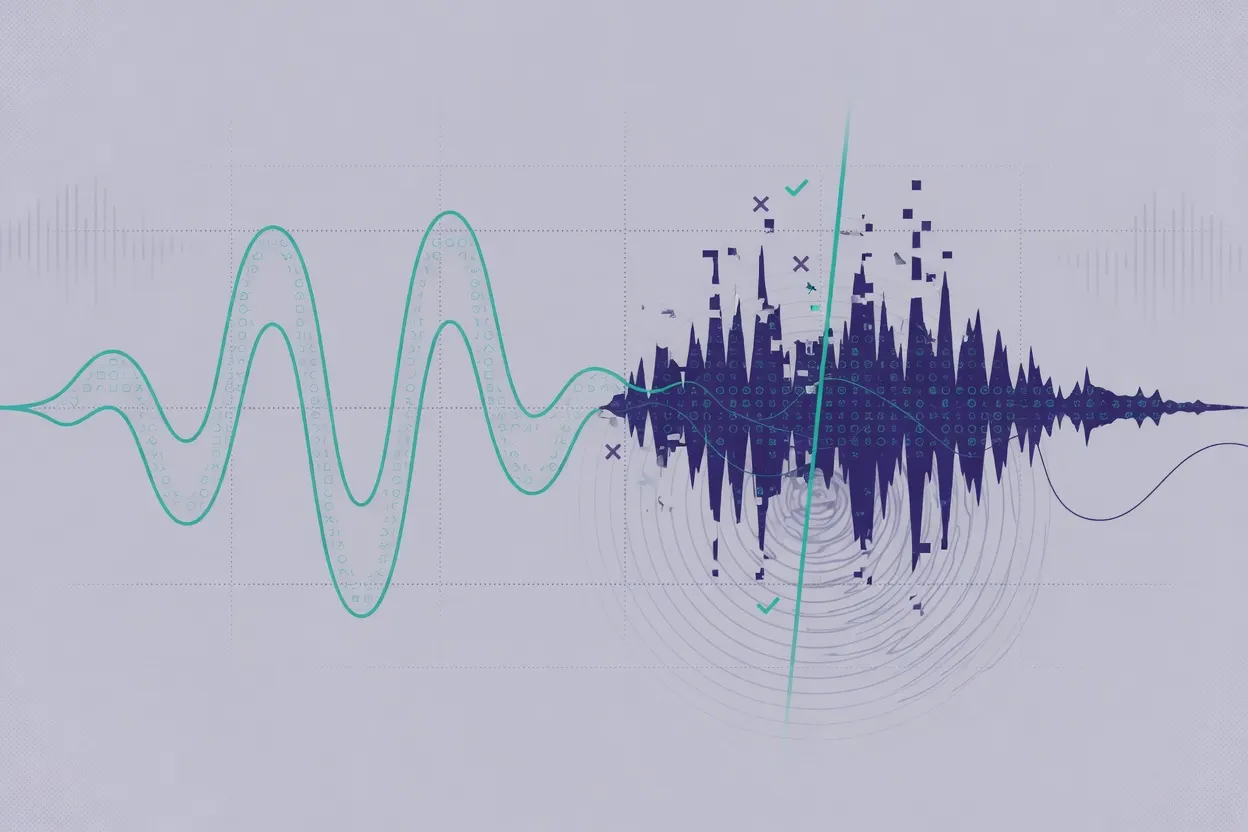
A new paper turns audio steganography from a hiding trick into a deepfake tripwire.
Researchers propose a self-embedding scheme where clean speech is used to encode a compressed copy of itself, using existing steganographic codecs. Because that embedded reference survives untouched, later splices or partial synthesis can be caught by comparing the extracted copy against the altered audio. The approach requires no training data or model fine-tuning; it simply repurposes existing steganography tools for codec-based restoration and comparison. Tests on a benchmark dataset show the method complements, rather than replaces, existing passive deepfake detectors.
Partial deepfakes, audio where only a phrase or two has been swapped, are the hardest case for current detectors, which grow less reliable as the manipulated share of a clip shrinks. A training-free method matters because it avoids the retraining treadmill that passive detectors face every time a new generative model shows up.
It is a proactive fix, not a universal one: it only works on speech that was steganographically marked before anyone got their hands on it, more a security tag you attach in advance than a metal detector you add later.