A research team has built a way to run multi-agent-style reasoning inside a single model, sidestepping the compute bill that comes with spinning up multiple AI instances.
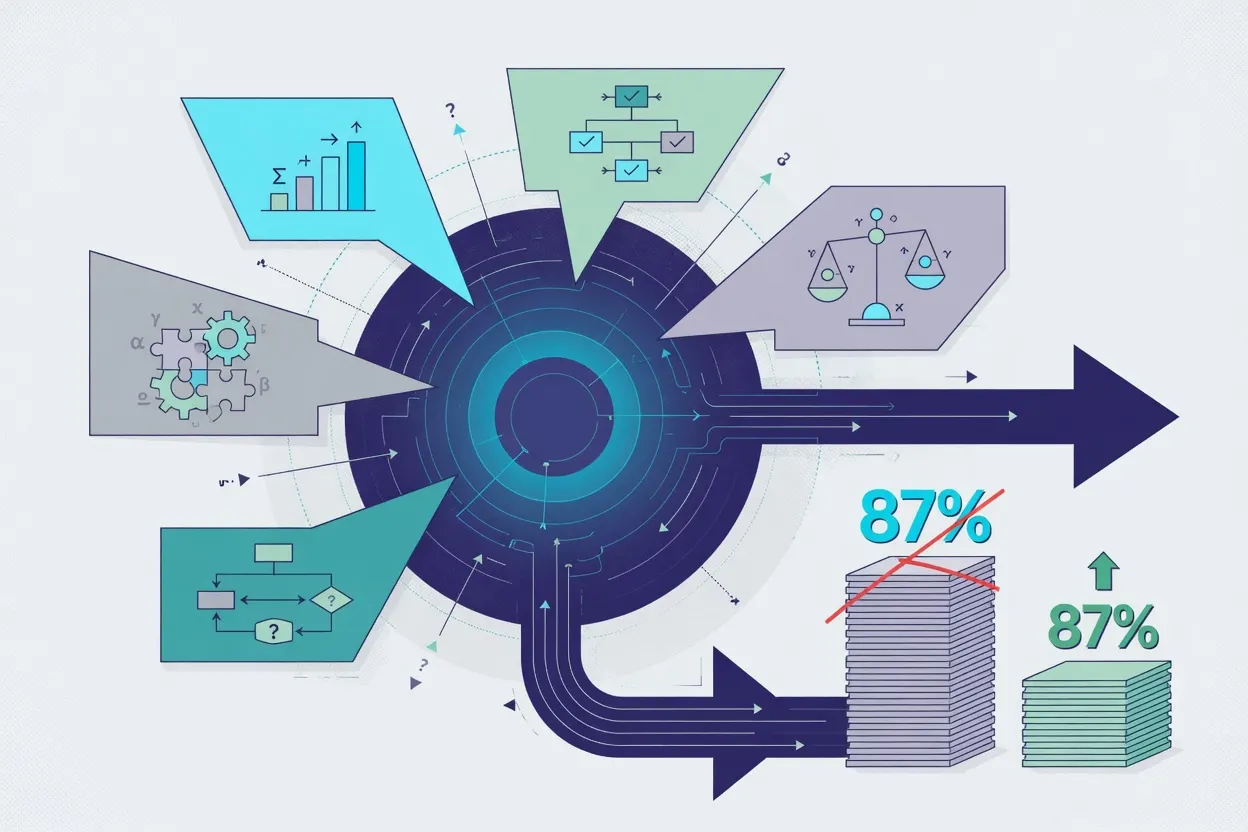
The system, called Mixture of Debaters (MoD), grafts debate mechanics onto the Mixture-of-Experts architecture — a design where different neural subnetworks handle different tasks. Instead of running several model copies that argue with each other over a network, MoD routes tokens through lightweight internal modules that play distinct debating roles. Three specific problems had to be solved to make this work: a dual-routing mechanism that decides when the model should argue versus when it should synthesize an answer, a momentum-switching method to stop the routing from thrashing between experts mid-sentence, and a way to package distinct reasoning personas into those modules without them needing to communicate externally. Benchmarks across multimodal tasks show MoD outperforming both solo models and conventional multi-agent debate setups, with 3.7x lower latency and 87% fewer tokens consumed.
The token reduction matters because inference cost is one of the main brakes on deploying reasoning-heavy AI at scale. If you can get debate-quality outputs from a single forward pass rather than an orchestrated back-and-forth between model instances, that changes the economics of building systems that need to reason carefully — without requiring a data center budget to match.
Multi-agent debate as a reasoning strategy has been fashionable since 2023, but nearly every implementation has quietly treated the compute overhead as an acceptable tax. MoD is essentially an argument that the overhead was never necessary — which, if the benchmark results hold up outside the lab, would make a lot of existing multi-agent pipelines look like expensive workarounds.