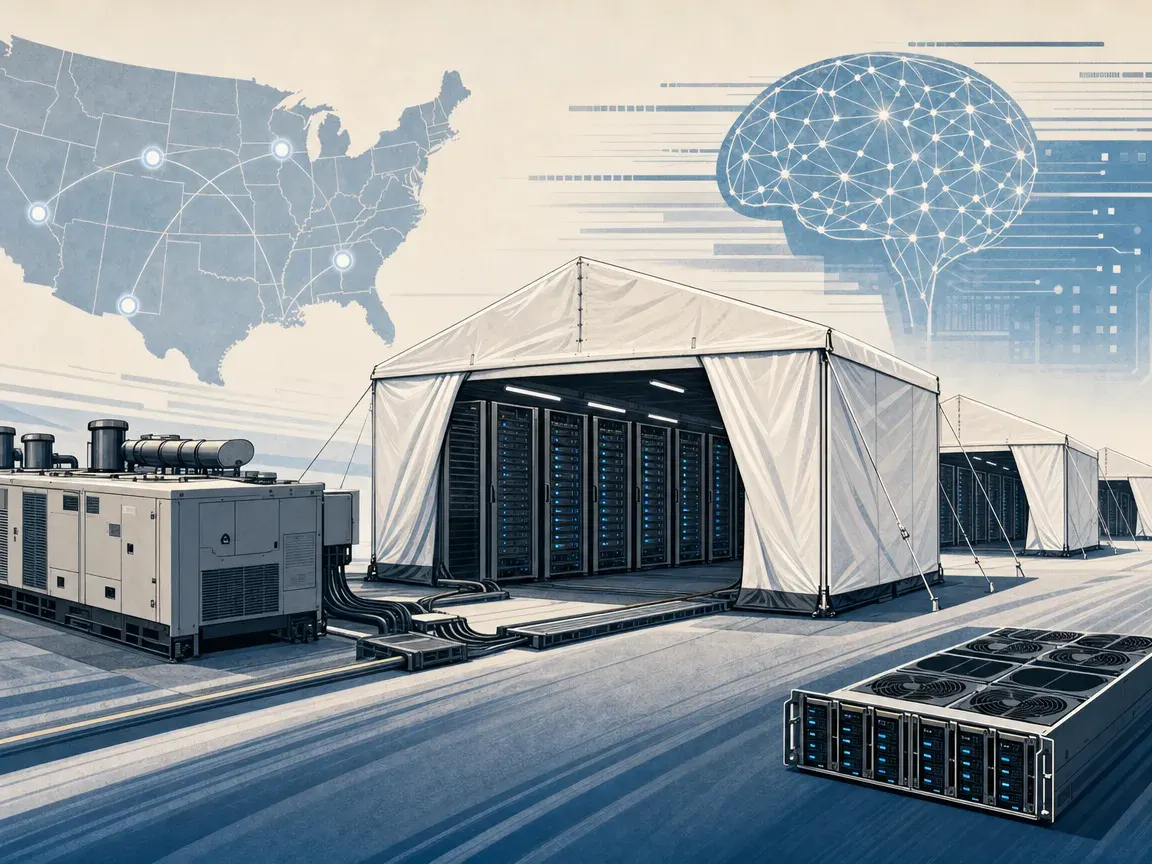
Meta is bypassing the usual multi-year data center construction cycle by pitching tent structures across the country and powering them with jet engines.
The company has reportedly shifted away from conventional data center builds, which typically take two to three years from groundbreaking to operation, to temporary structures that can be stood up in roughly three months. Rather than waiting for utility companies to extend grid capacity to new sites, Meta is hauling in its own power generation in the form of jet engines. The structures are going up at locations across the US as Meta pushes to add AI compute capacity at a pace that traditional construction simply cannot match.
The move signals how severely constrained the AI infrastructure build-out has become: not just by land and permits, but by electricity. Grid interconnection queues in the US already stretch for years in many regions; by bringing its own power, Meta sidesteps that bottleneck entirely. The tent approach compresses the timeline so aggressively it lets Meta treat data center capacity more like a deployable resource than a fixed asset, something closer to military field infrastructure than a corporate campus.
Whether jet-engine power plants inside canvas structures constitute a sustainable long-term strategy is a separate conversation, but at this point in the AI spending race, "sustainable" appears to be losing ground to "fast."