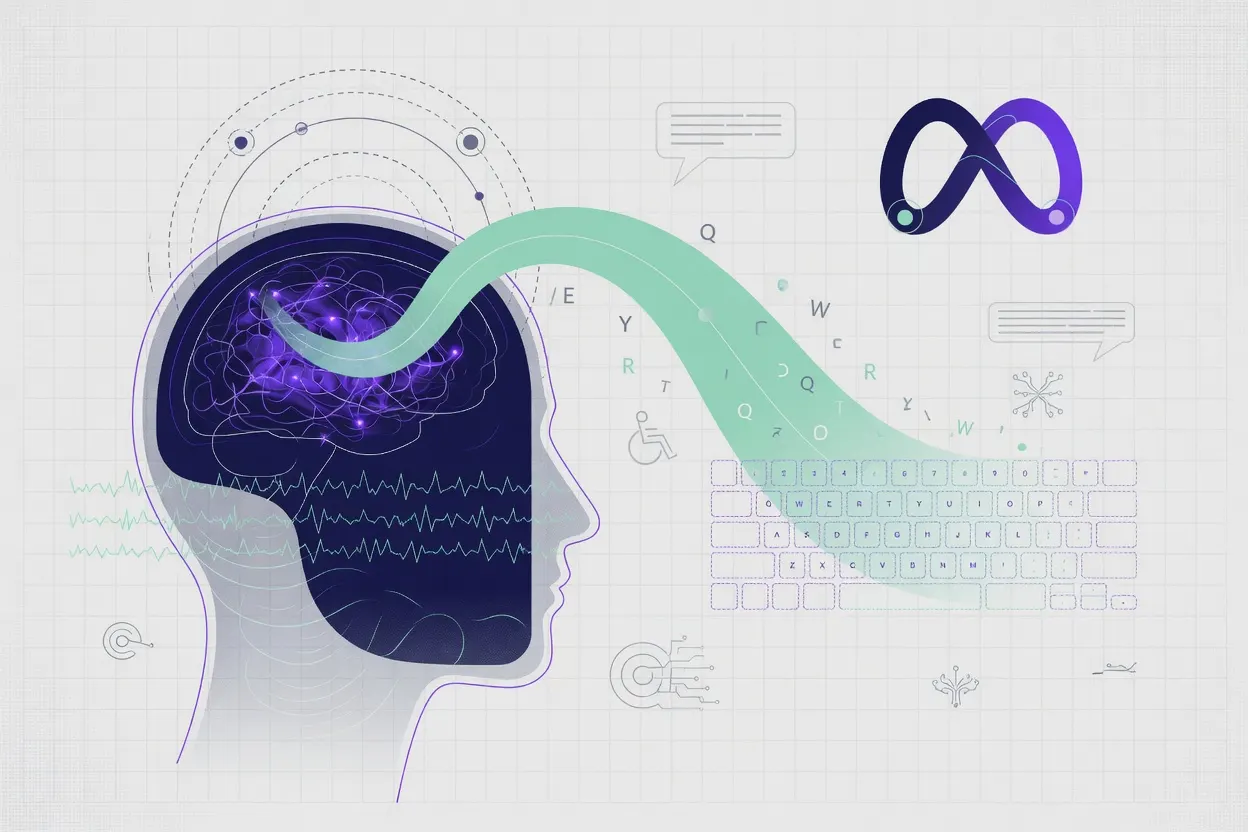
Meta's second-generation Brain2Qwerty system converts imagined typing into text using brain activity alone — no electrodes drilled into your skull.
Meta unveiled Brain2Qwerty v2, an AI model that reads brain signals non-invasively and translates them into typed text. The system is designed to help people who have lost the ability to speak or move, giving them a way to communicate without surgery. It builds on the original Brain2Qwerty, pushing the technology closer to something that could plausibly leave a lab. The non-invasive approach is the headline distinction — no implants means a dramatically lower barrier to use.
Most brain-computer interface work that gets attention involves surgical implants, as with Neuralink's approach. A system that works without cutting into someone changes the calculus on who could actually use it and when — regulatory hurdles for non-invasive devices are considerably lower, which matters if Meta wants this out of research and into clinical or consumer settings anytime soon.
Meta framing this as assistive technology is smart positioning, but the underlying capability — a system that reads what you're thinking about typing — is also the kind of thing that tends to make privacy researchers very nervous.