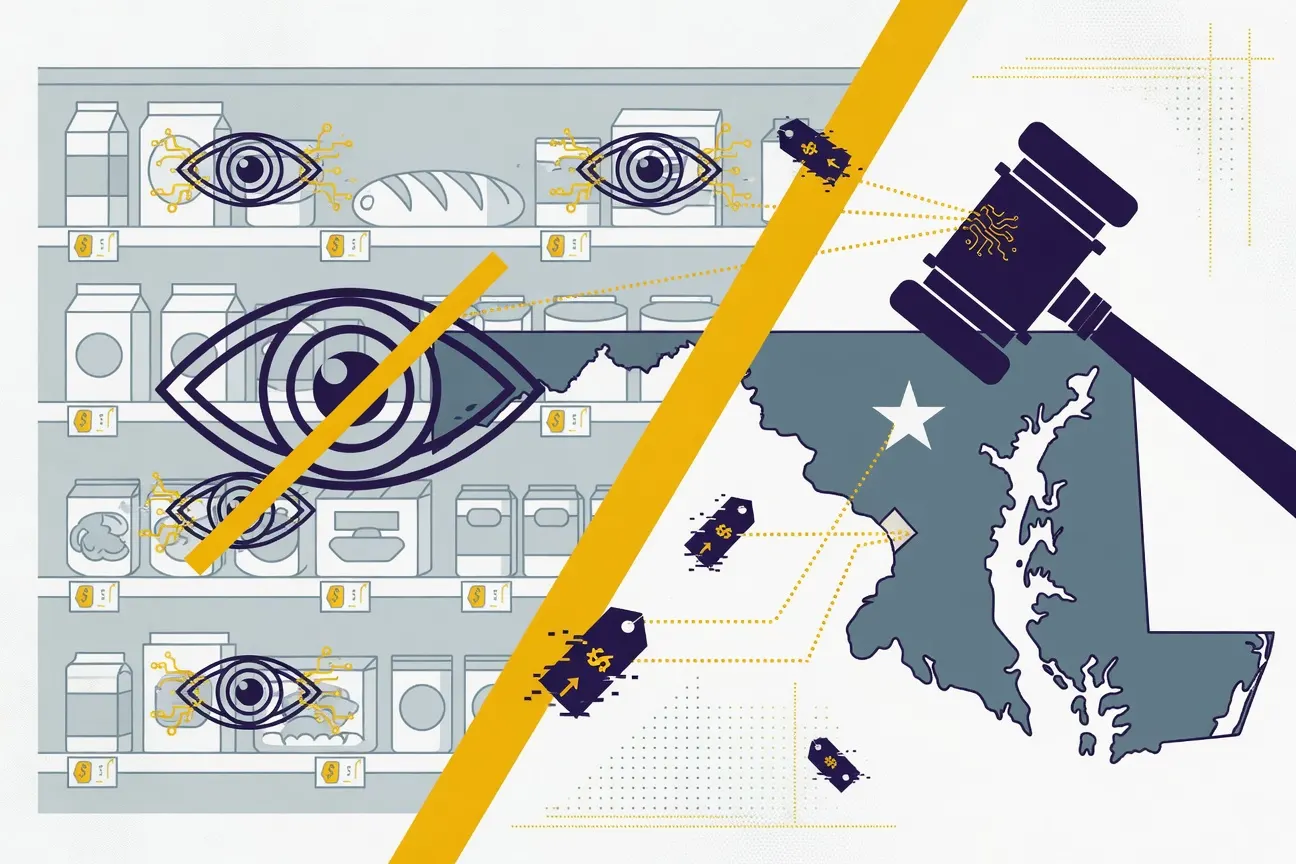
Maryland just became the first state to ban grocery stores from using AI-driven pricing systems that adjust costs based on shopper data. The law targets so-called "surveillance pricing" where retailers use purchase history, location data, and other signals to charge different prices to different customers. It applies to grocery chains with $100M+ in annual revenue. Violations carry fines up to $10K per incident.
This is the first concrete legislative response to a practice consumer advocates have warned about for years — the possibility that the same grocery item could cost more depending on who you are and what the algorithm thinks you'll pay. The law's scope is narrow (only large grocers, only AI-driven pricing) but it creates a template other states could follow. The real question is enforcement: how will regulators verify whether pricing is "AI-driven" versus standard dynamic pricing, and will retailers simply rebrand their systems to get around the rules?