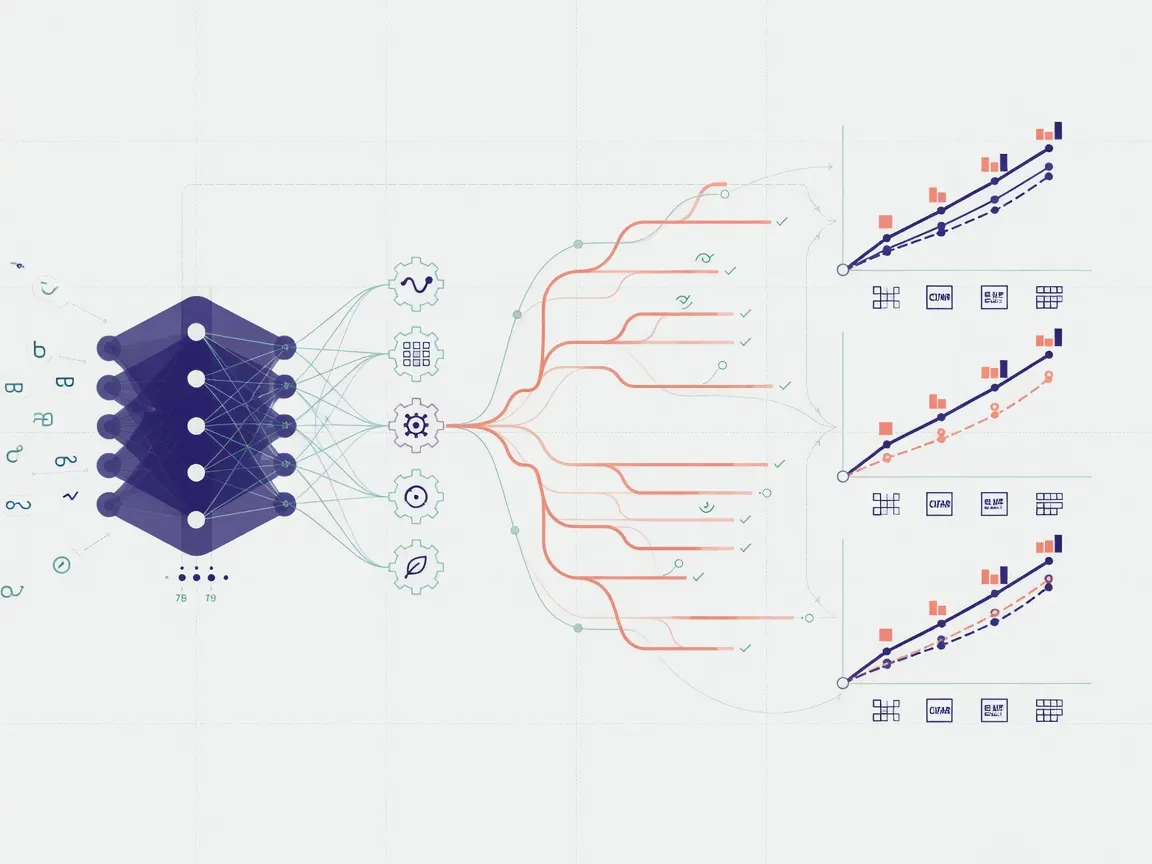
A paper out of arxiv asks the question practitioners have been quietly wondering: can large language models replace the specialized algorithms that machine learning teams use to tune their models?
Hyperparameter optimization - finding the right learning rate, batch size, and regularization settings without exhaustive trial-and-error - has a mature toolset. Bayesian optimization, random search, and evolutionary algorithms have decades of theory behind them and dedicated frameworks that slot neatly into ML pipelines. The new research frames a direct comparison: put LLMs in the optimizer role, using in-context learning to suggest hyperparameter configurations, and measure how they stack up against purpose-built methods. The paper's title poses the question without answering it in the headline, which is either academic restraint or a clue about the verdict.
The implications would be significant if LLMs do prove competitive. Most practitioners already treat HPO as a background process - fire up a search, let it run overnight, collect the results. If a general-purpose model can shortcut that loop without a separate tuning framework, that collapses one layer of infrastructure. The counterargument is that classical HPO algorithms are already fast, cheap, and well-understood; an LLM-based alternative would need to be noticeably better to justify the added compute and complexity.
Hacker News gave the paper 44 points and four comments when it surfaced this month - not a cold shoulder, but not the reaction you'd expect if the answer were a clean yes.