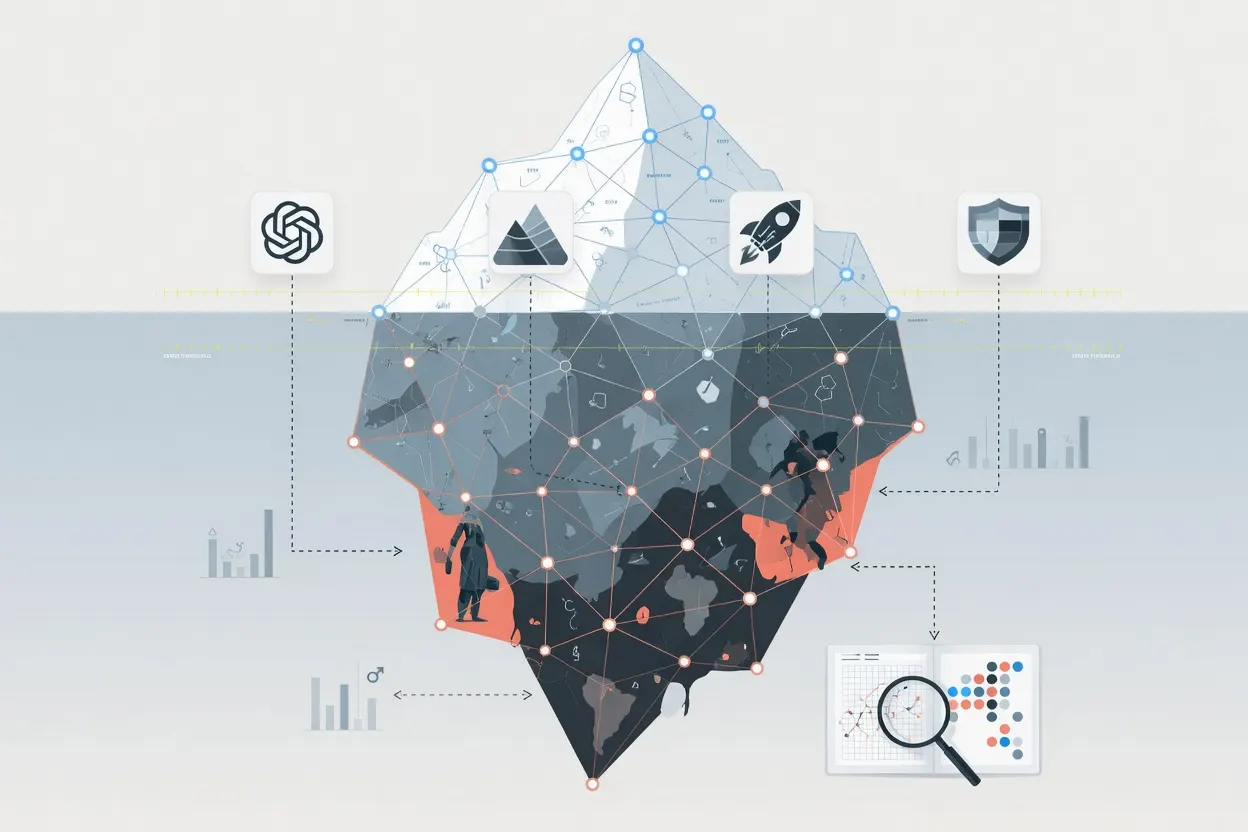
Four of the biggest AI chatbots tell stories where Black characters face hardship and white characters navigate the world with agency. None of it looks like an error.
Researchers submitted identical prompts to ChatGPT, Claude, Grok, and Copilot, first generating fiction using names associated with specific racial and gender groups, then asking questions about global economic development. All four models produced outputs that mapped onto the same hierarchy: men act while women feel, white characters navigate the world with autonomy while Black characters face hardship, and economic explanations stayed rooted in Western frameworks with little acknowledgment of Global South perspectives. The researchers call this "insidious" because it operates below the threshold of obvious error, embedded in narrative structure and emotional register rather than overt prejudice.
Most bias research targets overt or measurable harms, the kind content filters are built to catch. This study argues the subtler kind is harder to correct precisely because it reads as plausible storytelling, to casual readers and automated safety checks alike. As universities accelerate their adoption of these tools, the risk is not just that models reflect existing inequalities but that authoritative-sounding prose normalizes them without anyone flagging an error.
The sample is small and exploratory, so treat the specific findings as a starting point. That four dominant models all converge on the same hierarchy, without any of them flagging something unusual, is harder to wave away.