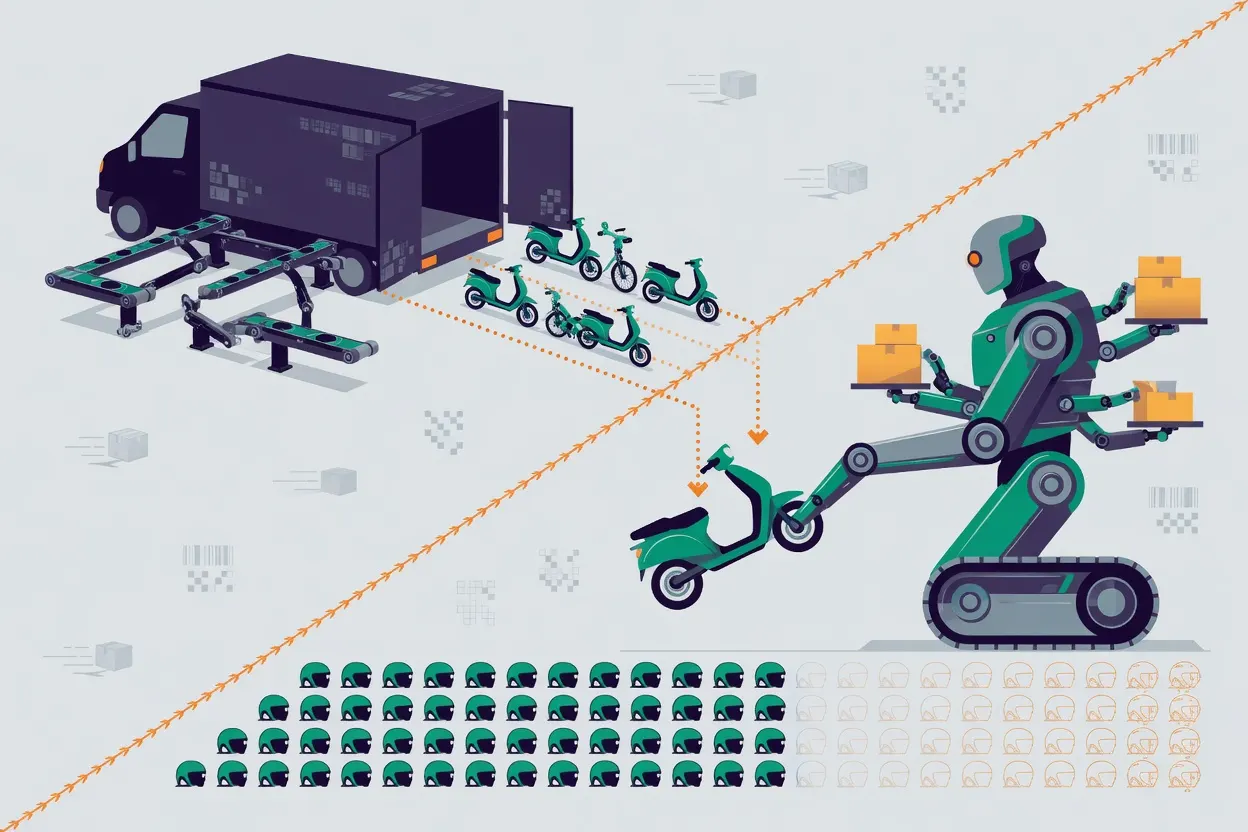
JD.com's founder told a public audience that robots will eventually replace every one of the company's 700,000 delivery workers.
Richard Liu, chairman of one of China's largest e-commerce groups, made the admission at the APEC China forum. It stands out for its directness — most executives in his position offer carefully worded reassurances about humans and machines working side-by-side, or dodge the question entirely. Liu skipped the dodge. He said the couriers would be replaced.
That candor matters because it puts a number on what automation looks like at scale. Seven hundred thousand is not a rounding error — it is a workforce the size of a mid-sized city's entire labor pool. When a company that size states displacement as a destination rather than a risk to manage, it shifts the conversation about automation from abstract to operational.
Whether the robots actually show up on that timeline is another question. Fully autonomous last-mile delivery has been "almost here" for a decade, and the real-world complexity of doorsteps, elevators, and bad weather keeps humbling the optimists.