A developer claims Claude Code's visible "extended thinking" output isn't what Anthropic implies it is.
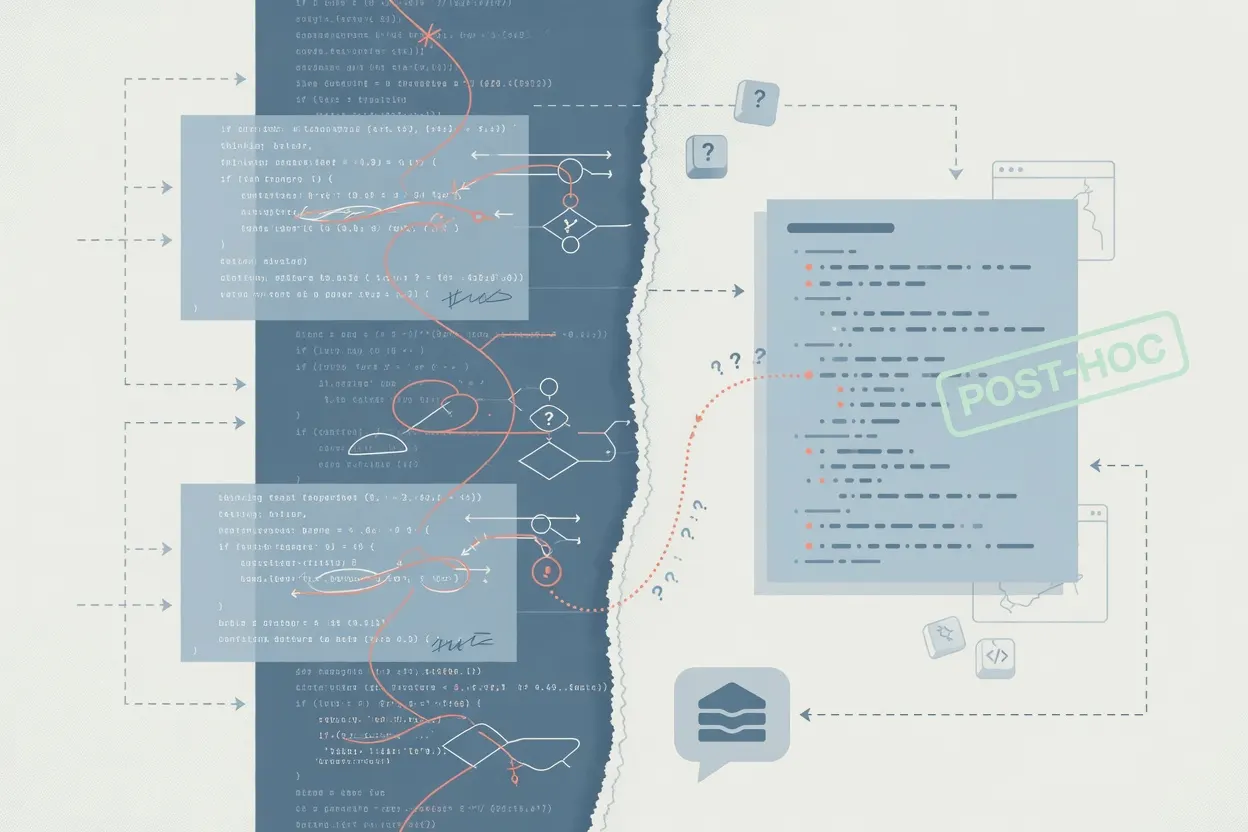
Patrick McCanna published a blog post arguing that the text Claude Code surfaces as its reasoning process is not an authentic, real-time chain of thought — it is a summary generated after the fact. McCanna's case rests on behavioral observation: he examined the structure and timing of the thinking output and found patterns inconsistent with genuine step-by-step reasoning, concluding the visible text is reconstructed narration rather than the model's live internal process. The post drew 54 points and 37 comments on Hacker News shortly after publication. Anthropic has not publicly responded to the claim.
The distinction matters because "extended thinking" is marketed as a window into the model's reasoning — a feature that lets developers audit how Claude arrives at answers. If the output is a cleaned-up summary rather than a raw trace, developers relying on it to catch errors or understand model behavior are working with a less useful signal than advertised. Trust in AI reasoning transparency is already thin; a gap between what is shown and what actually happens widens that problem.
This is one developer's analysis from a single blog post, not peer-reviewed research, and McCanna's methodology has not been independently verified. Still, the question it raises — whether AI "thinking" outputs are authentic or performative — is one the whole industry will eventually have to answer.