A research paper proposes letting the plumbing of vector databases do double duty as a messaging backbone for fleets of AI agents.
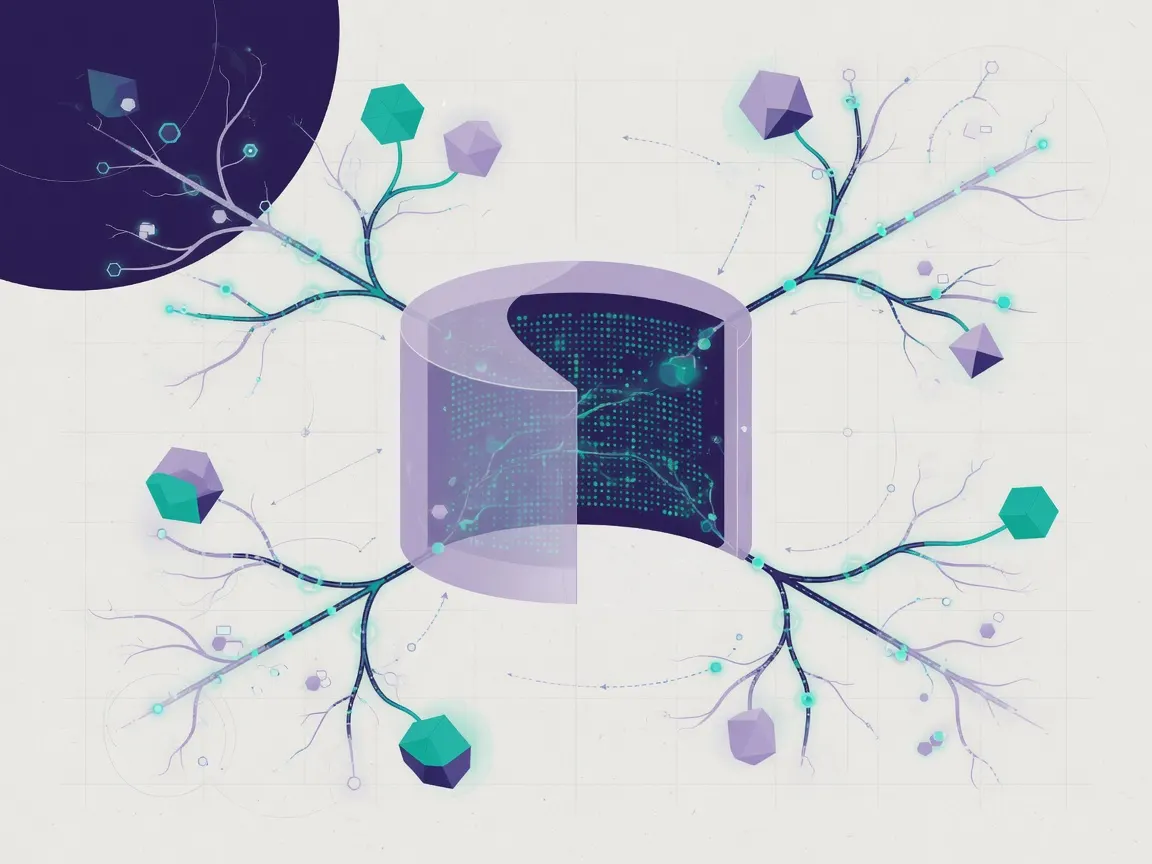
HyphaeDB reframes the Hierarchical Navigable Small World graph — the data structure that makes similarity search fast in systems like pgvector — as a fabric through which agents spread knowledge to their neighbors. Rather than sitting still until queried, memory propagates via a gossip protocol, attenuating with distance the way a rumor fades across a crowd. Three primitives underpin the design: knowledge nodes, topology edges, and memory diffs. Behaviors the authors call contradiction detection, pattern crystallization, and consensus formation emerge from how those pieces interact, not from any central coordinator. The reference implementation runs on PostgreSQL with pgvector, and the paper describes a deployment in what the authors term "Swarm-Driven Development" — a multi-agent software engineering workflow.
Most agent memory systems are passive: an agent writes, another agent reads, nothing travels on its own. If HyphaeDB's propagation model holds up outside the lab, it would shift the coordination burden from explicit orchestration logic to the memory layer itself — a meaningful change for anyone building systems where many agents need shared situational awareness. The gossip approach also means no single node has to maintain global state, which sidesteps a classic scaling headache.
The paper is pre-peer-review, and "emergent consensus" is the kind of phrase that deserves scrutiny before it shows up in a production deployment pitch.