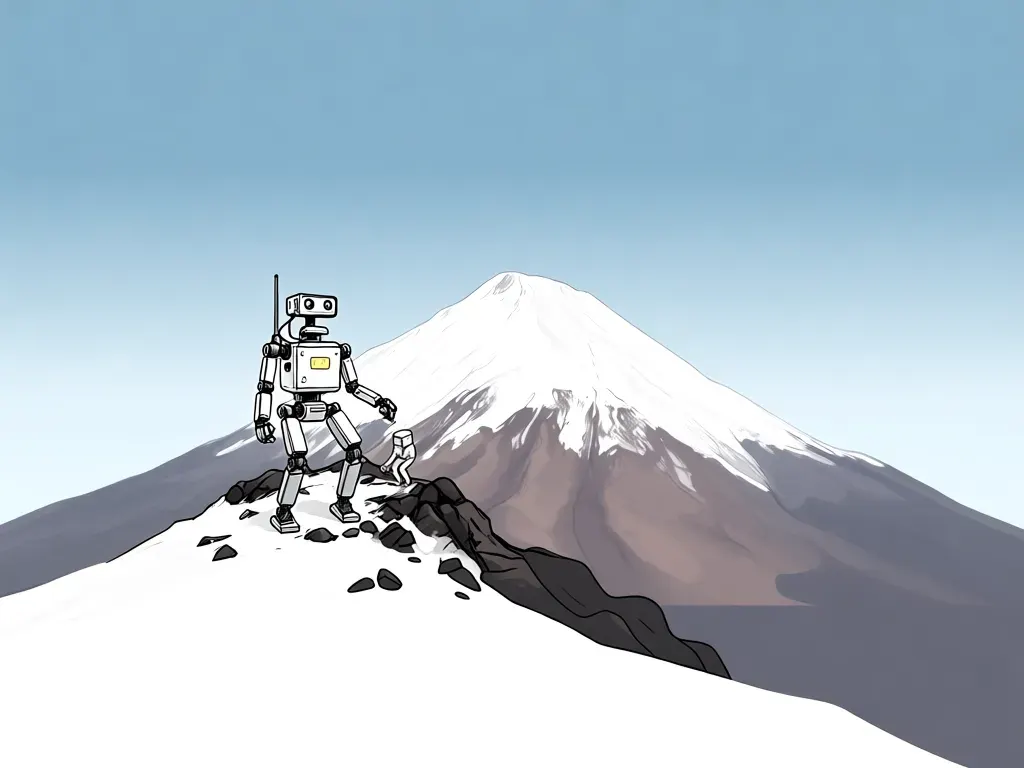
A humanoid robot named Pemba reached the top of Ecuador's Chimborazo, though humans had to carry it through the sections too difficult for it to navigate on its own.
Pemba completed the Chimborazo ascent, but not entirely under its own power. The climb went well enough on manageable terrain, but when conditions got tougher the robot's autonomous capabilities ran out. At those points, the human team physically carried Pemba rather than wait for it to route-find or risk a fall. The summit was reached; an autonomous summit was not.
Humanoid robot demos have a well-established tradition of looking better than they are. The controlled warehouse floor, the pre-planned route, the edited highlight reel: these are the standard packaging for a technology that still struggles badly in unstructured environments. An Andean volcano is about as far from a controlled setting as you can get, and Pemba's dependence on human intervention at key moments is a more honest data point than most robot milestone announcements tend to produce.
Bipedal locomotion in rough outdoor terrain remains one of the harder unsolved problems in robotics. Pemba got to the summit. It just did not get there alone.