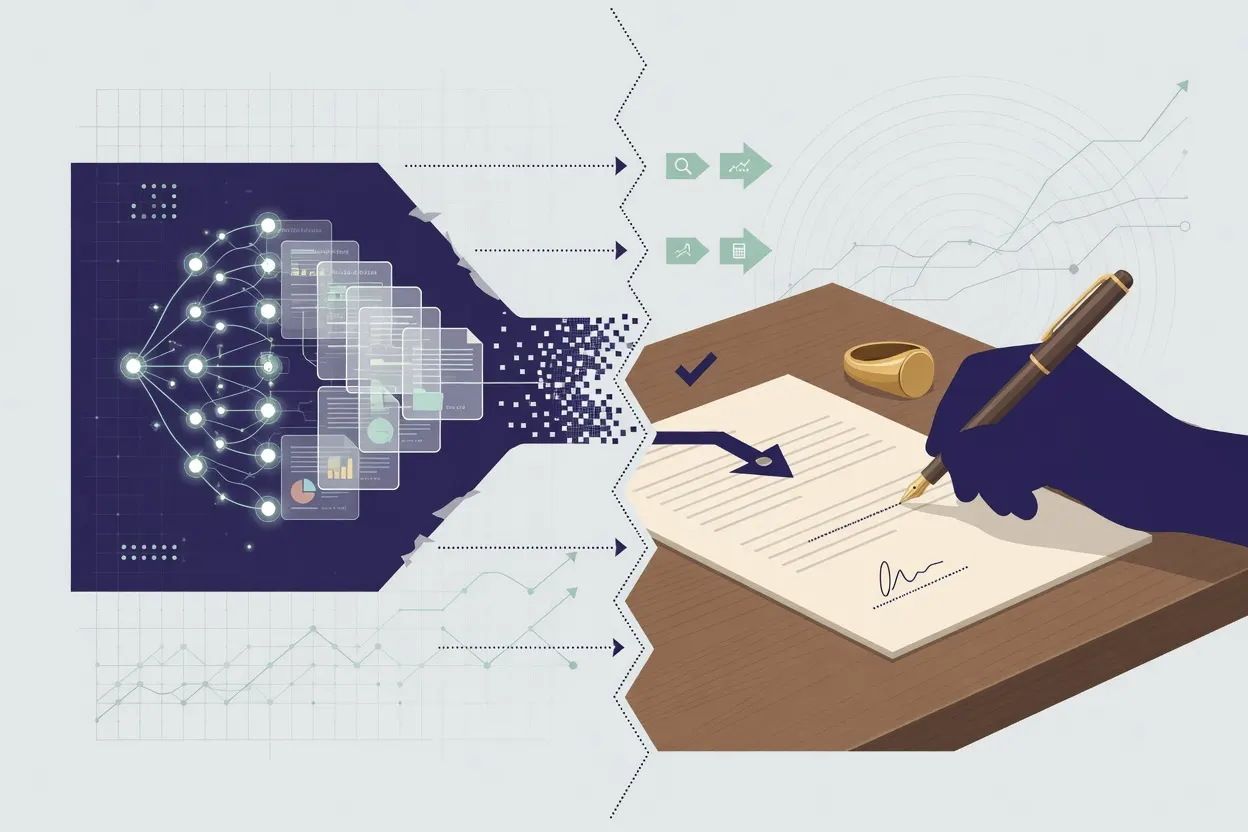
Wealthy investors trust AI to do the homework, then hand the answer sheet to a human.
HSBC surveyed nearly 10,000 affluent and high-net-worth individuals across 10 markets and found a consistent pattern: people use AI to research investments and generate ideas, but when money is actually about to move, they want a human adviser in the room. The research was published Wednesday. The gap between AI as a tool and AI as a decision-maker is, at least for now, wide.
That distinction matters because the wealth management industry has spent considerable energy pitching AI as a front-to-back solution. What the data suggests instead is a two-speed process: AI handles the cheap, scalable parts of the job - screening, summarizing, scenario-running - while human advisers hold the relationship and the final call. That is a narrower role than the industry's marketing implies, but it is also a durable one that incumbents like HSBC are well-positioned to sell.
The finding echoes a pattern seen in other high-stakes domains - legal, medical, financial - where AI earns trust as a research layer but rarely as the last word. Whether that changes as model reliability improves, or whether the human sign-off persists for liability reasons regardless of capability, is the more interesting question the survey doesn't answer.