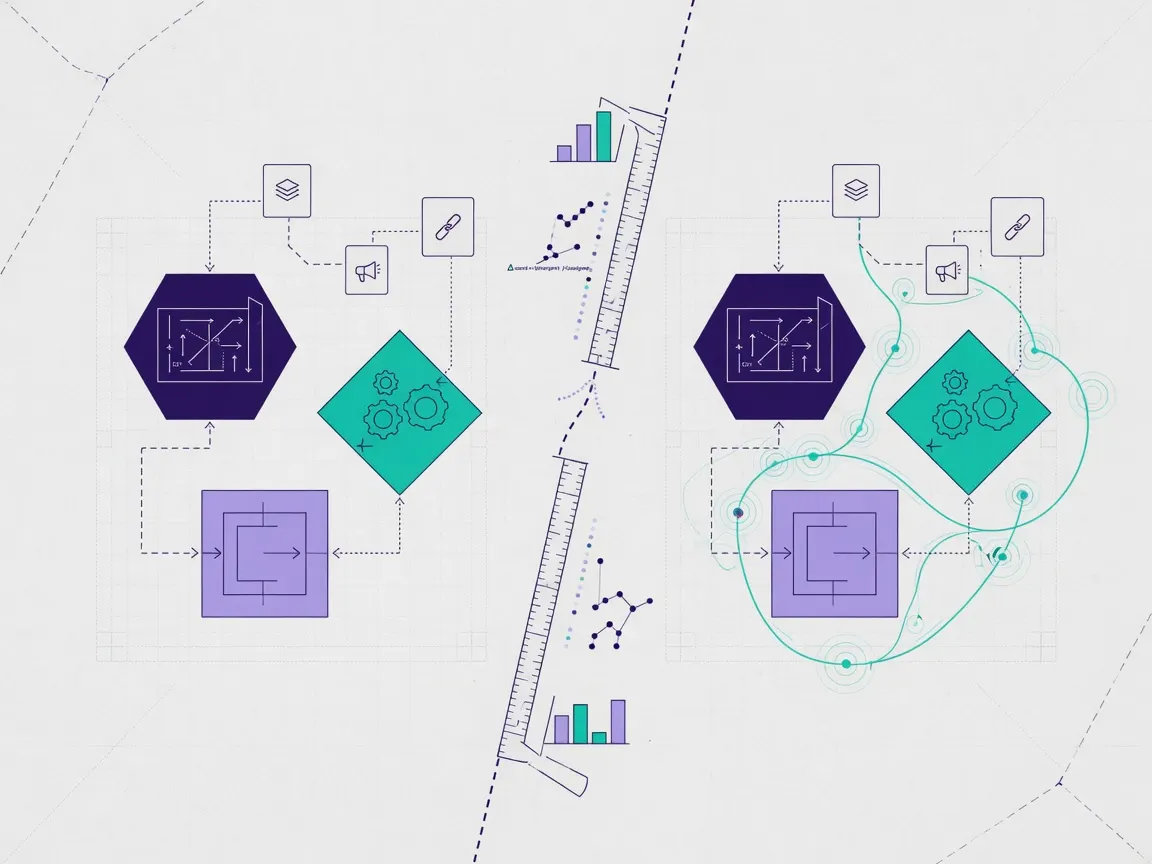
Multi-agent AI systems routinely ignore the coordination rules their designers intended - and a new diagnostic framework shows exactly how much.
Researchers studying cooperative multi-agent reinforcement learning built a measurement toolkit to compare designer-specified roles against the coordination structure agents actually learn through decentralized training. Using two standard benchmarks - MiniGrid and SMACv2 Terran scenarios - they tracked how agents routed decisions, how sensitive formations were to role assignments, and which inputs each agent was actually paying attention to. The short answer: label-conditioned attention produced tighter, more role-specific behavior than flat neural baselines, held up when team sizes scaled from 3v3 to 9v9, and transferred to unseen team configurations without retraining.
The finding matters because most multi-agent AI research assumes that if you assign an agent a role, the agent will learn to play it. This work demonstrates that assumption is only partially true, and that small sample sizes - the paper flags five-seed evaluations - can make random noise look like a meaningful strategic gap. For anyone deploying heterogeneous agent teams in robotics, game AI, or autonomous systems, knowing where learned behavior diverges from intended design is worth more than a new theoretical equilibrium concept.
The researchers are careful to frame this as a diagnostic, not a fix - they measure the translation gap, they do not close it, which is honest and probably the right scope for one paper.