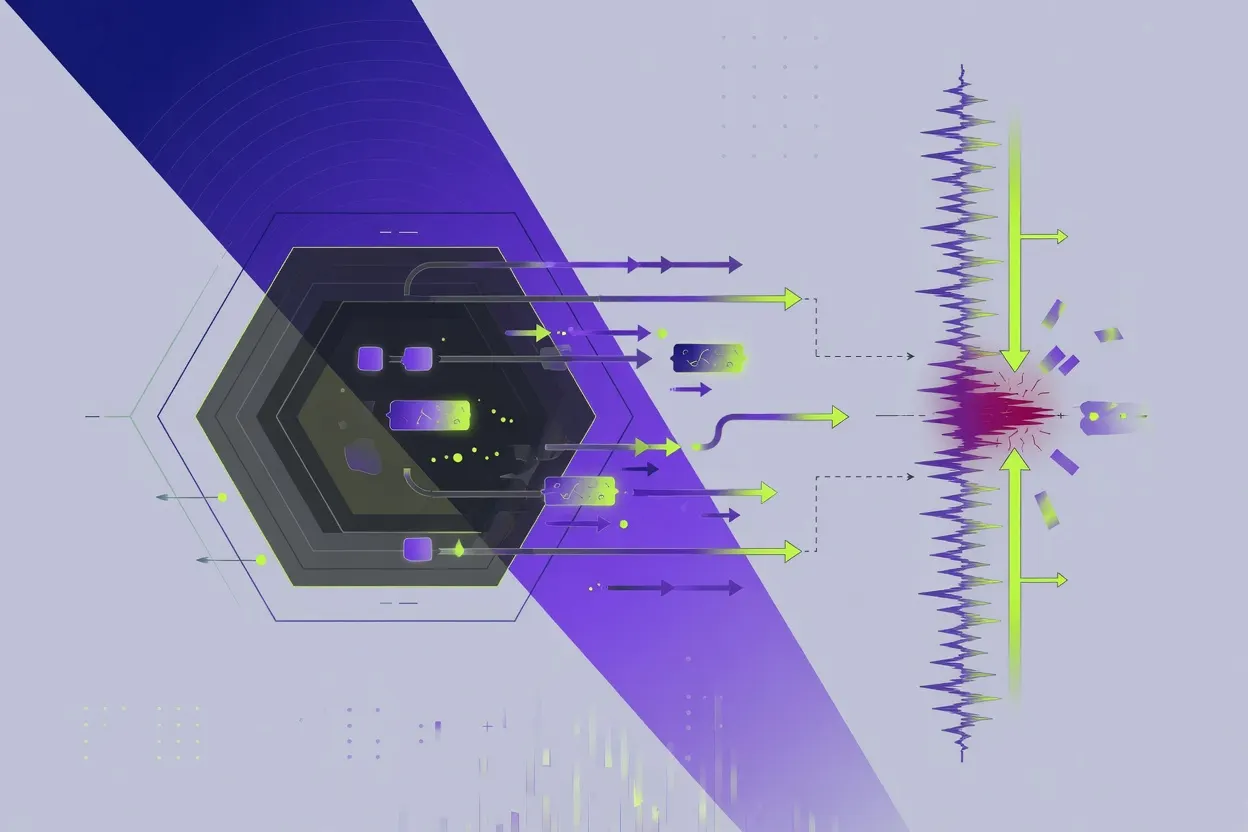
A research team says looking inside a model's math — not just its output — is a better way to catch when a large language model is lying.
Grad Detect works by running a single forward-backward pass during inference and reading the layer-wise gradient patterns that result. The argument is that a model's internal gradient structure carries information about output correctness that surface-level confidence scores simply don't expose. Tested across Q&A benchmarks and evaluated against eleven models from four architectural families, the method outperformed both confidence-based and sampling-based detection baselines. Crucially, the researchers found that the final five layers of a model concentrate more than 97% of the useful signal, meaning the approach can be made efficient without much accuracy loss.
Hallucination detection has mostly lived at the output layer — sampling multiple responses and checking for consistency, or flagging low-confidence tokens. Grad Detect's gradient-level approach opens a different angle: the model's own backward-pass activity as a reliability signal. That matters in high-stakes deployments — medical, legal, financial — where a confident wrong answer is worse than no answer.
Whether this translates cleanly from benchmark Q&A to open-ended generation at production scale is the part the paper doesn't settle — that gap is where most "promising" detection methods tend to quietly disappear.